1
Arc Length
Given a curve in ℝ𝑛 , 𝑐(𝑡), we want to find its length when 𝑡0 ≤ 𝑡 ≤ 𝑡1 . We
define arc length as:
𝑡1
𝐿(𝑐) = ∫ ‖𝑐 ′ (𝑡)‖𝑑𝑡 .
𝑡0
That is, we integrate the speed between 𝑡 = 𝑡0 and 𝑡 = 𝑡1 (this
corresponds to our notion of arc length when the speed of an object is constant).
We will motivate this definition in ℝ3 .
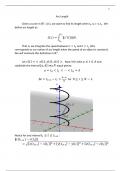
Let 𝑐 (𝑡) = < 𝑥 (𝑡), 𝑦(𝑡), 𝑧(𝑡) >. Now, let’s take 𝑎 ≤ 𝑡 ≤ 𝑏 and
subdivide the interval [𝑎, 𝑏] into 𝑁 equal pieces:
𝑎 = 𝑡0 < 𝑡1 < ⋯ < 𝑡𝑁 = 𝑏
𝑏−𝑎
Δ𝑡 = 𝑡𝑖+1 − 𝑡𝑖 = for 0 ≤ 𝑖 ≤ 𝑁 − 1.
𝑁
𝑐(𝑡𝑖+1 )
𝑐(𝑡𝑖 )
Notice for any interval 𝑡𝑖 ≤ 𝑡 ≤ 𝑡𝑖+1 :
‖𝑐 (𝑡𝑖+1 ) − 𝑐(𝑡𝑖 )‖
= √[𝑥(𝑡𝑖+1 ) − 𝑥 (𝑡𝑖 )]2 + [𝑦(𝑡𝑖+1 ) − 𝑦(𝑡𝑖 )]2 + [𝑧(𝑡𝑖+1 ) − 𝑧(𝑡𝑖 )]2 .
, 2
By the mean value theorem there are points in [𝑡𝑖 , 𝑡𝑖+1 ], 𝑡𝑖∗ , 𝑡𝑖∗∗ , and 𝑡𝑖∗∗∗ with:
𝑥 (𝑡𝑖+1 ) − 𝑥 (𝑡𝑖 ) = 𝑥 ′ (𝑡𝑖∗ )(𝑡𝑖+1 − 𝑡𝑖 )
𝑦(𝑡𝑖+1 ) − 𝑦(𝑡𝑖 ) = 𝑦 ′ (𝑡𝑖∗∗ )(𝑡𝑖+1 − 𝑡𝑖 )
𝑧(𝑡𝑖+1 ) − 𝑧(𝑡𝑖 ) = 𝑧 ′ (𝑡𝑖∗∗∗ )(𝑡𝑖+1 − 𝑡𝑖 ).
Thus:
2 2 2
‖𝑐 (𝑡𝑖+1 ) − 𝑐 (𝑡𝑖 )‖ = √(𝑥 ′ (𝑡𝑖∗ )) + (𝑦 ′ (𝑡𝑖∗∗ )) + (𝑧 ′ (𝑡𝑖∗∗∗ )) (𝑡𝑖+1 − 𝑡𝑖 ).
So the approximate length of the curve is:
𝑁−1
2 2 2
𝑆𝑁 ≈ ∑ √(𝑥 ′ (𝑡𝑖∗ )) + (𝑦 ′ (𝑡𝑖∗∗ )) + (𝑧 ′ (𝑡𝑖∗∗∗ )) (𝑡𝑖+1 − 𝑡𝑖 )
𝑖=0
𝑏 2 2 2
𝐿(𝑐) = lim 𝑆𝑁 = ∫𝑎 √(𝑥 ′ (𝑡)) + (𝑦 ′ (𝑡)) + (𝑧 ′ (𝑡)) 𝑑𝑡
𝑁→∞
Arc Length
Given a curve in ℝ𝑛 , 𝑐(𝑡), we want to find its length when 𝑡0 ≤ 𝑡 ≤ 𝑡1 . We
define arc length as:
𝑡1
𝐿(𝑐) = ∫ ‖𝑐 ′ (𝑡)‖𝑑𝑡 .
𝑡0
That is, we integrate the speed between 𝑡 = 𝑡0 and 𝑡 = 𝑡1 (this
corresponds to our notion of arc length when the speed of an object is constant).
We will motivate this definition in ℝ3 .
Let 𝑐 (𝑡) = < 𝑥 (𝑡), 𝑦(𝑡), 𝑧(𝑡) >. Now, let’s take 𝑎 ≤ 𝑡 ≤ 𝑏 and
subdivide the interval [𝑎, 𝑏] into 𝑁 equal pieces:
𝑎 = 𝑡0 < 𝑡1 < ⋯ < 𝑡𝑁 = 𝑏
𝑏−𝑎
Δ𝑡 = 𝑡𝑖+1 − 𝑡𝑖 = for 0 ≤ 𝑖 ≤ 𝑁 − 1.
𝑁
𝑐(𝑡𝑖+1 )
𝑐(𝑡𝑖 )
Notice for any interval 𝑡𝑖 ≤ 𝑡 ≤ 𝑡𝑖+1 :
‖𝑐 (𝑡𝑖+1 ) − 𝑐(𝑡𝑖 )‖
= √[𝑥(𝑡𝑖+1 ) − 𝑥 (𝑡𝑖 )]2 + [𝑦(𝑡𝑖+1 ) − 𝑦(𝑡𝑖 )]2 + [𝑧(𝑡𝑖+1 ) − 𝑧(𝑡𝑖 )]2 .
, 2
By the mean value theorem there are points in [𝑡𝑖 , 𝑡𝑖+1 ], 𝑡𝑖∗ , 𝑡𝑖∗∗ , and 𝑡𝑖∗∗∗ with:
𝑥 (𝑡𝑖+1 ) − 𝑥 (𝑡𝑖 ) = 𝑥 ′ (𝑡𝑖∗ )(𝑡𝑖+1 − 𝑡𝑖 )
𝑦(𝑡𝑖+1 ) − 𝑦(𝑡𝑖 ) = 𝑦 ′ (𝑡𝑖∗∗ )(𝑡𝑖+1 − 𝑡𝑖 )
𝑧(𝑡𝑖+1 ) − 𝑧(𝑡𝑖 ) = 𝑧 ′ (𝑡𝑖∗∗∗ )(𝑡𝑖+1 − 𝑡𝑖 ).
Thus:
2 2 2
‖𝑐 (𝑡𝑖+1 ) − 𝑐 (𝑡𝑖 )‖ = √(𝑥 ′ (𝑡𝑖∗ )) + (𝑦 ′ (𝑡𝑖∗∗ )) + (𝑧 ′ (𝑡𝑖∗∗∗ )) (𝑡𝑖+1 − 𝑡𝑖 ).
So the approximate length of the curve is:
𝑁−1
2 2 2
𝑆𝑁 ≈ ∑ √(𝑥 ′ (𝑡𝑖∗ )) + (𝑦 ′ (𝑡𝑖∗∗ )) + (𝑧 ′ (𝑡𝑖∗∗∗ )) (𝑡𝑖+1 − 𝑡𝑖 )
𝑖=0
𝑏 2 2 2
𝐿(𝑐) = lim 𝑆𝑁 = ∫𝑎 √(𝑥 ′ (𝑡)) + (𝑦 ′ (𝑡)) + (𝑧 ′ (𝑡)) 𝑑𝑡
𝑁→∞