HLH 199 study Questions and Complete Answers|
Verified 100% Correct| Newest 2024-2025
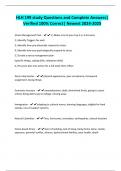
Stress Management Plan - ✔✔1.) Make a list of your top 3 or 4 stressors
2.) Identify Triggers for each
3.) Identify how you physically respond to stress
4.) Identify how you psychologically respond to stress
5.) Create a stress management plan
(specific things, coping skills, relaxation skills)
6.) Put your plan into action for a full week then reflect
Day to day hassles - ✔✔physical appearance, peer acceptance, homework
assignment, losing things
Economic stressors - ✔✔unemployment, debt, diminished funds, going to a poor
school, being able to go to college, moving away
Immigration - ✔✔adapting to cultural norms, learning languages, eligible for food
stamps, loss of support systems
Natural Calamities - ✔✔Fires, hurricanes, tornadoes, earthquakes, natural disasters
Home-based Stress - ✔✔Over scheduling, lack of sleep, being home alone, media
exposure, parental conflict, divorce, dysfunctional families, poor health, death
, School-based Stress - ✔✔friendships, sharing, arguing, schoolwork, public speaking,
bullying, overworked, feeling unsafe, unsupported
Depressive Disorder - ✔✔an illness that involves the body, mood, and thoughts.
Affects the way one eats, sleeps, feelings toward self, thinking about things
Major Depression - ✔✔combination of symptoms that interfere with a persons ability
to work, sleep, study, eat, and enjoy pleasurable activities
Dysthymic Disorder - ✔✔long term symptoms that may not be severe enough to
disable a person, but can prevent functioning normally
Minor Depression - ✔✔having symptoms for two weeks or longer that do not meet
the full criteria for major depression
Seasonal Affective Disorder (SAD) - ✔✔onset of depression during the winter
months, when there is less natural light
Bipolar Disorder - ✔✔manic-depressive illness, cycling mood changes from extreme
highs to extreme lows
Anxiety - ✔✔normal reaction to a fearful stress, but when it becomes an excessive
irrational dread of even when there is little to no reason to worry
Generalized Anxiety Disorder (GAD) - ✔✔someone being extremely worried about
many things, even when there is little reason to worry
Verified 100% Correct| Newest 2024-2025
Stress Management Plan - ✔✔1.) Make a list of your top 3 or 4 stressors
2.) Identify Triggers for each
3.) Identify how you physically respond to stress
4.) Identify how you psychologically respond to stress
5.) Create a stress management plan
(specific things, coping skills, relaxation skills)
6.) Put your plan into action for a full week then reflect
Day to day hassles - ✔✔physical appearance, peer acceptance, homework
assignment, losing things
Economic stressors - ✔✔unemployment, debt, diminished funds, going to a poor
school, being able to go to college, moving away
Immigration - ✔✔adapting to cultural norms, learning languages, eligible for food
stamps, loss of support systems
Natural Calamities - ✔✔Fires, hurricanes, tornadoes, earthquakes, natural disasters
Home-based Stress - ✔✔Over scheduling, lack of sleep, being home alone, media
exposure, parental conflict, divorce, dysfunctional families, poor health, death
, School-based Stress - ✔✔friendships, sharing, arguing, schoolwork, public speaking,
bullying, overworked, feeling unsafe, unsupported
Depressive Disorder - ✔✔an illness that involves the body, mood, and thoughts.
Affects the way one eats, sleeps, feelings toward self, thinking about things
Major Depression - ✔✔combination of symptoms that interfere with a persons ability
to work, sleep, study, eat, and enjoy pleasurable activities
Dysthymic Disorder - ✔✔long term symptoms that may not be severe enough to
disable a person, but can prevent functioning normally
Minor Depression - ✔✔having symptoms for two weeks or longer that do not meet
the full criteria for major depression
Seasonal Affective Disorder (SAD) - ✔✔onset of depression during the winter
months, when there is less natural light
Bipolar Disorder - ✔✔manic-depressive illness, cycling mood changes from extreme
highs to extreme lows
Anxiety - ✔✔normal reaction to a fearful stress, but when it becomes an excessive
irrational dread of even when there is little to no reason to worry
Generalized Anxiety Disorder (GAD) - ✔✔someone being extremely worried about
many things, even when there is little reason to worry