Solutions for CB,Solutions
ConsumerforBehaviour
CB, Consumer
3rd Canadian
Behaviour
Edition
3rd Canadian
by J. Babin.pdfhttps://www.stuvia.com/user/parkrobertson99
Edition by J. Babin.pdfhttps://www.stuvia.com/user/parkrobertson99
https://www.stuvia.com/user/parkrobertson99
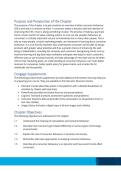
Purpose and Perspective of the Chapter
The purpose of this chapter is to give students an overview of what consumer behaviour
(CB) is and why it is relevant to them. A consumer makes a decision with the intention of
improving their life—that is, doing something of value. The process of making a purchase
starts a chain reaction of value-creating actions. As one can see, people’s behaviour as
consumers is critically important not just to themselves but to many other people. This is
why so many people, not just marketing people, are interested in learning about consumer
behaviour. It is true that the marketer who understands consumers will be able to design
products with greater value potential and thus a greater chance of enhancing the well-
being of stakeholders, including the company and customers. Recognizing trends such as
machine learning and big data helps marketers anticipate new ways to reach customers,
different ways to use existing channels, and take advantage of new data sources to better
inform their marketing plans. An understanding of consumer behaviour can mean better
business for companies, better public policy for governments, and a better life for
individuals and households.
Cengage Supplements
The following product-level supplements provide additional information that may help you
in preparing your course. They are available in the Instructor Resource Centre.
• Educator’s Guide (describes assets in the platform with a detailed breakdown of
activities by chapter with seat time)
• PowerPoint (provides text-based lectures and presentations)
• Cognero Test Bank (contains assessment questions and problems)
• Instructor Solutions Manual (provides hints and answers to all questions from in-
text case studies)
• Image Library (includes a digital copy of all text images and exhibits)
Chapter Objectives
The following objectives are addressed in this chapter:
1-1 Understand the meaning of consumption and consumer behaviour.
1-2 Describe how consumers get treated differently in various types of exchange
environments.
1-3 Explain the role of consumer behaviour in business and society.
1-4 Be familiar with basic approaches to studying consumer behaviour.
1-5 Describe why consumer behaviour is so dynamic and how recent trends affect
consumers.
https://www.stuvia.com/user/parkrobertson99 https://www.stuvia.com/user/parkrobertson99
Solutions for CB, Consumer Behaviour 3rd Canadian Edition by J. Babin.pdf
,Solutions for CB,Solutions
ConsumerforBehaviour
CB, Consumer
3rd Canadian
Behaviour
Edition
3rd Canadian
by J. Babin.pdfhttps://www.stuvia.com/user/parkrobertson99
Edition by J. Babin.pdfhttps://www.stuvia.com/user/parkrobertson99
https://www.stuvia.com/user/parkrobertson99
[return to top]
Key Terms
anthropology: study in which researchers interpret relationships between people and the
things they purchase, the products they own, and the activities in which they participate
attributes: product features that deliver a desired consumer benefit
behavioural economics: study of what happens in markets with decision makers who
display human limitations and complications
benefits: positive results of consumption
big data: the massive amounts of data available to companies, which can potentially be
used to predict customer behaviours
cognitive psychology: study of the intricacies of mental reactions involved in information
processing
collaborative consumption: rental transaction activity that is consumer to consumer,
rather than business to consumer or business to business
consumer behaviour: set of value-seeking activities that take place as people go about
addressing needs
consumer behaviour as a field of study: study of consumers as they go about the
consumption process; the science of studying how consumers seek value to address needs
consumer (customer) orientation: way of doing business in which the actions and
decision-making of the institution prioritize consumer value and satisfaction above all other
concerns
consumption: process by which goods, services, or ideas are used and transformed into
value
costs: negative results of consumption
differentiated marketers: firms that serve multiple market segments, each with a unique
product offering
economics: the study of production and consumption, including the distribution of
resources, goods, and services
https://www.stuvia.com/user/parkrobertson99 https://www.stuvia.com/user/parkrobertson99
Solutions for CB, Consumer Behaviour 3rd Canadian Edition by J. Babin.pdf
,Solutions for CB,Solutions
ConsumerforBehaviour
CB, Consumer
3rd Canadian
Behaviour
Edition
3rd Canadian
by J. Babin.pdfhttps://www.stuvia.com/user/parkrobertson99
Edition by J. Babin.pdfhttps://www.stuvia.com/user/parkrobertson99
https://www.stuvia.com/user/parkrobertson99
ethnography: qualitative approach to studying consumers that relies on interpretation of
artifacts to draw conclusions about consumption
exchange: acting out of the decision to give something up in return for something of
greater value
experimental methodology: quantitative research approach to research that examines
cause-and-effect relationships by measuring changes in one or more key variables while
systematically manipulating and controlling other variables
Internet of Things: automatic recording of data from everyday products that signal
consumers’ patterns of behaviour
interpretive research: approach that seeks to explain the inner meanings and
motivations associated with specific consumption experiences
machine learning: application of artificial intelligence to automate tasks otherwise
performed by humans
market orientation: organizational culture that embodies the importance of creating
value for customers among all employees
marketing: multitude of value-producing seller activities that facilitate exchanges between
buyers and sellers
netnography: an adaptation of ethnography for the online world, including online
communities and online cultures
neuroscience: study of the central nervous system, including brain mechanisms
associated with thoughts, emotion, and behaviour
niche marketing: plan wherein a firm specializes in serving one market segment with
particularly unique demand characteristics
one-to-one marketing: plan wherein a different product is offered for each individual
customer so that each customer is treated as a segment of one
phenomenology: qualitative approach to studying consumers that relies on interpretation
of the lived experience associated with some aspect of consumption
predictive analytics: application of statistical tools in an effort to discover patterns in data
that allow companies to predict consumer behaviour
product: potentially valuable bundle of benefits
https://www.stuvia.com/user/parkrobertson99 https://www.stuvia.com/user/parkrobertson99
Solutions for CB, Consumer Behaviour 3rd Canadian Edition by J. Babin.pdf
, Solutions for CB,Solutions
ConsumerforBehaviour
CB, Consumer
3rd Canadian
Behaviour
Edition
3rd Canadian
by J. Babin.pdfhttps://www.stuvia.com/user/parkrobertson99
Edition by J. Babin.pdfhttps://www.stuvia.com/user/parkrobertson99
https://www.stuvia.com/user/parkrobertson99
production orientation: approach where innovation is geared primarily toward making
the production process as efficient and economic as possible
psychology: study of human reactions to environments, including behaviour and mental
processes
qualitative research tools: means for gathering data in a relatively unstructured way,
including case analysis, clinical interviews, and focus group interviews
quantitative research: approach that addresses questions about consumer behaviour
using numerical measurement and analysis tools
relationship marketing: activities based on the belief that the firm’s performance is
enhanced through repeat business
sharing economy: global consumer trend toward rental (temporary usage for hire) rather
than ownership or doing a task yourself
social psychology: study that focuses on the thoughts, feelings, and behaviours that
people have as they interact with other people or groups in various situations
sociology: study of society, including patterns of social relationships, social interaction, and
culture
stakeholder marketing: orientation in which firms recognize that more than just the
buyer and seller are involved in the marketing process, and a host of primary and
secondary stakeholders affect and are affected by the value creation process
touchpoints: direct contacts between the firm and a customer
undifferentiated marketing: plan wherein the same basic product is offered to all
customers
want: way a consumer goes about addressing a recognized need
[return to top]
https://www.stuvia.com/user/parkrobertson99 https://www.stuvia.com/user/parkrobertson99
Solutions for CB, Consumer Behaviour 3rd Canadian Edition by J. Babin.pdf
ConsumerforBehaviour
CB, Consumer
3rd Canadian
Behaviour
Edition
3rd Canadian
by J. Babin.pdfhttps://www.stuvia.com/user/parkrobertson99
Edition by J. Babin.pdfhttps://www.stuvia.com/user/parkrobertson99
https://www.stuvia.com/user/parkrobertson99
Purpose and Perspective of the Chapter
The purpose of this chapter is to give students an overview of what consumer behaviour
(CB) is and why it is relevant to them. A consumer makes a decision with the intention of
improving their life—that is, doing something of value. The process of making a purchase
starts a chain reaction of value-creating actions. As one can see, people’s behaviour as
consumers is critically important not just to themselves but to many other people. This is
why so many people, not just marketing people, are interested in learning about consumer
behaviour. It is true that the marketer who understands consumers will be able to design
products with greater value potential and thus a greater chance of enhancing the well-
being of stakeholders, including the company and customers. Recognizing trends such as
machine learning and big data helps marketers anticipate new ways to reach customers,
different ways to use existing channels, and take advantage of new data sources to better
inform their marketing plans. An understanding of consumer behaviour can mean better
business for companies, better public policy for governments, and a better life for
individuals and households.
Cengage Supplements
The following product-level supplements provide additional information that may help you
in preparing your course. They are available in the Instructor Resource Centre.
• Educator’s Guide (describes assets in the platform with a detailed breakdown of
activities by chapter with seat time)
• PowerPoint (provides text-based lectures and presentations)
• Cognero Test Bank (contains assessment questions and problems)
• Instructor Solutions Manual (provides hints and answers to all questions from in-
text case studies)
• Image Library (includes a digital copy of all text images and exhibits)
Chapter Objectives
The following objectives are addressed in this chapter:
1-1 Understand the meaning of consumption and consumer behaviour.
1-2 Describe how consumers get treated differently in various types of exchange
environments.
1-3 Explain the role of consumer behaviour in business and society.
1-4 Be familiar with basic approaches to studying consumer behaviour.
1-5 Describe why consumer behaviour is so dynamic and how recent trends affect
consumers.
https://www.stuvia.com/user/parkrobertson99 https://www.stuvia.com/user/parkrobertson99
Solutions for CB, Consumer Behaviour 3rd Canadian Edition by J. Babin.pdf
,Solutions for CB,Solutions
ConsumerforBehaviour
CB, Consumer
3rd Canadian
Behaviour
Edition
3rd Canadian
by J. Babin.pdfhttps://www.stuvia.com/user/parkrobertson99
Edition by J. Babin.pdfhttps://www.stuvia.com/user/parkrobertson99
https://www.stuvia.com/user/parkrobertson99
[return to top]
Key Terms
anthropology: study in which researchers interpret relationships between people and the
things they purchase, the products they own, and the activities in which they participate
attributes: product features that deliver a desired consumer benefit
behavioural economics: study of what happens in markets with decision makers who
display human limitations and complications
benefits: positive results of consumption
big data: the massive amounts of data available to companies, which can potentially be
used to predict customer behaviours
cognitive psychology: study of the intricacies of mental reactions involved in information
processing
collaborative consumption: rental transaction activity that is consumer to consumer,
rather than business to consumer or business to business
consumer behaviour: set of value-seeking activities that take place as people go about
addressing needs
consumer behaviour as a field of study: study of consumers as they go about the
consumption process; the science of studying how consumers seek value to address needs
consumer (customer) orientation: way of doing business in which the actions and
decision-making of the institution prioritize consumer value and satisfaction above all other
concerns
consumption: process by which goods, services, or ideas are used and transformed into
value
costs: negative results of consumption
differentiated marketers: firms that serve multiple market segments, each with a unique
product offering
economics: the study of production and consumption, including the distribution of
resources, goods, and services
https://www.stuvia.com/user/parkrobertson99 https://www.stuvia.com/user/parkrobertson99
Solutions for CB, Consumer Behaviour 3rd Canadian Edition by J. Babin.pdf
,Solutions for CB,Solutions
ConsumerforBehaviour
CB, Consumer
3rd Canadian
Behaviour
Edition
3rd Canadian
by J. Babin.pdfhttps://www.stuvia.com/user/parkrobertson99
Edition by J. Babin.pdfhttps://www.stuvia.com/user/parkrobertson99
https://www.stuvia.com/user/parkrobertson99
ethnography: qualitative approach to studying consumers that relies on interpretation of
artifacts to draw conclusions about consumption
exchange: acting out of the decision to give something up in return for something of
greater value
experimental methodology: quantitative research approach to research that examines
cause-and-effect relationships by measuring changes in one or more key variables while
systematically manipulating and controlling other variables
Internet of Things: automatic recording of data from everyday products that signal
consumers’ patterns of behaviour
interpretive research: approach that seeks to explain the inner meanings and
motivations associated with specific consumption experiences
machine learning: application of artificial intelligence to automate tasks otherwise
performed by humans
market orientation: organizational culture that embodies the importance of creating
value for customers among all employees
marketing: multitude of value-producing seller activities that facilitate exchanges between
buyers and sellers
netnography: an adaptation of ethnography for the online world, including online
communities and online cultures
neuroscience: study of the central nervous system, including brain mechanisms
associated with thoughts, emotion, and behaviour
niche marketing: plan wherein a firm specializes in serving one market segment with
particularly unique demand characteristics
one-to-one marketing: plan wherein a different product is offered for each individual
customer so that each customer is treated as a segment of one
phenomenology: qualitative approach to studying consumers that relies on interpretation
of the lived experience associated with some aspect of consumption
predictive analytics: application of statistical tools in an effort to discover patterns in data
that allow companies to predict consumer behaviour
product: potentially valuable bundle of benefits
https://www.stuvia.com/user/parkrobertson99 https://www.stuvia.com/user/parkrobertson99
Solutions for CB, Consumer Behaviour 3rd Canadian Edition by J. Babin.pdf
, Solutions for CB,Solutions
ConsumerforBehaviour
CB, Consumer
3rd Canadian
Behaviour
Edition
3rd Canadian
by J. Babin.pdfhttps://www.stuvia.com/user/parkrobertson99
Edition by J. Babin.pdfhttps://www.stuvia.com/user/parkrobertson99
https://www.stuvia.com/user/parkrobertson99
production orientation: approach where innovation is geared primarily toward making
the production process as efficient and economic as possible
psychology: study of human reactions to environments, including behaviour and mental
processes
qualitative research tools: means for gathering data in a relatively unstructured way,
including case analysis, clinical interviews, and focus group interviews
quantitative research: approach that addresses questions about consumer behaviour
using numerical measurement and analysis tools
relationship marketing: activities based on the belief that the firm’s performance is
enhanced through repeat business
sharing economy: global consumer trend toward rental (temporary usage for hire) rather
than ownership or doing a task yourself
social psychology: study that focuses on the thoughts, feelings, and behaviours that
people have as they interact with other people or groups in various situations
sociology: study of society, including patterns of social relationships, social interaction, and
culture
stakeholder marketing: orientation in which firms recognize that more than just the
buyer and seller are involved in the marketing process, and a host of primary and
secondary stakeholders affect and are affected by the value creation process
touchpoints: direct contacts between the firm and a customer
undifferentiated marketing: plan wherein the same basic product is offered to all
customers
want: way a consumer goes about addressing a recognized need
[return to top]
https://www.stuvia.com/user/parkrobertson99 https://www.stuvia.com/user/parkrobertson99
Solutions for CB, Consumer Behaviour 3rd Canadian Edition by J. Babin.pdf