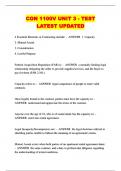
CON 1100V UNIT 3 - TEST
LATEST UPDATED
4 Essential Elements in Contracting include: - ANSWER 1. Capacity
2. Mutual Assent
3. Consideration
4. Lawful Purpose
Federal Acquisition Regulation (FAR) is: - ANSWER a mutually binding legal
relationship obligating the seller to provide supplies/services, and the buyer to
pay for them (FAR 2.101).
Capacity refers to: - ANSWER legal competence of people to enter valid
contracts.
Once legally bound to the contract, parties must have the capacity to: -
ANSWER understand and appreciate the terms of the contract.
Anyone over the age of 18, who is of sound mind, has the capacity to: -
ANSWER enter into rental agreement.
Legal Incapacity/Incompetence are: - ANSWER the legal doctrines utilized in
shielding parties unable to fathom the meaning of an agreement's terms.
Mutual Assent exists when both parties of an apartment rental agreement share:
- ANSWER the same contract, and a duty to perform due diligence regarding
the understanding of terms/conditions.
, Consideration is: - ANSWER something of value that a promisor receives
from a promisee in return for his/her offer.
Consideration can take 4 forms: - ANSWER 1. Money
2. Promise
3. Action/Nonaction
4. Property
Without consideration, a contract is: - ANSWER not enforceable.
In an apartment scenario, consideration lodges in accordance with the terms &
conditions of - ANSWER the contract and monthly rent payment.
Lawful Purpose occurs when: - ANSWER a contract is unenforceable if any
term of an agreement contrasts public policy.
Public/Government Policies involve: - ANSWER 1. Public Morals
2. Health
3. Safety
4. Welfare
A contract CANNOT be enforced if: - ANSWER 1. Any term of the
agreement is against the law.
2. Enforcement of any term of the agreement would harm the state or its
citizens.
LATEST UPDATED
4 Essential Elements in Contracting include: - ANSWER 1. Capacity
2. Mutual Assent
3. Consideration
4. Lawful Purpose
Federal Acquisition Regulation (FAR) is: - ANSWER a mutually binding legal
relationship obligating the seller to provide supplies/services, and the buyer to
pay for them (FAR 2.101).
Capacity refers to: - ANSWER legal competence of people to enter valid
contracts.
Once legally bound to the contract, parties must have the capacity to: -
ANSWER understand and appreciate the terms of the contract.
Anyone over the age of 18, who is of sound mind, has the capacity to: -
ANSWER enter into rental agreement.
Legal Incapacity/Incompetence are: - ANSWER the legal doctrines utilized in
shielding parties unable to fathom the meaning of an agreement's terms.
Mutual Assent exists when both parties of an apartment rental agreement share:
- ANSWER the same contract, and a duty to perform due diligence regarding
the understanding of terms/conditions.
, Consideration is: - ANSWER something of value that a promisor receives
from a promisee in return for his/her offer.
Consideration can take 4 forms: - ANSWER 1. Money
2. Promise
3. Action/Nonaction
4. Property
Without consideration, a contract is: - ANSWER not enforceable.
In an apartment scenario, consideration lodges in accordance with the terms &
conditions of - ANSWER the contract and monthly rent payment.
Lawful Purpose occurs when: - ANSWER a contract is unenforceable if any
term of an agreement contrasts public policy.
Public/Government Policies involve: - ANSWER 1. Public Morals
2. Health
3. Safety
4. Welfare
A contract CANNOT be enforced if: - ANSWER 1. Any term of the
agreement is against the law.
2. Enforcement of any term of the agreement would harm the state or its
citizens.