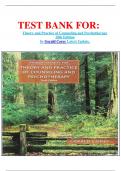
Theory and Practice
N N N
of Counseling and P
N N N
sychotherapy 11thE N N
dition Test Bank Cor
N N N
ey
,Chapters 01 Introduction and Overview
N N N N
MULTIPLE-CHOICENTESTNITEMS
Note:NBelowNareNtestNitemsNforNchapterN1NofNTheoryNandNPracticeNofNCounselingNandNPsychotherapy.
1. SynthesizingNtheNapproachesNcoveredNinNtheNtext:
a. canNeasilyNbeNaccomplishedNafterNtakingNanNintroductoryNcourse.
b. isNusuallyNmasteredNbyNtheNendNofNtheNfirstNyearNofNone’sNgraduateNprogram.
c. oftenNrequiresNmanyNyearsNofNstudy,Ntraining,NandNpracticalNcounselingNexperience.
d. rarely,NifNever,NhappensNandNisNaNcompletelyNunrealisticNgoal.
ANS:NC PG:N5
2. WhichN oneN ofNtheNfollowingN isN notNconsideredN anN experientialN andNrelationship-orientedNtherapy?N a.
GestaltNtherapy
b. familyNsystemsNtherapy
c. existentialNapproach
d. person-
centeredNapproachNANS:NBNPG:N1
0
3. WhichNoneNofNtheNfollowingNisNnotNassociatedNwithNtheNcognitive-behavioralNaction-orientedNtherapies?
a. existentialNtherapy
b. cognitiveNtherapy
c. realityNtherapy
d. behaviorNtherapy
e. rationalNemotiveNbehaviorNtherap
yNANS:NANPG:N10
4. WhichN humanisticN approachN emphasizesN theN basicN attitudesN ofN theN therapistN asN theN coreN ofN t
heNtherapeuticNprocess?Na.N psychoanalyticNtherapy
b. AdlerianNtherapy
c. person-centeredNtherapy
d. cognitive-behavioralNtherapy
e. familyNtherap
yNANS:NCNPG:N12
5. PresentingNoneNmodelNtoNwhichNallNtraineesNsubscribe
a. isNwhatNtheNcounselingNprofessionNendorsesNatNpresent.
b. isNlikelyNtoNbeNaNrealityNbyNtheNyearN2020NwhenNtheNCACREPNstandardsNareNrevisited.
c. isNdangerousNinNthatNitNcanNlimitNtheirNeffectivenessNinNworkingNwithNaNdiverseNrangeNofNfutureNclients.
d. isNillegalNinNtheNNortheasternNregionNofNtheNU.S.,NbutNnotNinNotherNpartsNofNtheNcountry.
ANS:NC PG:N5
, Stuvia.comN-NTheNMarketplaceNtoNBuyNandNSellNyourNStudyNMaterial
178
6. TheNauthorNmakesNaNcaseNfor:
a. initiallyNgettingNanNoverviewNofNtheNmajorNtheoreticalNorientations,NandNthenNdelvingNmoreNdeeplyNin
toNeachNapproach.
b. delvingN deeplyN intoN oneN approachN initiallyN andN thenN takingN aN superficialN lookN atN otherN theoretic
alNmodels.
c. learningN theN theoriesN ofN counselingN onlyN afterN startingN toN workN withN clientsN inN orderN toN makeN t
heNtheoriesNmoreNrelevant.
d. theNreaderNtoNchooseNtheNapproachNtoNwhichNs/heNsubscribes.
ANS:NA PG:N5
7. WhichNofNtheNfollowingNstatementsNaboutNtheoriesNorNmodelsNofNcounseling/NpsychotherapyNisNtrue?
a. ExtensiveNresearchNhasNshownNthatNcertainNpopularNmodelsNofNpsychotherapyNareN―wrong.‖
b. ThereNisNaNclearNplaceNforNtheoreticalNpluralismNinNourNsociety.
c. AcceptingNtheNvalidityNofNoneNmodelNimpliesNrejectingNtheNvalidityNofNotherNmodels.
d. TheoreticalNpluralismNhasNbeenNfrownedNonNbyNseveralNmajorNprofessionalNorganizations.
ANS:NB PG:N5
8. WhatN typeN ofN factorsN oftentimesN limitN ourN freedomN ofN choice?N
a.Nsocial
b. environmental
c. cultural
d. biological
e. allNofNthese
ANS:NE PG:N6
9. WhichNofNtheseNstatementsNaboutNinterventionsNisNtrue?
a. ItNisNhelpfulNtoNuseNoneNtypeNofNinterventionNwithNmostNclients.
b. DuringNtheNcourseNofNanNindividual’sNtherapy,NdifferentNinterventionsNmayNbeNneededNatNdifferentNtimes.
c. ItN isN bestN toNrequireNclientsN toNadaptNtoN yourN approachN toN counselingN andNtheN interventionsNthatN youN a
reNskilledNatNusing.
d. YouNshouldNonlyNuseNcounselingNinterventionsNwhenNyouNareNcertifiedNorNlicensed.
ANS:NB PG:N8
10. WhichN approachN wasN developedN duringNtheN1940sNasNaNnondirectiveNreactionNagainstNpsychoanalysis?
a. person-centeredNtherapy
b. familyNsystemsNtherapy
c. AdlerianNtherapy
d. realityNtherapy
e. cognitiveNtherapy
ANS:NA PG:N10
179
, 11. Francesca,N aNcognitiveN behavioralNtherapist,NlikesN toN giveNhomeworkN assignmentsNtoNherN clients.NWh
atNmightNherNrationaleNbeNforNdoingNthis?
a. HomeworkN canN beN aN vehicleN forN assistingN herN clientsN inN puttingN intoN actionN whatN theyN areN learningN
inNtherapy.
N N N
of Counseling and P
N N N
sychotherapy 11thE N N
dition Test Bank Cor
N N N
ey
,Chapters 01 Introduction and Overview
N N N N
MULTIPLE-CHOICENTESTNITEMS
Note:NBelowNareNtestNitemsNforNchapterN1NofNTheoryNandNPracticeNofNCounselingNandNPsychotherapy.
1. SynthesizingNtheNapproachesNcoveredNinNtheNtext:
a. canNeasilyNbeNaccomplishedNafterNtakingNanNintroductoryNcourse.
b. isNusuallyNmasteredNbyNtheNendNofNtheNfirstNyearNofNone’sNgraduateNprogram.
c. oftenNrequiresNmanyNyearsNofNstudy,Ntraining,NandNpracticalNcounselingNexperience.
d. rarely,NifNever,NhappensNandNisNaNcompletelyNunrealisticNgoal.
ANS:NC PG:N5
2. WhichN oneN ofNtheNfollowingN isN notNconsideredN anN experientialN andNrelationship-orientedNtherapy?N a.
GestaltNtherapy
b. familyNsystemsNtherapy
c. existentialNapproach
d. person-
centeredNapproachNANS:NBNPG:N1
0
3. WhichNoneNofNtheNfollowingNisNnotNassociatedNwithNtheNcognitive-behavioralNaction-orientedNtherapies?
a. existentialNtherapy
b. cognitiveNtherapy
c. realityNtherapy
d. behaviorNtherapy
e. rationalNemotiveNbehaviorNtherap
yNANS:NANPG:N10
4. WhichN humanisticN approachN emphasizesN theN basicN attitudesN ofN theN therapistN asN theN coreN ofN t
heNtherapeuticNprocess?Na.N psychoanalyticNtherapy
b. AdlerianNtherapy
c. person-centeredNtherapy
d. cognitive-behavioralNtherapy
e. familyNtherap
yNANS:NCNPG:N12
5. PresentingNoneNmodelNtoNwhichNallNtraineesNsubscribe
a. isNwhatNtheNcounselingNprofessionNendorsesNatNpresent.
b. isNlikelyNtoNbeNaNrealityNbyNtheNyearN2020NwhenNtheNCACREPNstandardsNareNrevisited.
c. isNdangerousNinNthatNitNcanNlimitNtheirNeffectivenessNinNworkingNwithNaNdiverseNrangeNofNfutureNclients.
d. isNillegalNinNtheNNortheasternNregionNofNtheNU.S.,NbutNnotNinNotherNpartsNofNtheNcountry.
ANS:NC PG:N5
, Stuvia.comN-NTheNMarketplaceNtoNBuyNandNSellNyourNStudyNMaterial
178
6. TheNauthorNmakesNaNcaseNfor:
a. initiallyNgettingNanNoverviewNofNtheNmajorNtheoreticalNorientations,NandNthenNdelvingNmoreNdeeplyNin
toNeachNapproach.
b. delvingN deeplyN intoN oneN approachN initiallyN andN thenN takingN aN superficialN lookN atN otherN theoretic
alNmodels.
c. learningN theN theoriesN ofN counselingN onlyN afterN startingN toN workN withN clientsN inN orderN toN makeN t
heNtheoriesNmoreNrelevant.
d. theNreaderNtoNchooseNtheNapproachNtoNwhichNs/heNsubscribes.
ANS:NA PG:N5
7. WhichNofNtheNfollowingNstatementsNaboutNtheoriesNorNmodelsNofNcounseling/NpsychotherapyNisNtrue?
a. ExtensiveNresearchNhasNshownNthatNcertainNpopularNmodelsNofNpsychotherapyNareN―wrong.‖
b. ThereNisNaNclearNplaceNforNtheoreticalNpluralismNinNourNsociety.
c. AcceptingNtheNvalidityNofNoneNmodelNimpliesNrejectingNtheNvalidityNofNotherNmodels.
d. TheoreticalNpluralismNhasNbeenNfrownedNonNbyNseveralNmajorNprofessionalNorganizations.
ANS:NB PG:N5
8. WhatN typeN ofN factorsN oftentimesN limitN ourN freedomN ofN choice?N
a.Nsocial
b. environmental
c. cultural
d. biological
e. allNofNthese
ANS:NE PG:N6
9. WhichNofNtheseNstatementsNaboutNinterventionsNisNtrue?
a. ItNisNhelpfulNtoNuseNoneNtypeNofNinterventionNwithNmostNclients.
b. DuringNtheNcourseNofNanNindividual’sNtherapy,NdifferentNinterventionsNmayNbeNneededNatNdifferentNtimes.
c. ItN isN bestN toNrequireNclientsN toNadaptNtoN yourN approachN toN counselingN andNtheN interventionsNthatN youN a
reNskilledNatNusing.
d. YouNshouldNonlyNuseNcounselingNinterventionsNwhenNyouNareNcertifiedNorNlicensed.
ANS:NB PG:N8
10. WhichN approachN wasN developedN duringNtheN1940sNasNaNnondirectiveNreactionNagainstNpsychoanalysis?
a. person-centeredNtherapy
b. familyNsystemsNtherapy
c. AdlerianNtherapy
d. realityNtherapy
e. cognitiveNtherapy
ANS:NA PG:N10
179
, 11. Francesca,N aNcognitiveN behavioralNtherapist,NlikesN toN giveNhomeworkN assignmentsNtoNherN clients.NWh
atNmightNherNrationaleNbeNforNdoingNthis?
a. HomeworkN canN beN aN vehicleN forN assistingN herN clientsN inN puttingN intoN actionN whatN theyN areN learningN
inNtherapy.