

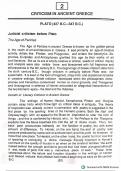
Principles & History of Literary Criticism – Chapter 2 : Plato (427 BC – 347 BC) & ARISTOTLE(384 BC – 322 BC)
Principles & History of Literary Criticism – Chapter 2 : Plato (427 BC – 347 BC) – Judicial Criticism before Plato : The Age of pericles, Growth of Literary Criticism in Ancient Greece, Critical References about the nature and function of Poetry, Critical references in Greek Dramatic Literature, Summing up – The Life of Plato – Plato’s Theory of Ideas : Art as Imitation, Plato’s Theory of ideas based on his theory of knowledge, The painter and the poetimitate reality without understanding it, Plato’s insistence on art for the sake of life, Criticism of Plato’s theory of ideas – Plato’s Indictment of Poetry : Why does Plato attacks poets and artists in “The Republic”, The nature and function of poetry, Poetry deals with the baser aspects of human nature, No strict adherence to poetic justice, poetry is not a safe guide for human beings, The place of the poet is between a prophet and a mad man, Poetry harms human beings and Aristotle’s defence of poetry – Plato’s views on Drama : Plato’s views on poetry are also applicable to drama, Drama produces bad taste and indiscipline in the spectators, Drama demoralizes the actors themselves, Drama appeals to human emotions rather than reasons – Plato’s contribution to Criticism – ARISTOTLE(384 BC – 322 BC) – The Life of Aristotle – A Consideration of “The Poetics” : “The Poetics” a fragmentary work on criticism, “The Poetics” as a reply to Plato’s criticism of Poetry – “The Poetics” its value – The Concept of Imitation or “Mimesis” : Aristotle’s conception of imitation, Pleasure in Imitation – Poetic Truth, History and Philosophy : The role and function of a Poet, Three grounds of distinction between Poetry and History, Poetry, Philosophy and History – Definition of Tragedy – Parts of Tragedy – The story of “Oedipus” : Reversal (“Peripeteia” or “peripety”) and Recognition (“Anagnorisis”) – Reversal (Peripeteia”) – Recognition (“Anagnorisis”) : The Tragic Character, Spectacle, Thought, Melody, Language – The Tragic Hero : Qualifications of a Tragic Hero, Hamartia its meaning and interpretation, Criticism of Aristotle’s doctrine of the tragic hero. - Very helpful for students of Master Degree in English
Document information
- Uploaded on
- December 3, 2024
- Number of pages
- 31
- Written in
- 2024/2025
- Type
- Class notes
- Professor(s)
- Kbzone
- Contains
- Ma - english


