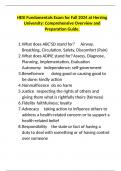
HESI Fundamentals Exam for Fall 2024 at Herzing
University: Comprehensive Overview and
Preparation Guide.
1.What does ABC'SD stand for? Airway,
Breathing, Circulation, Safety, Discomfort (Pain)
2.What does ADPIE stand for?Assess, Diagnose,
Planning, Implementation, Evaluation
Autonomy independence; self-government
3.Beneficence doing good or causing good to
be done; kindly action
4.Nonmalficence do no harm
5.Justice respecting the rights of others and
giving them what is rightfully theirs (fairness)
6.Fidelity faithfulness; loyalty
7.Advocacy taking action to influence others to
address a health-related concern or to support a
health-related belief
8.Responsibility the state or fact of having a
duty to deal with something or of having control
over someone
,9.Accountability willingness to take credit and
blame for actions.
10. Confidentiality the act of holding
information in confidence, not to be released to
unauthorized individuals
11. Advance Directives legal documents that
allow people to choose what medical care they
wish to have if they are unable to make those
decisions themselves
12. Informed Consent giving potential
participants enough information about a study
to enable them to choose whether they wish to
participate
13. Who is required to obtain the informed
consent form? physician, but the nurse is the
last person to ensure that the informed consent
was obtained
14. What is HIPPA? What does it do? Health
Insurance Portability and Accounting Act, which
protects the privacy of individually identifiable
health information.
, 15. Difference between battery and assault.
that assault requires no physical contact; an
assault is complete before the offender touches
the victim, battery is when the offender touches
the victim
16. Difference between negligence and
malpractice. negligence: harm that results
because a person did not act reasonably, implies
that a person acted carelessly
17. malpractice: professional negligence, holds
professionals to a higher standard of
accountability
18. Communication - Listening know when to
stay silent
19. Therapeutic Communication: What not to
do? Do not ask why questions, give personal
opinions, give false reassurance, make
judgements, interrupt.
20. What type of questions should you ask in
therapeutic communication? open-ended, do
NOT ask yes or no questions
University: Comprehensive Overview and
Preparation Guide.
1.What does ABC'SD stand for? Airway,
Breathing, Circulation, Safety, Discomfort (Pain)
2.What does ADPIE stand for?Assess, Diagnose,
Planning, Implementation, Evaluation
Autonomy independence; self-government
3.Beneficence doing good or causing good to
be done; kindly action
4.Nonmalficence do no harm
5.Justice respecting the rights of others and
giving them what is rightfully theirs (fairness)
6.Fidelity faithfulness; loyalty
7.Advocacy taking action to influence others to
address a health-related concern or to support a
health-related belief
8.Responsibility the state or fact of having a
duty to deal with something or of having control
over someone
,9.Accountability willingness to take credit and
blame for actions.
10. Confidentiality the act of holding
information in confidence, not to be released to
unauthorized individuals
11. Advance Directives legal documents that
allow people to choose what medical care they
wish to have if they are unable to make those
decisions themselves
12. Informed Consent giving potential
participants enough information about a study
to enable them to choose whether they wish to
participate
13. Who is required to obtain the informed
consent form? physician, but the nurse is the
last person to ensure that the informed consent
was obtained
14. What is HIPPA? What does it do? Health
Insurance Portability and Accounting Act, which
protects the privacy of individually identifiable
health information.
, 15. Difference between battery and assault.
that assault requires no physical contact; an
assault is complete before the offender touches
the victim, battery is when the offender touches
the victim
16. Difference between negligence and
malpractice. negligence: harm that results
because a person did not act reasonably, implies
that a person acted carelessly
17. malpractice: professional negligence, holds
professionals to a higher standard of
accountability
18. Communication - Listening know when to
stay silent
19. Therapeutic Communication: What not to
do? Do not ask why questions, give personal
opinions, give false reassurance, make
judgements, interrupt.
20. What type of questions should you ask in
therapeutic communication? open-ended, do
NOT ask yes or no questions