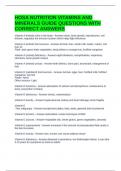
HOSA NUTRITION VITAMINS AND
MINERALS GUIDE QUESTIONS WITH
CORRECT ANSWERS
Vitamin A (retinol) roles in the body - Answer-vision, bone growth, reproduction, cell
division, regulates the immune system which helps fight infections
Vitamin A (retinol) food sources - Answer-Animal- liver, whole milk, butter, cream, cod
liver oil
Plant- dark green leafy vegetables, deep yellow or orange fruit, fortified margarine
Vitamin A (retinol) deficiency - Answer-night blindness, xerophthalmia, respiratory
infections, bone growth ceases
Vitamin A (retinol) toxicity - Answer-birth defects, bone pain, anorexiant, enlargement of
liver
Vitamin D (calciferol) food sources - Answer-Animal- eggs, liver, fortified milk, fortified
margarine, oily fish
Plants- None
Other sources- Light
Vitamin D functions - Answer-absorption of calcium and phosphorus, maintenance of
bone, prevention of tetany
Vitamin D deficiency - Answer-rickets, osteomalacia
Vitamin D toxicity - Answer-hypercalcemia, kidney and heart damage, bone fragility
Vitamin E
-Two subgroups - Answer-tocopherols (alpha, beta, delta, gamma) and tocotrienols
Vitamin E function - Answer-antioxidant, resists hemolysis of RBC
Vitamin E sources - Answer-Vegetable oils, whole grains, green vegetables, almonds
Vitamin E requirements - Answer-increases if the amount of polusaturated fatty acids in
the diet increases
Vitamin E toxicity - Answer-rare, excess can cause adipose tissue
Vitamin E deficiency - Answer-detected in premature, low birthweight infants. It can take
5-10 years for symptoms to show in adults
MINERALS GUIDE QUESTIONS WITH
CORRECT ANSWERS
Vitamin A (retinol) roles in the body - Answer-vision, bone growth, reproduction, cell
division, regulates the immune system which helps fight infections
Vitamin A (retinol) food sources - Answer-Animal- liver, whole milk, butter, cream, cod
liver oil
Plant- dark green leafy vegetables, deep yellow or orange fruit, fortified margarine
Vitamin A (retinol) deficiency - Answer-night blindness, xerophthalmia, respiratory
infections, bone growth ceases
Vitamin A (retinol) toxicity - Answer-birth defects, bone pain, anorexiant, enlargement of
liver
Vitamin D (calciferol) food sources - Answer-Animal- eggs, liver, fortified milk, fortified
margarine, oily fish
Plants- None
Other sources- Light
Vitamin D functions - Answer-absorption of calcium and phosphorus, maintenance of
bone, prevention of tetany
Vitamin D deficiency - Answer-rickets, osteomalacia
Vitamin D toxicity - Answer-hypercalcemia, kidney and heart damage, bone fragility
Vitamin E
-Two subgroups - Answer-tocopherols (alpha, beta, delta, gamma) and tocotrienols
Vitamin E function - Answer-antioxidant, resists hemolysis of RBC
Vitamin E sources - Answer-Vegetable oils, whole grains, green vegetables, almonds
Vitamin E requirements - Answer-increases if the amount of polusaturated fatty acids in
the diet increases
Vitamin E toxicity - Answer-rare, excess can cause adipose tissue
Vitamin E deficiency - Answer-detected in premature, low birthweight infants. It can take
5-10 years for symptoms to show in adults