

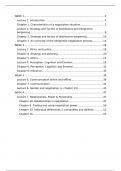
WEEK 1........................................................................................................2
Lecture 1. Introduction.............................................................................2
Chapter 1. Characteristics of a negotiation situation...............................2
Lecture 2. Strategy and Tactics of Distributive and Integrative
bargaining................................................................................................6
Chapter 2. Strategy and tactics of distributive bargaining.....................10
Chapter 3. An overview of the integrative negotiation process..............14
WEEK 2......................................................................................................18
Lecture 3. Ethics and justice...................................................................18
Chapter 4. Strategy and planning...........................................................20
Chapter 5. Ethics....................................................................................23
Lecture 4. Perception, Cognition and Emotion.......................................28
Chapter 6. Perception, Cognition and Emotion.......................................35
Chapter 9. Influence...............................................................................35
WEEK 3......................................................................................................36
Lecture 5. Communication online and offline.........................................36
Chapter 7. Communication.....................................................................41
Lecture 6. Gender and negotiation (+ chapter 14).................................43
WEEK 4......................................................................................................47
Lecture 7. Relationships, Power & Personality........................................47
Chapter 10. Relationships in negotiation.............................................47
Chapter 8. Finding and using negotiation power.................................50
Chapter 15. Individual differences 2: personality and abilities............53
Chapter 16...........................................................................................55
,WEEK 1.
Lecture 1. Introduction
Negotiations:
- Why?
- When?
- What? Characteristics:
o Conflict of needs and desires
o Parties assume to get a better deal
o Parties expect a ‘give and take’ process
Succesful negotiation involves:
- Management of tangibles (concrete matters), ánd;
- Intangibles (emotions)
Chapter 1. Characteristics of a negotiation situation
Negotiation: a process by which two or more parties attempt to resolve their opposing interests. It is
one of several mechanisms by which people can resolve conflicts. Negotiation situations have
fundamentally the same characteristics; whether they are peace negotiations between countries at
war, business negotiations, etc. Characteristics:
- A process between two or more parties (individuals, groups, organizations, etc).
- There is a conflict of needs and desires between two or more parties: what one wants is not
necessarily what the other one wants, and the parties must search for a way to resolve the
conflict.
- The parties negotiate by choice: they negotiate because they think they can get a better deal
by negotiating than by simply accepting what the other side will voluntarily give them or let
them have. It is largely a voluntary process.
- When we negotiate, we expect a ‘give-and-take' process: we expect that both sides will
modify or move away from their opening statements, requests, or demands. This movement
toward the middle of their positions, is called a compromise.
- Successful negotiation involved the management of tangibles (e.g., the price or the terms of
agreement) and the resolution of intangibles. Intangible factors are the underlying
psychological motivations that may directly/indirectly influence the parties during a
negotiation. They are often rooted in personal values and emotions and can have an
enormous influence on negotiation processes and outcomes. It is almost impossible to
ignore intangibles because they affect our judgment about what is fair, right, or appropriate.
examples of intangibles:
o The need to win
, o The need to look good or competent to the people you represent
o The need to defend an important principle
o The need to appear fair to protect one's reputation
o The need to maintain a good relationship with the other party, primary by
maintaining trust and reducing uncertainty.
Conflict: a shared disagreement or opposition, as of interests, ideas, etc. It includes the perceived
divergence of interest, or a belief that the parties current aspirations cannot be achieved
simultaneously. They result form the interaction of interdependent people who perceived
incompatible goals and interference form each other in achieving those goals.
Functions of conflict:
- Competitive, win-lose goals: parties compete agianst each other because they believe that
their interdependence is such that goals are in opposition and both cannot simultaneously
achieve their objectives.
- Misperception and bias: as conflict intensifies, perceptions become distorted. People tend to
interpret events as being either with them or against them which leads to become
stereotypical and biased.
- Emotionality: conflicts tend to become emotionally charged as the parties become anxious,
irritated, annoyed, angry, or frustrated. Emotions overwhelm clear thinking, and parties may
become increasingly irrational as the conflict escalates.
- Decreased communication: productive communication declines with conflict. Parties
communicate less with those who disagree with them and more with those who agree.
- Blurred issues: the central issues in the dispute become blurred and less well defined. The
conflict leads to unrelated issues and innocent bystanders.
Conflict diagnostic model: factors that make conflict easy or difficult to manage. Conflicts with more
of the characteristics in the difficult to resolve column will be harder to settle, and vice versa.
, Effective conflict management.
Dual concerns model: people in conflict have two independent types of concern: concern about
their own outcomes (horizontal dimension; assertiveness dimension) and concern about the other's
outcomes (vertical dimension; cooperativeness dimension). The stronger their concern for their own
outcomes, the more likely people will be to pursue strategies located on the right side of the figure,
and visa versa.
- Contending (competing/dominating): actors pursue their own outcomes strongly and show
little concern for whether the other party obtains their desired outcomes. Threats,
punishment, intimidation, etc.
Lecture 1. Introduction.............................................................................2
Chapter 1. Characteristics of a negotiation situation...............................2
Lecture 2. Strategy and Tactics of Distributive and Integrative
bargaining................................................................................................6
Chapter 2. Strategy and tactics of distributive bargaining.....................10
Chapter 3. An overview of the integrative negotiation process..............14
WEEK 2......................................................................................................18
Lecture 3. Ethics and justice...................................................................18
Chapter 4. Strategy and planning...........................................................20
Chapter 5. Ethics....................................................................................23
Lecture 4. Perception, Cognition and Emotion.......................................28
Chapter 6. Perception, Cognition and Emotion.......................................35
Chapter 9. Influence...............................................................................35
WEEK 3......................................................................................................36
Lecture 5. Communication online and offline.........................................36
Chapter 7. Communication.....................................................................41
Lecture 6. Gender and negotiation (+ chapter 14).................................43
WEEK 4......................................................................................................47
Lecture 7. Relationships, Power & Personality........................................47
Chapter 10. Relationships in negotiation.............................................47
Chapter 8. Finding and using negotiation power.................................50
Chapter 15. Individual differences 2: personality and abilities............53
Chapter 16...........................................................................................55
,WEEK 1.
Lecture 1. Introduction
Negotiations:
- Why?
- When?
- What? Characteristics:
o Conflict of needs and desires
o Parties assume to get a better deal
o Parties expect a ‘give and take’ process
Succesful negotiation involves:
- Management of tangibles (concrete matters), ánd;
- Intangibles (emotions)
Chapter 1. Characteristics of a negotiation situation
Negotiation: a process by which two or more parties attempt to resolve their opposing interests. It is
one of several mechanisms by which people can resolve conflicts. Negotiation situations have
fundamentally the same characteristics; whether they are peace negotiations between countries at
war, business negotiations, etc. Characteristics:
- A process between two or more parties (individuals, groups, organizations, etc).
- There is a conflict of needs and desires between two or more parties: what one wants is not
necessarily what the other one wants, and the parties must search for a way to resolve the
conflict.
- The parties negotiate by choice: they negotiate because they think they can get a better deal
by negotiating than by simply accepting what the other side will voluntarily give them or let
them have. It is largely a voluntary process.
- When we negotiate, we expect a ‘give-and-take' process: we expect that both sides will
modify or move away from their opening statements, requests, or demands. This movement
toward the middle of their positions, is called a compromise.
- Successful negotiation involved the management of tangibles (e.g., the price or the terms of
agreement) and the resolution of intangibles. Intangible factors are the underlying
psychological motivations that may directly/indirectly influence the parties during a
negotiation. They are often rooted in personal values and emotions and can have an
enormous influence on negotiation processes and outcomes. It is almost impossible to
ignore intangibles because they affect our judgment about what is fair, right, or appropriate.
examples of intangibles:
o The need to win
, o The need to look good or competent to the people you represent
o The need to defend an important principle
o The need to appear fair to protect one's reputation
o The need to maintain a good relationship with the other party, primary by
maintaining trust and reducing uncertainty.
Conflict: a shared disagreement or opposition, as of interests, ideas, etc. It includes the perceived
divergence of interest, or a belief that the parties current aspirations cannot be achieved
simultaneously. They result form the interaction of interdependent people who perceived
incompatible goals and interference form each other in achieving those goals.
Functions of conflict:
- Competitive, win-lose goals: parties compete agianst each other because they believe that
their interdependence is such that goals are in opposition and both cannot simultaneously
achieve their objectives.
- Misperception and bias: as conflict intensifies, perceptions become distorted. People tend to
interpret events as being either with them or against them which leads to become
stereotypical and biased.
- Emotionality: conflicts tend to become emotionally charged as the parties become anxious,
irritated, annoyed, angry, or frustrated. Emotions overwhelm clear thinking, and parties may
become increasingly irrational as the conflict escalates.
- Decreased communication: productive communication declines with conflict. Parties
communicate less with those who disagree with them and more with those who agree.
- Blurred issues: the central issues in the dispute become blurred and less well defined. The
conflict leads to unrelated issues and innocent bystanders.
Conflict diagnostic model: factors that make conflict easy or difficult to manage. Conflicts with more
of the characteristics in the difficult to resolve column will be harder to settle, and vice versa.
, Effective conflict management.
Dual concerns model: people in conflict have two independent types of concern: concern about
their own outcomes (horizontal dimension; assertiveness dimension) and concern about the other's
outcomes (vertical dimension; cooperativeness dimension). The stronger their concern for their own
outcomes, the more likely people will be to pursue strategies located on the right side of the figure,
and visa versa.
- Contending (competing/dominating): actors pursue their own outcomes strongly and show
little concern for whether the other party obtains their desired outcomes. Threats,
punishment, intimidation, etc.


