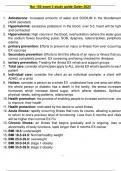
Nur 155 exam 2 study guide Galen 2024
1. Aldosterone: increased amounts of water and SODIUM in the bloodstream
(ADH secreted)
2. Hyperkalemia: excessive potassium in the blood. over 5.0, heart will be tight
and contracted
3. Hypervolemia: High volume in the blood, overhydration (where the water goes
the sodium flows) bounding pulse, SOB, dyspnea, rales/crackles, peripheral
edema.
4. primary prevention: Efforts to prevent an injury or illness from ever occurring.
EX vaccines
5. Secondary prevention: Efforts to limit the effects of an injury or illness that you
cannot completely prevent. EX screening and being checked for illnesses
6. tertiary prevention: Treating the illness EX rehab and support groups
7. Total care: consider all principles apply to ALL clients EX what's specific to each
patient
8. Individual care: consider the client as an individual example: a client with
ADHD, or a child.
9. Holism: consider a person as a whole EX -understand how one area can affect
the whole person or diabetic has a death in the family, the stress increases
hormones which increase blood sugar, which affects diabetes. Spiritual,
physical needs, eating patterns, relationships
10. Health promotion: the process of enabling people to increase control over, and
to improve, their health
11. Health protection: motivated by the desire to avoid illness
12. Acute illness: rapidly occurring illness that runs its course, allowing a person
to return to one's previous level of functioning. Less then 6 months and vitals
will be higher then normal EX Flu
13. Chronic illness: an illness that begins gradually and is ongoing. loss or
abnormality of body functions. lasts longer then 6 months EX cancer
14. BMI 18.5: underweight
15. BMI 18.5-24.9: Normal/healthy weight
16. BMI 25.0-29.9: overweight
17. BMI 30.0-34.9: stage 1 obesity
18. BMI 35.0-39.9: stage 2 obesity
1/8
, Nur 155 exam 2 study guide Galen 2024
19. BMI 40.0+: Morbid obese
20. polyuria: excessive urination
21. disuresis: abnormal increase in production of urine can be caused by
medications
22. oliguria: scanty urination
23. nocturia: excessive urination at night. more then 2x a night
24. retention of bladder: bladder is not emptying due to impairment
25. Normal urine output: 30 mL/hr
26. Normal pH oF urine: 4.5-8.0
27. Steatorreha: fat in the feces
28. fecal impaction: Collection in the rectum of hardened feces that cannot be
passed but can still expel loose stool
29. flatulence: gas in the stomach or intestines. Farting.
30. Most at risk for colon cancer: African Americans (in US) and Europeans ( in
worlds ethnic population) pg 1030
31. What foods increase phosphate: Beans, dairy, lentils
32. signs and symptoms of hypervolemia: BOUNDING, increased pulse rate,
SOB, weight gain, high BP, Kidney disfunction, crackles and dyspnea.
33. adduction and abduction: movement of the joint toward the midline of the
body. and Move arm laterally from side to above head
34. recommended food for a pt with Chvosteks and Trousseau: almonds and
yogurt
35. Glucose lab values: 70-110 ( sugar makes you wide so 70-110 is a wide range)
36. Sodium lab value: 135-145. maggie slept for 135-145 mins after swimming
at the beach
37. potassium lab values: 3.5-5.0. maggie ate 3.5-5.0 bannanas
38. Creatine lab values: men- 0.6-1.2
Women- 0.5-1.1
Men are double, women are single
39. Albumin lab values: 3.5-5.0 (same as potassium) 40. BUN lab values: 10 - 20
a good burger will cost 10-20 dollars
41. Iron: Green leafy vegetable and animal meat
42. Calcium: milk, tofu, soy products, green leafy veggies
2/8
1. Aldosterone: increased amounts of water and SODIUM in the bloodstream
(ADH secreted)
2. Hyperkalemia: excessive potassium in the blood. over 5.0, heart will be tight
and contracted
3. Hypervolemia: High volume in the blood, overhydration (where the water goes
the sodium flows) bounding pulse, SOB, dyspnea, rales/crackles, peripheral
edema.
4. primary prevention: Efforts to prevent an injury or illness from ever occurring.
EX vaccines
5. Secondary prevention: Efforts to limit the effects of an injury or illness that you
cannot completely prevent. EX screening and being checked for illnesses
6. tertiary prevention: Treating the illness EX rehab and support groups
7. Total care: consider all principles apply to ALL clients EX what's specific to each
patient
8. Individual care: consider the client as an individual example: a client with
ADHD, or a child.
9. Holism: consider a person as a whole EX -understand how one area can affect
the whole person or diabetic has a death in the family, the stress increases
hormones which increase blood sugar, which affects diabetes. Spiritual,
physical needs, eating patterns, relationships
10. Health promotion: the process of enabling people to increase control over, and
to improve, their health
11. Health protection: motivated by the desire to avoid illness
12. Acute illness: rapidly occurring illness that runs its course, allowing a person
to return to one's previous level of functioning. Less then 6 months and vitals
will be higher then normal EX Flu
13. Chronic illness: an illness that begins gradually and is ongoing. loss or
abnormality of body functions. lasts longer then 6 months EX cancer
14. BMI 18.5: underweight
15. BMI 18.5-24.9: Normal/healthy weight
16. BMI 25.0-29.9: overweight
17. BMI 30.0-34.9: stage 1 obesity
18. BMI 35.0-39.9: stage 2 obesity
1/8
, Nur 155 exam 2 study guide Galen 2024
19. BMI 40.0+: Morbid obese
20. polyuria: excessive urination
21. disuresis: abnormal increase in production of urine can be caused by
medications
22. oliguria: scanty urination
23. nocturia: excessive urination at night. more then 2x a night
24. retention of bladder: bladder is not emptying due to impairment
25. Normal urine output: 30 mL/hr
26. Normal pH oF urine: 4.5-8.0
27. Steatorreha: fat in the feces
28. fecal impaction: Collection in the rectum of hardened feces that cannot be
passed but can still expel loose stool
29. flatulence: gas in the stomach or intestines. Farting.
30. Most at risk for colon cancer: African Americans (in US) and Europeans ( in
worlds ethnic population) pg 1030
31. What foods increase phosphate: Beans, dairy, lentils
32. signs and symptoms of hypervolemia: BOUNDING, increased pulse rate,
SOB, weight gain, high BP, Kidney disfunction, crackles and dyspnea.
33. adduction and abduction: movement of the joint toward the midline of the
body. and Move arm laterally from side to above head
34. recommended food for a pt with Chvosteks and Trousseau: almonds and
yogurt
35. Glucose lab values: 70-110 ( sugar makes you wide so 70-110 is a wide range)
36. Sodium lab value: 135-145. maggie slept for 135-145 mins after swimming
at the beach
37. potassium lab values: 3.5-5.0. maggie ate 3.5-5.0 bannanas
38. Creatine lab values: men- 0.6-1.2
Women- 0.5-1.1
Men are double, women are single
39. Albumin lab values: 3.5-5.0 (same as potassium) 40. BUN lab values: 10 - 20
a good burger will cost 10-20 dollars
41. Iron: Green leafy vegetable and animal meat
42. Calcium: milk, tofu, soy products, green leafy veggies
2/8