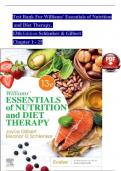
Test Bank For Williams' Essentials of Nutrition
and Diet Therapy,
13th Edition Schlenker & Gilbert
Chapter 1 - 25
,TABLE OF CONTENT FI FI
PART 1: INTRODUCTION TO HUMAN NUTRITION
FI FI FI FI FI
1. Nutrition and Health FI FI
2. Digestion, Absorption, and Metabolism
FI FI FI
3. Carbohydrates
4. Lipids
5. Proteins
6. Vitamins
7. Minerals and Water FI FI
8. Energy BalanceFI
PART 2: COMMUNITY NUTRITION AND THE LIFE CYCLE
FI F I FI FI FI FI FI
9. Food Selection and Food Safety
FI FI FI FI
10. CommunityNutrition: Promoting Healthy Eating
FI FI FI FI
11. Nutrition During Pregnancy and Lactation
FI FI FI FI
12. Nutrition for Normal Growth and Development
FI FI FI FI FI
13. Nutrition for Adults: Early, Middle, and Later Years
FI FI FI FI FI FI FI
,14. Nutrition and Physical Fitness
FI FI FI
15. The Complexityo f Obesity: Beyond Energy Balance
FI FI FI FI FI FI
PART 3: INTRODUCTION TO CLINICAL NUTRITION
FI FI FI FI FI
16. Nutrition Assessment and Nutrition Therapy in Patient Care
FI FI FI FI FI FI FI
17. Metabolic Stress FI
18. Drug-Nutrient Interactions FI
19. Nutrition Support: Enteral and Parenteral Nutrition
FI FI FI FI FI
20. Gastrointestinal Diseases FI
21. Diseases of the Heart, Blood Vessels, and Lungs
FI FI FI FI FI FI FI
22. Diabetes MellitusFI
23. Renal Disease
FI
24. Acquired Immunodeficiency Syndrome (AIDS)
FI FI FI
25. Cancer
, Chapter 01: Nutrition and Health
FI FI FI FI
Schlenker & Gilbert: Williams’ Essentials of Nutrition and Diet Therapy, 13th Edition
FI FI FI FI FI FI FI FI FI FI FI
MULTIPLE CHOICE FI
1. The major focus of nutritional recommendations in this century has shifted to:
FI FI FI FI FI FI FI FI FI FI FI
a. prevention and control of chronic diseases. FI FI FI FI FI
b. improved sanitation and public health. FI FI FI FI
c. prevention and control of infectious diseases. FI FI FI FI FI
d. development of healthful foods using food technology. FI FI FI FI FI FI
ANSWER: A DIF: Easy F I REF: p. 2 FI FI
MSC: Type of Question: Knowledge
F I FI FI FI
2. A physical science that contributes to understanding how nutrition relates to health and well-
FI FI FI FI FI FI FI FI FI FI FI FI FI
being is:
FI FI
a. anatomy.
b. biochemistry.
c. physics.
d. pharmacology.
ANSWER: B DIF: Easy F I REF: p. 6 FI FI
MSC: Type of Question: Knowledge
F I FI FI FI
3. The body of scientific knowledge related to nutritional requirements of human growth,
FI FI FI FI FI FI FI FI FI FI FI FI
maintenance, activity, and reproduction is known as: FI FI FI FI FI FI
a.physiology.
b.nutrition science. FI
c.biochemistry.
d.dietetics.
ANSWER: B DIF: Easy F I REF: p. 7 FI FI
MSC: Type of Question: Knowledge
F I FI FI FI
4. The professional primarily responsible for application of nutrition science in clinical practice s
FI FI FI FI FI FI FI FI FI FI FI FI
ettings is the: FI FI
a. nurse.
b. physician.
c. public health nutritionist. FI FI
d. registered dietitian. FI
ANSWER: D DIF: Easy F I REF: p. 7 FI FI
MSC: Type of Question: Knowledge
F I FI FI FI
5. The primary responsibility for nutrition care of people in the community belongs to the:
FI FI FI FI FI FI FI FI FI FI FI FI FI
a. community physician. FI
b. public health nurse. FI FI
c. public health nutritionist. FI FI
d. registered dietitian. FI
ANSWER: C F I DIF: Easy REF: p. 7 FI FI
and Diet Therapy,
13th Edition Schlenker & Gilbert
Chapter 1 - 25
,TABLE OF CONTENT FI FI
PART 1: INTRODUCTION TO HUMAN NUTRITION
FI FI FI FI FI
1. Nutrition and Health FI FI
2. Digestion, Absorption, and Metabolism
FI FI FI
3. Carbohydrates
4. Lipids
5. Proteins
6. Vitamins
7. Minerals and Water FI FI
8. Energy BalanceFI
PART 2: COMMUNITY NUTRITION AND THE LIFE CYCLE
FI F I FI FI FI FI FI
9. Food Selection and Food Safety
FI FI FI FI
10. CommunityNutrition: Promoting Healthy Eating
FI FI FI FI
11. Nutrition During Pregnancy and Lactation
FI FI FI FI
12. Nutrition for Normal Growth and Development
FI FI FI FI FI
13. Nutrition for Adults: Early, Middle, and Later Years
FI FI FI FI FI FI FI
,14. Nutrition and Physical Fitness
FI FI FI
15. The Complexityo f Obesity: Beyond Energy Balance
FI FI FI FI FI FI
PART 3: INTRODUCTION TO CLINICAL NUTRITION
FI FI FI FI FI
16. Nutrition Assessment and Nutrition Therapy in Patient Care
FI FI FI FI FI FI FI
17. Metabolic Stress FI
18. Drug-Nutrient Interactions FI
19. Nutrition Support: Enteral and Parenteral Nutrition
FI FI FI FI FI
20. Gastrointestinal Diseases FI
21. Diseases of the Heart, Blood Vessels, and Lungs
FI FI FI FI FI FI FI
22. Diabetes MellitusFI
23. Renal Disease
FI
24. Acquired Immunodeficiency Syndrome (AIDS)
FI FI FI
25. Cancer
, Chapter 01: Nutrition and Health
FI FI FI FI
Schlenker & Gilbert: Williams’ Essentials of Nutrition and Diet Therapy, 13th Edition
FI FI FI FI FI FI FI FI FI FI FI
MULTIPLE CHOICE FI
1. The major focus of nutritional recommendations in this century has shifted to:
FI FI FI FI FI FI FI FI FI FI FI
a. prevention and control of chronic diseases. FI FI FI FI FI
b. improved sanitation and public health. FI FI FI FI
c. prevention and control of infectious diseases. FI FI FI FI FI
d. development of healthful foods using food technology. FI FI FI FI FI FI
ANSWER: A DIF: Easy F I REF: p. 2 FI FI
MSC: Type of Question: Knowledge
F I FI FI FI
2. A physical science that contributes to understanding how nutrition relates to health and well-
FI FI FI FI FI FI FI FI FI FI FI FI FI
being is:
FI FI
a. anatomy.
b. biochemistry.
c. physics.
d. pharmacology.
ANSWER: B DIF: Easy F I REF: p. 6 FI FI
MSC: Type of Question: Knowledge
F I FI FI FI
3. The body of scientific knowledge related to nutritional requirements of human growth,
FI FI FI FI FI FI FI FI FI FI FI FI
maintenance, activity, and reproduction is known as: FI FI FI FI FI FI
a.physiology.
b.nutrition science. FI
c.biochemistry.
d.dietetics.
ANSWER: B DIF: Easy F I REF: p. 7 FI FI
MSC: Type of Question: Knowledge
F I FI FI FI
4. The professional primarily responsible for application of nutrition science in clinical practice s
FI FI FI FI FI FI FI FI FI FI FI FI
ettings is the: FI FI
a. nurse.
b. physician.
c. public health nutritionist. FI FI
d. registered dietitian. FI
ANSWER: D DIF: Easy F I REF: p. 7 FI FI
MSC: Type of Question: Knowledge
F I FI FI FI
5. The primary responsibility for nutrition care of people in the community belongs to the:
FI FI FI FI FI FI FI FI FI FI FI FI FI
a. community physician. FI
b. public health nurse. FI FI
c. public health nutritionist. FI FI
d. registered dietitian. FI
ANSWER: C F I DIF: Easy REF: p. 7 FI FI