#Examify | #OnlineExams | #TestPrep | #StudyResources | #AcademicSuccess |
#ExamPreparation | #QuizTime | #LearningTools | #Education | #StudentSupport
NSB236 Questions and Correct
Answers the Latest Update
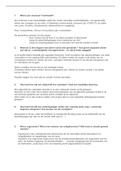
Situation
Mr. Johnson Butterworth is a 72-year-old man who was initially admitted 3 days
ago for the conservative managed of a small bowel obstruction, which has now
required surgical intervention. Mr Butterworth is being admitted to your ward
post-operatively and has undergone a left hemicolectomy with approximately
15cm of necrotic small bowel resected and a double-barreled ileostomy brought
out, a peritoneal washout performed, times two Redivacs in situ to drain the
pericolic gutter (Right side 100mls, Left side 80mls of haemoserous fluid) and
mid-line abdominal closure performed. Intra-operatively, Mr. Butternut
received 4 units of blood and an additional 2 litres of Hartman's solution. A quad
(4) lumen central venous line, a Salem sump nasogastric tube (NGT) and an
indwelling urinary catheter (IDC) were inserted. On admission at 16:15 hours he
has Hartman's solution running at 125mls/hour, and an urinary output
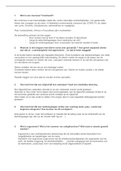
✓ Key points:
✓ Decreased urinary out indicator of decreased organ perfusion as evidenced by
decreased blood pressure.
✓ Hypotension - related to the inflammatory process associated with sepsis and
vasodilatory effects of the inflammatory mediators.
✓ Tachycardia - compensatory response to decreased blood pressure and the bodies
attempt to improve cardiac output (stroke volume x heart rate) secondary to the
decreased blood pressure and organ perfusion.
✓ Tachypnea - an incresed respiratory effort to improve oxygenation secondary to
Examify | Smart Grades | Latest update
,#Examify | #OnlineExams | #TestPrep | #StudyResources | #AcademicSuccess |
#ExamPreparation | #QuizTime | #LearningTools | #Education | #StudentSupport
compromise organ perfusion and decreased Oxygenation (supplemented via Hudson
mask)
Mr. Johnson Butterworth is a 72-year-old man who was initially admitted 3 days
ago for the conservative managed of a small bowel obstruction, which has now
required surgical intervention. Mr Butterworth is being admitted to your ward
post-operatively and has undergone a left hemicolectomy with approximately
15cm of necrotic small bowel resected and a double-barreled ileostomy brought
out, a peritoneal washout performed, times two Redivacs in situ to drain the
pericolic gutter (Right side 100mls, Left side 80mls of haemoserous fluid) and
mid-line abdominal closure performed. Intra-operatively, Mr. Butternut
received 4 units of blood and an additional 2 litres of Hartman's solution. A quad
(4) lumen central venous line, a Salem sump nasogastric tube (NGT) and an
indwelling urinary catheter (IDC) were inserted. On admission at 16:15 hours he
has Hartman's solution running at 125mls/hour, and an urinary output of 70-
90ml
✓ Elevated white cell count: indication of increased white cell activity in response to a
systemic infection, in order to fight the invading bacteria.
✓ Increased creatinine - indication of decreased renal function secondary to decreased
blood pressure and renal perfusion, that has occurred secondary to the vasodilatory
effects of sepsis and evidenced by decreased urinary output.
✓ Increased Alanine Aminotransferase (ALT) - liver enzyme: increased levels secondary
to decreased organ perfusion as a result of hypotension and decreased end-organ
perfusion, as a result of the vasodilatory effects of sepsis. In low blood pressure
states, blood is shunted to support critical organs such as the heart, respiratory
system and brain.
Examify | Smart Grades | Latest update
, #Examify | #OnlineExams | #TestPrep | #StudyResources | #AcademicSuccess |
#ExamPreparation | #QuizTime | #LearningTools | #Education | #StudentSupport
Mr Williams is day 2 postoperatively (appendectomy) on assessment this
morning, he is reporting abdominal discomfort with a pain score of 5/10, is has
hypoactive bowel sounds, you note his urinary output has decreased from an
acceptable 40mls/hr to 20ml/hr. You perform a set of vital signs which reveal the
following:
HR 122 beats/min, BP 95/65mmHg, RR 28 breaths/min, Temp: 38.8, SpO2 95%
on 4L/min
Based on the above assessment findings outline the compensatory processes
that have been initiated.
✓ Heart rate has increased as a compensatory process to improve cardiac output and
in turn blood pressures (CO = HRX SV)
✓ Increase respiratory rate to compensate for decreased oxygenation as a result of
decreasing blood pressure and oxygenation
✓ Decreased blood pressure and perfusion to the kidney results in decreased urinary
out which would trigger the renin-angiotensin aldosterone system resulting in fluid
retention as a means to try and improve circulating volume and blood pressure.
Which two underlying shock-related factors cause the majority of clinical
manifestations associated with shock?
✓ Activation of compensatory mechanisms
✓
✓ Inadequate oxygen delivery
Examify | Smart Grades | Latest update
#ExamPreparation | #QuizTime | #LearningTools | #Education | #StudentSupport
NSB236 Questions and Correct
Answers the Latest Update
Situation
Mr. Johnson Butterworth is a 72-year-old man who was initially admitted 3 days
ago for the conservative managed of a small bowel obstruction, which has now
required surgical intervention. Mr Butterworth is being admitted to your ward
post-operatively and has undergone a left hemicolectomy with approximately
15cm of necrotic small bowel resected and a double-barreled ileostomy brought
out, a peritoneal washout performed, times two Redivacs in situ to drain the
pericolic gutter (Right side 100mls, Left side 80mls of haemoserous fluid) and
mid-line abdominal closure performed. Intra-operatively, Mr. Butternut
received 4 units of blood and an additional 2 litres of Hartman's solution. A quad
(4) lumen central venous line, a Salem sump nasogastric tube (NGT) and an
indwelling urinary catheter (IDC) were inserted. On admission at 16:15 hours he
has Hartman's solution running at 125mls/hour, and an urinary output
✓ Key points:
✓ Decreased urinary out indicator of decreased organ perfusion as evidenced by
decreased blood pressure.
✓ Hypotension - related to the inflammatory process associated with sepsis and
vasodilatory effects of the inflammatory mediators.
✓ Tachycardia - compensatory response to decreased blood pressure and the bodies
attempt to improve cardiac output (stroke volume x heart rate) secondary to the
decreased blood pressure and organ perfusion.
✓ Tachypnea - an incresed respiratory effort to improve oxygenation secondary to
Examify | Smart Grades | Latest update
,#Examify | #OnlineExams | #TestPrep | #StudyResources | #AcademicSuccess |
#ExamPreparation | #QuizTime | #LearningTools | #Education | #StudentSupport
compromise organ perfusion and decreased Oxygenation (supplemented via Hudson
mask)
Mr. Johnson Butterworth is a 72-year-old man who was initially admitted 3 days
ago for the conservative managed of a small bowel obstruction, which has now
required surgical intervention. Mr Butterworth is being admitted to your ward
post-operatively and has undergone a left hemicolectomy with approximately
15cm of necrotic small bowel resected and a double-barreled ileostomy brought
out, a peritoneal washout performed, times two Redivacs in situ to drain the
pericolic gutter (Right side 100mls, Left side 80mls of haemoserous fluid) and
mid-line abdominal closure performed. Intra-operatively, Mr. Butternut
received 4 units of blood and an additional 2 litres of Hartman's solution. A quad
(4) lumen central venous line, a Salem sump nasogastric tube (NGT) and an
indwelling urinary catheter (IDC) were inserted. On admission at 16:15 hours he
has Hartman's solution running at 125mls/hour, and an urinary output of 70-
90ml
✓ Elevated white cell count: indication of increased white cell activity in response to a
systemic infection, in order to fight the invading bacteria.
✓ Increased creatinine - indication of decreased renal function secondary to decreased
blood pressure and renal perfusion, that has occurred secondary to the vasodilatory
effects of sepsis and evidenced by decreased urinary output.
✓ Increased Alanine Aminotransferase (ALT) - liver enzyme: increased levels secondary
to decreased organ perfusion as a result of hypotension and decreased end-organ
perfusion, as a result of the vasodilatory effects of sepsis. In low blood pressure
states, blood is shunted to support critical organs such as the heart, respiratory
system and brain.
Examify | Smart Grades | Latest update
, #Examify | #OnlineExams | #TestPrep | #StudyResources | #AcademicSuccess |
#ExamPreparation | #QuizTime | #LearningTools | #Education | #StudentSupport
Mr Williams is day 2 postoperatively (appendectomy) on assessment this
morning, he is reporting abdominal discomfort with a pain score of 5/10, is has
hypoactive bowel sounds, you note his urinary output has decreased from an
acceptable 40mls/hr to 20ml/hr. You perform a set of vital signs which reveal the
following:
HR 122 beats/min, BP 95/65mmHg, RR 28 breaths/min, Temp: 38.8, SpO2 95%
on 4L/min
Based on the above assessment findings outline the compensatory processes
that have been initiated.
✓ Heart rate has increased as a compensatory process to improve cardiac output and
in turn blood pressures (CO = HRX SV)
✓ Increase respiratory rate to compensate for decreased oxygenation as a result of
decreasing blood pressure and oxygenation
✓ Decreased blood pressure and perfusion to the kidney results in decreased urinary
out which would trigger the renin-angiotensin aldosterone system resulting in fluid
retention as a means to try and improve circulating volume and blood pressure.
Which two underlying shock-related factors cause the majority of clinical
manifestations associated with shock?
✓ Activation of compensatory mechanisms
✓
✓ Inadequate oxygen delivery
Examify | Smart Grades | Latest update