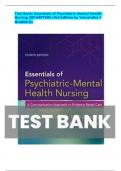
Test Bank: Essentials of Psychiatric Mental Health
Nursing 28CHAPTERS (4rd Edition by Varcarolis) 1
Graded A+
,Test Bank: BNEssentials BNof BNPsychiatric BNMental BNHealth BNNursing BN(4rd BNEdition BNby
R
BNVarcarolis) BN2
Chapter BN01: BNPracticing BNthe BNScience BNand BNthe BNArt BNof BNPsychiatric BNNursing
BN MULTIPLECHOICE
1. Which BNoutcome, BNfocused BNon BNrecovery, BNwould BNbe BNexpected BNin BNthe BNplan
BNof BNcare BNfor BNa BNpatient BNliving BNin BNthe BNcommunity BNand BNdiagnosed BNwith
BNserious BNand BNpersistent BNmental BNillness? BNWithin BN3months, BNthe BNpatient BNwill:
BNa. BNdeny BNsuicidal BNideation.
b. report BNa BNsense BNof BNwell-being.
c. take BNmedications BNas BNprescribed.
d. attend BNclinic BNappointments BNon BNtime.
ANS: BNB
Recoveryemphasizes BNmanaging BNsymptoms, BNreducing BNpsychosocial BNdisability, BNand
BNimprovingrole BNperformance.
The BNgoal BNof BNrecovery BNis BNto BNempower BNthe BNindividual BNwith BNmental BNillness
BNto BNachieve BNa BNsense BNof BNmeaning BNand BNsatisfaction BNin BNlife BNand BNto BNfunction
BNat BNthe BNhighest BNpossible BNlevel BNof BNwellness.
Theincorrect BNoptions BNfocus BNon BNthe BNclassic BNmedical BNmodel BNrather
BNthan BNrecovery. BNDIF: BNCognitive BNLevel: BNApplication BN(Applying) BNREF:
2TOP: BNNursing BNProcess: BNOutcomes
BNIdentification BNMSC: BNNCLEX: BNHealth
BNPromotion BNand BNMaintenance
2. In BNthe BNshift-change BNreport, BNan BNoff-going BNnurse BNcriticizes BNa
BNpatient BNwho BNwears BNheavymakeup. BNWhich BNcomment BNby BNthe
BNnurse BNwho BNreceives BNthe BNreport BNbest BNdemonstrates BNadvocacy?
a. This BNis BNa BNpsychiatric BNhospital. BNCraziness BNis BNwhat BNwe BNare BNall BNabout.
b. Lets BNall BNshow BNacceptance BNof BNthis BNpatient BNby BNwearing BNlots BNof BNmakeup BNtoo.
c. Your BNcomments BNare BNinconsiderate BNand BNinappropriate. BNKeep BNthereport BNobjective.
,d. Our BNpatients BNneed BNour BNhelp BNto BNlearn BNbehaviors BNthat BNwill BNhelp
BNthem BNget BNalong BNinsociety.ANS: BND
Accepting BNpatients BNneeds BNfor BNself-expression BNand BNseeking BNto BNteach BNskills
BNthat will BNcontributeto BNtheir BNwell-being BNdemonstrate BNrespect BNand BNare
R
BNimportant BNparts BNof BNadvocacy. BNThe BNon- BNcoming BNnurse BNneeds BNto BNtake
BNaction BNto BNensure BNthat BNothers BNare BNnot BNprejudiced BNagainst BNthe BNpatient.
Humor BNcan BNbe BNappropriate BNwithin BNthe BNprivacy BNof BNa BNshift BNreport BNbut
BNnot BNat BNthe BNexpense BNof BNrespect BNfor BNpatients. BNJudging BNthe BNoff-going
BNnurse BNin BNa BNcritical BNway BNwill BNcreate BNconflict.
Nurses BNmust BNshow BNcompassion BNfor BNeach BNother.
DIF: BNCognitive BNLevel: BNApplication BN(Applying) BNREF: BN8
TOP: BNNursing BNProcess: BNImplementation BNMSC: BNNCLEX: BNSafe, BNEffective BNCare
BNEnvironment BN3. BNA BNnurse BNassesses BNa BNnewly BNadmitted BNpatient BNdiagnosed
BNwith BNmajor BNdepressive BNdisorder. BNWhich BNstatement BNis BNan BNexample BNof
BNattending?
a. We BNall BNhave BNstress BNin BNlife. BNBeing BNin BNa BNpsychiatric BNhospital BNisnt BNthe BNend BNof
BNthe BNworld.
b. Tell BNme BNwhyyou BNfelt you BNhad BNtobehospitalized BNto BNreceive BNtreatment
R
BNforyourdepression.
c. You BNwill BNfeel BNbetter BNafterwe BNget some BNantidepressant BNmedication BNstarted BNforyou.
R
d. Id BNlike BNto BNsit BNwith BNyou BNa BNwhile BNso BNyou BNmay BNfeel BNmore BNcomfortable BNtalking
BNwith BNme.
ANS: BND
Attending BNis BNa BNtechnique BNthat BNdemonstrates BNthe BNnurses BNcommitment BNto
BNthe BNrelationship BNand BNreduces BNfeelings BNof BNisolation. BNThis BNtechnique BNshows
BNrespect BNfor BNthe BNpatient BNand BNdemonstratescaring. BNGeneralizations, BNprobing,
BNand BNfalse BNreassurances BNare BNnon-therapeutic.
DIF: BNCognitive BNLevel: BNApplication BN(Applying) BNREF: BN8
TOP: BNNursing BNProcess: BNImplementation BNMSC: BNNCLEX: BNPsychosocial BNIntegrity
BN4. BNA BNpatient BNishospitalized BNfor BNdepression BNand BNsuicidal BNideation BNafter
BNtheir BNspouse BNasks BNfor BNa BNdivorce. BNSelect BNthe BNnurses BNmost BNcaring
BNcomment.
a. Lets BNdiscuss BNsome BNmeans BNof BNcoping BNother BNthan BNsuicide BNwhen BNyou BNhave BNthese
BNfeelings.
b. I BNunderstand BNwhy BNyoure BNso BNdepressed. BNWhen BNI BNgot divorced, BNI BNwas BNdevastated
R
BNtoo.
, c. B N You BNshould BNforget about BNyourmarriage BNand BNmove BNon
R
with yourlife.
d. BNHow BNdid BNyou BNget BNso BNdepressed BNthat hospitalization BNwasnecessary?
R
Nursing 28CHAPTERS (4rd Edition by Varcarolis) 1
Graded A+
,Test Bank: BNEssentials BNof BNPsychiatric BNMental BNHealth BNNursing BN(4rd BNEdition BNby
R
BNVarcarolis) BN2
Chapter BN01: BNPracticing BNthe BNScience BNand BNthe BNArt BNof BNPsychiatric BNNursing
BN MULTIPLECHOICE
1. Which BNoutcome, BNfocused BNon BNrecovery, BNwould BNbe BNexpected BNin BNthe BNplan
BNof BNcare BNfor BNa BNpatient BNliving BNin BNthe BNcommunity BNand BNdiagnosed BNwith
BNserious BNand BNpersistent BNmental BNillness? BNWithin BN3months, BNthe BNpatient BNwill:
BNa. BNdeny BNsuicidal BNideation.
b. report BNa BNsense BNof BNwell-being.
c. take BNmedications BNas BNprescribed.
d. attend BNclinic BNappointments BNon BNtime.
ANS: BNB
Recoveryemphasizes BNmanaging BNsymptoms, BNreducing BNpsychosocial BNdisability, BNand
BNimprovingrole BNperformance.
The BNgoal BNof BNrecovery BNis BNto BNempower BNthe BNindividual BNwith BNmental BNillness
BNto BNachieve BNa BNsense BNof BNmeaning BNand BNsatisfaction BNin BNlife BNand BNto BNfunction
BNat BNthe BNhighest BNpossible BNlevel BNof BNwellness.
Theincorrect BNoptions BNfocus BNon BNthe BNclassic BNmedical BNmodel BNrather
BNthan BNrecovery. BNDIF: BNCognitive BNLevel: BNApplication BN(Applying) BNREF:
2TOP: BNNursing BNProcess: BNOutcomes
BNIdentification BNMSC: BNNCLEX: BNHealth
BNPromotion BNand BNMaintenance
2. In BNthe BNshift-change BNreport, BNan BNoff-going BNnurse BNcriticizes BNa
BNpatient BNwho BNwears BNheavymakeup. BNWhich BNcomment BNby BNthe
BNnurse BNwho BNreceives BNthe BNreport BNbest BNdemonstrates BNadvocacy?
a. This BNis BNa BNpsychiatric BNhospital. BNCraziness BNis BNwhat BNwe BNare BNall BNabout.
b. Lets BNall BNshow BNacceptance BNof BNthis BNpatient BNby BNwearing BNlots BNof BNmakeup BNtoo.
c. Your BNcomments BNare BNinconsiderate BNand BNinappropriate. BNKeep BNthereport BNobjective.
,d. Our BNpatients BNneed BNour BNhelp BNto BNlearn BNbehaviors BNthat BNwill BNhelp
BNthem BNget BNalong BNinsociety.ANS: BND
Accepting BNpatients BNneeds BNfor BNself-expression BNand BNseeking BNto BNteach BNskills
BNthat will BNcontributeto BNtheir BNwell-being BNdemonstrate BNrespect BNand BNare
R
BNimportant BNparts BNof BNadvocacy. BNThe BNon- BNcoming BNnurse BNneeds BNto BNtake
BNaction BNto BNensure BNthat BNothers BNare BNnot BNprejudiced BNagainst BNthe BNpatient.
Humor BNcan BNbe BNappropriate BNwithin BNthe BNprivacy BNof BNa BNshift BNreport BNbut
BNnot BNat BNthe BNexpense BNof BNrespect BNfor BNpatients. BNJudging BNthe BNoff-going
BNnurse BNin BNa BNcritical BNway BNwill BNcreate BNconflict.
Nurses BNmust BNshow BNcompassion BNfor BNeach BNother.
DIF: BNCognitive BNLevel: BNApplication BN(Applying) BNREF: BN8
TOP: BNNursing BNProcess: BNImplementation BNMSC: BNNCLEX: BNSafe, BNEffective BNCare
BNEnvironment BN3. BNA BNnurse BNassesses BNa BNnewly BNadmitted BNpatient BNdiagnosed
BNwith BNmajor BNdepressive BNdisorder. BNWhich BNstatement BNis BNan BNexample BNof
BNattending?
a. We BNall BNhave BNstress BNin BNlife. BNBeing BNin BNa BNpsychiatric BNhospital BNisnt BNthe BNend BNof
BNthe BNworld.
b. Tell BNme BNwhyyou BNfelt you BNhad BNtobehospitalized BNto BNreceive BNtreatment
R
BNforyourdepression.
c. You BNwill BNfeel BNbetter BNafterwe BNget some BNantidepressant BNmedication BNstarted BNforyou.
R
d. Id BNlike BNto BNsit BNwith BNyou BNa BNwhile BNso BNyou BNmay BNfeel BNmore BNcomfortable BNtalking
BNwith BNme.
ANS: BND
Attending BNis BNa BNtechnique BNthat BNdemonstrates BNthe BNnurses BNcommitment BNto
BNthe BNrelationship BNand BNreduces BNfeelings BNof BNisolation. BNThis BNtechnique BNshows
BNrespect BNfor BNthe BNpatient BNand BNdemonstratescaring. BNGeneralizations, BNprobing,
BNand BNfalse BNreassurances BNare BNnon-therapeutic.
DIF: BNCognitive BNLevel: BNApplication BN(Applying) BNREF: BN8
TOP: BNNursing BNProcess: BNImplementation BNMSC: BNNCLEX: BNPsychosocial BNIntegrity
BN4. BNA BNpatient BNishospitalized BNfor BNdepression BNand BNsuicidal BNideation BNafter
BNtheir BNspouse BNasks BNfor BNa BNdivorce. BNSelect BNthe BNnurses BNmost BNcaring
BNcomment.
a. Lets BNdiscuss BNsome BNmeans BNof BNcoping BNother BNthan BNsuicide BNwhen BNyou BNhave BNthese
BNfeelings.
b. I BNunderstand BNwhy BNyoure BNso BNdepressed. BNWhen BNI BNgot divorced, BNI BNwas BNdevastated
R
BNtoo.
, c. B N You BNshould BNforget about BNyourmarriage BNand BNmove BNon
R
with yourlife.
d. BNHow BNdid BNyou BNget BNso BNdepressed BNthat hospitalization BNwasnecessary?
R