NURS 5220- EXAM #1 MODULE 1: CHAPTER 1, 2, 3, 5, 6, 8 QUIZBANK LATEST UPDATE
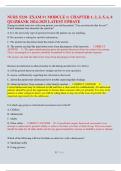
NURS 5220- EXAM #1 MODULE 1: CHAPTER 1, 2, 3, 5, 6, 8 QUIZBANK LATEST UPDATE During an initial interview with your patient, you ask the patient, "Can you describe that for me?" Which statement best describes the question? A. It is the most risky type of question because the patient can say anything. B.The question is asking for specific information. C. The patient has discretion about the extent of the answer. D. The answer can lead the interviewer away from the purpose of the interview. - CORRECT ANSWER C: The open-ended question gives the patient discretion about the extent of an answer. This is an example of a question carefully formulated to illicit an enhanced patient response. The answer can lead the interviewer away from the purpose of the interview. Because an adolescent is often reluctant to talk during an interview, it is best to: A. tell the patient that you must have straight answers to your questions. B. ensure confidentiality regarding the information discussed. C. inform the patient that adolescents have trouble expressing their feelings. D. obtain the history from a parent or other family member. - CORRECT ANSWER C: CorrectAdolescents may be reluctant to talk and have a clear need for confidentiality. All adolescent patients should be given the opportunity to discuss their concerns with you privately. It is wise to let parents or other caregivers know you will be asking them to step out of the room to provide this important opportunity for the adolescent. For which age group is a functional assessment most critical? A. Children B. Adolescents C. Adults D. Older adults - CORRECT ANSWER D: CorrectQuite simply, functional assessment is an attempt to understand a patient's ability to achieve the basic activities of daily living. This assessment should be made for all older adults and for any person limited by disease or disability, acute or chronic. Which of the following will best facilitate an interview with a deaf person? A. Speaking loudly B. Using gestures NURS 5220- EXAM #1 MODULE 1: CHAPTER 1, 2, 3, 5, 6, 8 QUIZBANK LATEST UPDATE 2 | P a g e C. Sitting or standing at eye level D. Sitting to the side of the patient - CORRECT ANSWER c: CorrectPersons with impaired hearing often read, write, sign, and/or read lips, but you must speak slowly and enunciate each word clearly and in full view. Sitting or standing at eye level allows for full view. Which of the following questions may lead to an inaccurate response? A. "Where do you feel the pain?" B. "How does this situation make you feel?" C. "What happened after you noticed your injury?" D. "That was a horrible experience, wasn't it?" - CORRECT ANSWER D: CorrectAnswer d is an example of a leading question. The leading question is the most risky because it may limit the information provided to what the patient thinks you want to know. Questions a, b, and c are examples of direct and open-ended questions. Ms. Carol Turner, a 38-year-old woman, brings her 1-year-old son in for health care. Which of the following requests made would be most appropriate at the beginning of an interview? A. "Mom, please place your son in your lap." B. "Carol, please place your son in your lap." C. "Ms. Turner, please place your son in your lap." D. "Sweetie, please place your son in your lap." - CORRECT ANSWER C: CorrectAnswer c best displays courtesy and respect for the parent. Initially, the examiner should address the patient or caregiver properly (e.g., as Mr., Miss, Mrs., Ms., or the manner of address preferred by the patient) and repeat the patient's name at appropriate times. Do not use a surrogate term for a person's name; for example, when the patient is a child, do not address the parent as "Mother" or "Father." During an interview, a patient describes abdominal pain that often awakens him at night. Which of the following responses by the interviewer would facilitate the interviewing process? A. "Constipation can cause abdominal pain." B. "Do you need a sleeping medication?" C. "Pain is always worse at night, isn't it?"
Document information
- Uploaded on
- October 31, 2024
- Number of pages
- 55
- Written in
- 2024/2025
- Type
- Exam (elaborations)
- Contains
- Questions & answers