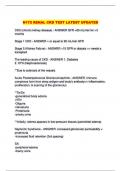
N172 RENAL CKD TEST LATEST UPDATED
CKD (chronic kidney disease) - ANSWER GFR <60 mL/min for >3
months
Stage 1 CKD - ANSWER > or equal to 90 mL/min GFR
Stage 5 (Kidney Failure) - ANSWER <15 GFR or dialysis == needs a
transplant
The leading cause of CKD - ANSWER 1. Diabetes
2. HTN (Nephrosclerosis)
**Due to sclerosis of the vessels
Acute Poststreptococcal Glomerulonephritis - ANSWER -immune
complexes form from strep antigen and body's antibody== inflammation,
proliferation, & scarring of the glomerulus
**Sx/Sx:
-generalized body edema
-HTN
-Oliguria
-Hematuria
-Proteinuria
-smoky urine
**Initially, edema appears in low-pressure tissues (periorbital edema)
Nephrotic Syndrome - ANSWER -increased glomerular permeability =
proteinuria
-Increased fluid retention (3rd spacing)
SX:
-peripheral edema
-foamy urine
, -hypoalbuminemia
DIET:
-low sodium, mod protein diet
Priority:
-focus on management of edema
1. weigh pt daily
2. record I/O
3.measure abdominal girth/extremity size
Pyelonephritis - ANSWER -Acute: inflammation of renal parenchyma &
collecting system
-Chronic: recurring infections = kidneys become shrunken and scarred
polycystic kidney disease (PKD) - ANSWER -grape-like cyst clusters =
compress/destroy surrounding tissues
-Need genetic counseling
Nephrotoxic Drugs - ANSWER -NSAIDS (ibuprofen, aspirin, naproxen)
-contrast media
-aminoglycosides ("mycins"
-heroin
-crack/cocaine
-Ace-I
Chronic renal failure/ESRD - ANSWER -Uremia/azotemia (increased
nitrogenous waste in the blood)
-polyuria w dilute urine
-hyperglycemia & hyperinsulinemia
-dyslipidemia
-Lytes & acid/base imbalances
Uremia w diabetes - ANSWER -May need less insulin because insulin
remains in circulation longer w ESRD
Potassium (3.5-5.3) - ANSWER -arrhythmias = put in EKG monitor
-peaked T-waves & widened QRS complex
CKD (chronic kidney disease) - ANSWER GFR <60 mL/min for >3
months
Stage 1 CKD - ANSWER > or equal to 90 mL/min GFR
Stage 5 (Kidney Failure) - ANSWER <15 GFR or dialysis == needs a
transplant
The leading cause of CKD - ANSWER 1. Diabetes
2. HTN (Nephrosclerosis)
**Due to sclerosis of the vessels
Acute Poststreptococcal Glomerulonephritis - ANSWER -immune
complexes form from strep antigen and body's antibody== inflammation,
proliferation, & scarring of the glomerulus
**Sx/Sx:
-generalized body edema
-HTN
-Oliguria
-Hematuria
-Proteinuria
-smoky urine
**Initially, edema appears in low-pressure tissues (periorbital edema)
Nephrotic Syndrome - ANSWER -increased glomerular permeability =
proteinuria
-Increased fluid retention (3rd spacing)
SX:
-peripheral edema
-foamy urine
, -hypoalbuminemia
DIET:
-low sodium, mod protein diet
Priority:
-focus on management of edema
1. weigh pt daily
2. record I/O
3.measure abdominal girth/extremity size
Pyelonephritis - ANSWER -Acute: inflammation of renal parenchyma &
collecting system
-Chronic: recurring infections = kidneys become shrunken and scarred
polycystic kidney disease (PKD) - ANSWER -grape-like cyst clusters =
compress/destroy surrounding tissues
-Need genetic counseling
Nephrotoxic Drugs - ANSWER -NSAIDS (ibuprofen, aspirin, naproxen)
-contrast media
-aminoglycosides ("mycins"
-heroin
-crack/cocaine
-Ace-I
Chronic renal failure/ESRD - ANSWER -Uremia/azotemia (increased
nitrogenous waste in the blood)
-polyuria w dilute urine
-hyperglycemia & hyperinsulinemia
-dyslipidemia
-Lytes & acid/base imbalances
Uremia w diabetes - ANSWER -May need less insulin because insulin
remains in circulation longer w ESRD
Potassium (3.5-5.3) - ANSWER -arrhythmias = put in EKG monitor
-peaked T-waves & widened QRS complex