NFDN 2006 Unit 8
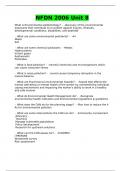
What is Environmental epidemiology? - -discovery of the environmental
exposures that contribute to or protect against injuries, illnesses,
developmental conditions, disabilities, and deathsW
- What are some environmental pollutants? - -Air
Water
Soil
- What are some chemical pollutants - -Metals
Hydrocarbons
Irritant gases
Asphyxiants
Pesticides
- What is food pollution? - -harmful chemicals and microorganisms which
can cause consumer illness
- What is noise pollution? - -sound causes temporary disruption in the
natural balance
- What are Psychosocial environmental hazards? - -hazard that affects the
mental well-being or mental health of the worker by overwhelming individual
coping mechanisms and impacting the worker's ability to work in a healthy
and safe manner
- What do Environmental Health Management do? - -Recognize
environmental health indicators and Environmental regulations & guidelines
- What does the CHN do for the planning stage? - -Plan how to reduce the 4
Rs for environmental pollution
- What are some interventions the CHN can do? - -Community involvement
Advocacy
Teaching
Manage vulnerable populations
Policy development
Research for upstream solutions
- What can the CHN assess for? - -CH2OPD2
I PREPARE
Windshield survey
Risk assessment
, - What are the 3 levels the CHN must intervene on? - -Primary prevention
Secondary prevention
Tertiary prevention
- What is the last step the CHN must do? - -Evaluate if they were affective
- What does sensitivity do? - -rules out disease (when the result is negative)
"Snout"
- What does specificity do? - -rules in disease with a high degree of
confidence
"Spin"
- What is specificity? - -true negatives/(true negative + false positives)
- What is sensitivity? - -true positives/(true positive + false negative)
- specificity - -If a person does not have the disease how often will the test
be negative (true negative rate)
- Sensitivity - -If a person has a disease, how often will the test be positive
(true positive rate)
- what is toxicology - -basic science that studies the health effects
associated with chemical exposure
- what is poisons - -toxic substances that cause injury, illness or death
- what is point pollution source - -released into the environment from a
single site (e.g., a smokestack)
- what is non-point pollution source - -more diffuse (e.g., traffic, fertilizer, or
pesticide runoff into waterways, or animal waste from food production)
- what is a "sink" - -any process, activity, or mechanism that removes a
greenhouse gas, aerosol, or precursor of a greenhouse gas from the
atmosphere
- what are Canadian Environmental Sustainability Indicators (CESI) - -
include air quality, greenhouse gas emissions, and water quality
- what does the Canadian Environmental Protection Act do - -Oversees
prevention of pollution and protection of the environment and human health
- whats an example of Psychosocial environmental pollution - -long hours
and heavy demands at work
What is Environmental epidemiology? - -discovery of the environmental
exposures that contribute to or protect against injuries, illnesses,
developmental conditions, disabilities, and deathsW
- What are some environmental pollutants? - -Air
Water
Soil
- What are some chemical pollutants - -Metals
Hydrocarbons
Irritant gases
Asphyxiants
Pesticides
- What is food pollution? - -harmful chemicals and microorganisms which
can cause consumer illness
- What is noise pollution? - -sound causes temporary disruption in the
natural balance
- What are Psychosocial environmental hazards? - -hazard that affects the
mental well-being or mental health of the worker by overwhelming individual
coping mechanisms and impacting the worker's ability to work in a healthy
and safe manner
- What do Environmental Health Management do? - -Recognize
environmental health indicators and Environmental regulations & guidelines
- What does the CHN do for the planning stage? - -Plan how to reduce the 4
Rs for environmental pollution
- What are some interventions the CHN can do? - -Community involvement
Advocacy
Teaching
Manage vulnerable populations
Policy development
Research for upstream solutions
- What can the CHN assess for? - -CH2OPD2
I PREPARE
Windshield survey
Risk assessment
, - What are the 3 levels the CHN must intervene on? - -Primary prevention
Secondary prevention
Tertiary prevention
- What is the last step the CHN must do? - -Evaluate if they were affective
- What does sensitivity do? - -rules out disease (when the result is negative)
"Snout"
- What does specificity do? - -rules in disease with a high degree of
confidence
"Spin"
- What is specificity? - -true negatives/(true negative + false positives)
- What is sensitivity? - -true positives/(true positive + false negative)
- specificity - -If a person does not have the disease how often will the test
be negative (true negative rate)
- Sensitivity - -If a person has a disease, how often will the test be positive
(true positive rate)
- what is toxicology - -basic science that studies the health effects
associated with chemical exposure
- what is poisons - -toxic substances that cause injury, illness or death
- what is point pollution source - -released into the environment from a
single site (e.g., a smokestack)
- what is non-point pollution source - -more diffuse (e.g., traffic, fertilizer, or
pesticide runoff into waterways, or animal waste from food production)
- what is a "sink" - -any process, activity, or mechanism that removes a
greenhouse gas, aerosol, or precursor of a greenhouse gas from the
atmosphere
- what are Canadian Environmental Sustainability Indicators (CESI) - -
include air quality, greenhouse gas emissions, and water quality
- what does the Canadian Environmental Protection Act do - -Oversees
prevention of pollution and protection of the environment and human health
- whats an example of Psychosocial environmental pollution - -long hours
and heavy demands at work