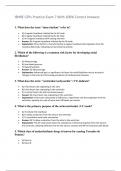
IBHRE CEPs Practice Exam 7 With 100% Correct Answers
1. What does the term "sinus rhythm" refer to?
• A) A regular heartbeat initiated by the AV node
• B) A regular heartbeat initiated by the SA node
• C) An irregular heartbeat with varying intervals
• Answer: B) A regular heartbeat initiated by the SA node
• Explanation: Sinus rhythm is characterized by a regular heartbeat that originates from the
sinoatrial (SA) node, indicating normal electrical activity.
2. Which of the following is a common risk factor for developing atrial
fibrillation?
• A) Advanced age
• B) Low blood pressure
• C) Hyperthyroidism
• Answer: A) Advanced age
• Explanation: Advanced age is a significant risk factor for atrial fibrillation due to structural
changes in the heart and increasing prevalence of cardiovascular diseases.
3. What does the term "ventricular tachycardia" (VT) indicate?
• A) A fast heart rate originating in the atria
• B) A fast heart rate originating in the ventricles
• C) A normal heart rate with occasional pauses
• Answer: B) A fast heart rate originating in the ventricles
• Explanation: Ventricular tachycardia is defined as a rapid heart rate that originates from the
ventricles, typically at a rate of more than 100 beats per minute.
4. What is the primary purpose of the atrioventricular (AV) node?
• A) To initiate the heartbeat
• B) To delay conduction from the atria to the ventricles
• C) To coordinate ventricular contraction
• Answer: B) To delay conduction from the atria to the ventricles
• Explanation: The AV node slows down the conduction of electrical impulses from the atria to
the ventricles, allowing sufficient time for the atria to contract and fill the ventricles with blood.
5. Which class of antiarrhythmic drugs is known for causing Torsades de
Pointes?
• A) Class IA
• B) Class IB
, • C) Class III
• Answer: C) Class III
• Explanation: Class III antiarrhythmics, such as sotalol, can prolong the QT interval, increasing the
risk of Torsades de Pointes, a potentially life-threatening ventricular arrhythmia.
6. What is a common indication for a cardiac implantable electronic device
(CIED)?
• A) Hypertension
• B) Bradycardia
• C) Hyperlipidemia
• Answer: B) Bradycardia
• Explanation: CIEDs, such as pacemakers, are commonly indicated for patients with symptomatic
bradycardia to maintain an adequate heart rate.
7. Which of the following arrhythmias is characterized by an irregularly
irregular rhythm?
• A) Atrial flutter
• B) Atrial fibrillation
• C) Ventricular fibrillation
• Answer: B) Atrial fibrillation
• Explanation: Atrial fibrillation is identified by an irregularly irregular rhythm on an ECG, without
discernible P waves.
8. What is the primary risk of atrial fibrillation?
• A) Increased heart rate
• B) Thromboembolism
• C) Ventricular fibrillation
• Answer: B) Thromboembolism
• Explanation: Atrial fibrillation can lead to thrombus formation in the left atrial appendage,
increasing the risk of stroke and other thromboembolic events.
9. Which of the following is a characteristic of first-degree AV block?
• A) Prolonged PR interval
• B) Dropped beats
• C) Irregularly irregular rhythm
• Answer: A) Prolonged PR interval
• Explanation: First-degree AV block is characterized by a consistently prolonged PR interval (>200
ms) on the ECG without dropped QRS complexes.
10. What is the main mechanism of action for Class I antiarrhythmic drugs?
• A) Beta-adrenergic blockade
1. What does the term "sinus rhythm" refer to?
• A) A regular heartbeat initiated by the AV node
• B) A regular heartbeat initiated by the SA node
• C) An irregular heartbeat with varying intervals
• Answer: B) A regular heartbeat initiated by the SA node
• Explanation: Sinus rhythm is characterized by a regular heartbeat that originates from the
sinoatrial (SA) node, indicating normal electrical activity.
2. Which of the following is a common risk factor for developing atrial
fibrillation?
• A) Advanced age
• B) Low blood pressure
• C) Hyperthyroidism
• Answer: A) Advanced age
• Explanation: Advanced age is a significant risk factor for atrial fibrillation due to structural
changes in the heart and increasing prevalence of cardiovascular diseases.
3. What does the term "ventricular tachycardia" (VT) indicate?
• A) A fast heart rate originating in the atria
• B) A fast heart rate originating in the ventricles
• C) A normal heart rate with occasional pauses
• Answer: B) A fast heart rate originating in the ventricles
• Explanation: Ventricular tachycardia is defined as a rapid heart rate that originates from the
ventricles, typically at a rate of more than 100 beats per minute.
4. What is the primary purpose of the atrioventricular (AV) node?
• A) To initiate the heartbeat
• B) To delay conduction from the atria to the ventricles
• C) To coordinate ventricular contraction
• Answer: B) To delay conduction from the atria to the ventricles
• Explanation: The AV node slows down the conduction of electrical impulses from the atria to
the ventricles, allowing sufficient time for the atria to contract and fill the ventricles with blood.
5. Which class of antiarrhythmic drugs is known for causing Torsades de
Pointes?
• A) Class IA
• B) Class IB
, • C) Class III
• Answer: C) Class III
• Explanation: Class III antiarrhythmics, such as sotalol, can prolong the QT interval, increasing the
risk of Torsades de Pointes, a potentially life-threatening ventricular arrhythmia.
6. What is a common indication for a cardiac implantable electronic device
(CIED)?
• A) Hypertension
• B) Bradycardia
• C) Hyperlipidemia
• Answer: B) Bradycardia
• Explanation: CIEDs, such as pacemakers, are commonly indicated for patients with symptomatic
bradycardia to maintain an adequate heart rate.
7. Which of the following arrhythmias is characterized by an irregularly
irregular rhythm?
• A) Atrial flutter
• B) Atrial fibrillation
• C) Ventricular fibrillation
• Answer: B) Atrial fibrillation
• Explanation: Atrial fibrillation is identified by an irregularly irregular rhythm on an ECG, without
discernible P waves.
8. What is the primary risk of atrial fibrillation?
• A) Increased heart rate
• B) Thromboembolism
• C) Ventricular fibrillation
• Answer: B) Thromboembolism
• Explanation: Atrial fibrillation can lead to thrombus formation in the left atrial appendage,
increasing the risk of stroke and other thromboembolic events.
9. Which of the following is a characteristic of first-degree AV block?
• A) Prolonged PR interval
• B) Dropped beats
• C) Irregularly irregular rhythm
• Answer: A) Prolonged PR interval
• Explanation: First-degree AV block is characterized by a consistently prolonged PR interval (>200
ms) on the ECG without dropped QRS complexes.
10. What is the main mechanism of action for Class I antiarrhythmic drugs?
• A) Beta-adrenergic blockade