CPCU 500 Chapter 1 Questions &
Answers
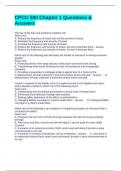
The rise of big data and predictive analytics will
Select one:
A. Reduce the frequency of losses but not the severity of losses.
B. Eliminate the frequency and severity of losses.
C. Increase the frequency and severity of losses.
D. Reduce the frequency and severity of losses, but won't eliminate them. - answer
D. Reduce the frequency and severity of losses, but won't eliminate them.
Which one of the following best illustrates the benefit of insurance in driving economic
growth?
Select one:
A. Protecting drivers from large lawsuits if they injure someone while driving.
B. Transforming what would otherwise be dire circumstances into manageable
scenarios.
C. Providing a guarantee to mortgage lenders against loss of a home by fire.
D. Making loans of funds collected in premiums before losses are paid. - answer D.
Making loans of funds collected in premiums before losses are paid.
Insurers' response to the liability crisis of a rapid increase in tort litigation and class-
action lawsuits evolved in which one of the following ways?
Select one:
A. Collaborating with the federal government to share costs of rising claims.
B. Enhancing fraud detection through data analysis.
C. Raising public awareness of the effect on policyholders.
D. Changing liability coverage to a claims-made basis. - answer D. Changing liability
coverage to a claims-made basis.
Which one of the following is an example of a negative perception of insurance that is
not based on reality?
Select one:
A. Insurance did not cover COVID-19 losses because they did not involve property
damage.
B. After taxes and fees, insurers are left with about 1 cent of profit for every dollar
received.
C. Insurance is an expensive product that's rarely used and doesn't provide a value
commensurate to its cost.
D. Insurance is a means of protection, not an investment. - answer C. Insurance is
an expensive product that's rarely used and doesn't provide a value commensurate to
its cost.
Answers
The rise of big data and predictive analytics will
Select one:
A. Reduce the frequency of losses but not the severity of losses.
B. Eliminate the frequency and severity of losses.
C. Increase the frequency and severity of losses.
D. Reduce the frequency and severity of losses, but won't eliminate them. - answer
D. Reduce the frequency and severity of losses, but won't eliminate them.
Which one of the following best illustrates the benefit of insurance in driving economic
growth?
Select one:
A. Protecting drivers from large lawsuits if they injure someone while driving.
B. Transforming what would otherwise be dire circumstances into manageable
scenarios.
C. Providing a guarantee to mortgage lenders against loss of a home by fire.
D. Making loans of funds collected in premiums before losses are paid. - answer D.
Making loans of funds collected in premiums before losses are paid.
Insurers' response to the liability crisis of a rapid increase in tort litigation and class-
action lawsuits evolved in which one of the following ways?
Select one:
A. Collaborating with the federal government to share costs of rising claims.
B. Enhancing fraud detection through data analysis.
C. Raising public awareness of the effect on policyholders.
D. Changing liability coverage to a claims-made basis. - answer D. Changing liability
coverage to a claims-made basis.
Which one of the following is an example of a negative perception of insurance that is
not based on reality?
Select one:
A. Insurance did not cover COVID-19 losses because they did not involve property
damage.
B. After taxes and fees, insurers are left with about 1 cent of profit for every dollar
received.
C. Insurance is an expensive product that's rarely used and doesn't provide a value
commensurate to its cost.
D. Insurance is a means of protection, not an investment. - answer C. Insurance is
an expensive product that's rarely used and doesn't provide a value commensurate to
its cost.