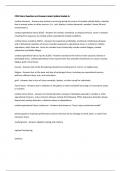
COSC Exam Questions and Answers Latest Update Graded A+
combat stressors - Answers any stressors occurring during the course of combat-related duties, whether
due to enemy action or other sources. (i.e., unit, leaders, mission demands, member's home life and
environment.)
combat operational stress (COS) - Answers the mental, emotional, or physical tension, strain or distress
resulting from exposure to combat and/or operational related conditions.
combat stress reactions (CSR's) - Answers the expected, predictable, emotional, intellectual, physical
and or behavioral reactions of service members exposed to operational stress in combat or military
operations, other than war. terms for combat stress historically include combat fatigue, combat
exhaustion and battle fatigue.
combat operational stress injuries (COSI) - Answers wounds to the mind or brain cause by intense or
prolonged stress. combat operational stress injuries have four possible mechanisms or causes. trauma,
fatigue, grief, moral injury.
trauma - Answers due to life threatening situations provoking terror, horror, or helplessness
fatigue - Answers due to the wear and tear of prolonged stress, including non-operational sources,
without sufficient sleep, rest, and restoration.
greif - Answers due to loss of close comrades, leaders, or other cared for individuals.
moral injury - Answers due to violation or disruption of value and belief by wrong or inconsistent action
or inaction.
combat stress illness - Answers all mental disorders arising in individuals exposed to combat or other
operational stressors. some common illnesses include the following. PTSD, depressive disorders (major
depression) anxiety disorders, substance abuse or dependence.
combat operational stress continuum - Answers also known as "stress injury continuum model"
primary goals to maximize performance and to minimize risk for damage to mind, brain, or spirit from
excessive stress.
ready (green) - Answers adaptive coping and mastery
optimal functioning
wellness
, well trained and prepared
fit and focused
in control
optimally effective
behaving ethically
having fun
reacting (yellow) - Answers mild and transient distress or loss of optimal functioning
always goes away
low risk for illness
irritable, angry
anxious or depressed
physically too pumped up or tired
loss of complete self control
poor focus
poor sleep
not having fun
combat stressors - Answers any stressors occurring during the course of combat-related duties, whether
due to enemy action or other sources. (i.e., unit, leaders, mission demands, member's home life and
environment.)
combat operational stress (COS) - Answers the mental, emotional, or physical tension, strain or distress
resulting from exposure to combat and/or operational related conditions.
combat stress reactions (CSR's) - Answers the expected, predictable, emotional, intellectual, physical
and or behavioral reactions of service members exposed to operational stress in combat or military
operations, other than war. terms for combat stress historically include combat fatigue, combat
exhaustion and battle fatigue.
combat operational stress injuries (COSI) - Answers wounds to the mind or brain cause by intense or
prolonged stress. combat operational stress injuries have four possible mechanisms or causes. trauma,
fatigue, grief, moral injury.
trauma - Answers due to life threatening situations provoking terror, horror, or helplessness
fatigue - Answers due to the wear and tear of prolonged stress, including non-operational sources,
without sufficient sleep, rest, and restoration.
greif - Answers due to loss of close comrades, leaders, or other cared for individuals.
moral injury - Answers due to violation or disruption of value and belief by wrong or inconsistent action
or inaction.
combat stress illness - Answers all mental disorders arising in individuals exposed to combat or other
operational stressors. some common illnesses include the following. PTSD, depressive disorders (major
depression) anxiety disorders, substance abuse or dependence.
combat operational stress continuum - Answers also known as "stress injury continuum model"
primary goals to maximize performance and to minimize risk for damage to mind, brain, or spirit from
excessive stress.
ready (green) - Answers adaptive coping and mastery
optimal functioning
wellness
, well trained and prepared
fit and focused
in control
optimally effective
behaving ethically
having fun
reacting (yellow) - Answers mild and transient distress or loss of optimal functioning
always goes away
low risk for illness
irritable, angry
anxious or depressed
physically too pumped up or tired
loss of complete self control
poor focus
poor sleep
not having fun