

Protozoa: Evolution and Development
27 October 2020 22:55
Protozoan Evolution and Development
Protozoa is an informal term for a group of single-celled eukaryotes, either free-living
or parasitic, which feed on organic matter such as other microorganisms or organic
tissues and debris.
Evolution of mitochondria
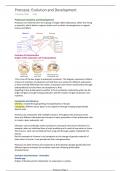
Origins of the eukaryotic cell: Endosymbiosis
This is one of the key stages in eukaryotic evolution. This diagram represents millions
of years of evolution of eukaryotic cell and there are scopes for different eukaryotes
to have evolved differently from others. Eukaryotic cells evolve mitochondria through
endosymbiosis but also there are exceptions to that.
Engulfing of one prokaryote by another to form symbiotic relationship where by the
larger cell gains enough energy production and the smaller cell gain protection and
nutrients.
Composites and chimeras
Chimera: created through grafting/ transplantation of tissues
Composite: different tissue types in one organism through merging of genetically
distinct cells.
Protozoa are composites with multiple ancestry. Throughout the protozoa world
there are different characteristics because of early association of two prokaryotic cells
to create a basic eukaryotic cell.
Chimaera can be artificially made and doesn't necessarily need to be inherited. For
example, when an individual have a heart problem and in need of new valve or tissue.
The tissue or valve can be obtained from a pig and through surgery implanted into
human.
But this example of chimera is not composite as the change of genetic material of
heart valve in human is not passed into their next generation.
Protozoa are both chimera and composite as they develop changes genetically from
different species and pass the variation onto their offspring (inheritable
characteristics).
Evolution of prokaryotes - Anomalies
Giardia spp.
Origins of Giardia and its relationship to eukaryotes is unclear.
Anomalies: No mitochondria, or peroxisomes (produce hydrogen peroxide and
Protozoa 1 Page 1
, Anomalies: No mitochondria, or peroxisomes (produce hydrogen peroxide and
metabolise lipids). It is unusual for eukaryotes to have no mitochondria or
peroxisomes.
• The Giardia genome does not encode myosin
• Giardia diverged from eukaryotes prior to endosymbiotic origin of mitochondria
• "Lost" mitochondria: giardia has genes related to mitochondria genes
Another theory:
The Giardia probably had mitochondria through endosymbiotic relationship and then
later the mitochondria probably wouldn't have maintained the symbiotic relationship
with the Giardia maybe because it had other energy producing organelles. (Probably
has the mitochondrial genes but not the actual structure).
Another genera of amitochondrial eukaryote?
Monocercomonoides sp. is the first eukaryote discovered to lack any trace of
mitochondria. There are other such as "Luminal" protozoa: Trichomonas; Entamoeba
How do amitochondrial protozoa generate energy?
Without mitochondria, present-day animal cells would be dependent on anaerobic
glycolysis for all of their ATP. When glucose is converted to pyruvate by glycolysis,
only a very small fraction of the total free energy potentially available from the
glucose is released.
Trichomonas has a hydrogenosome; it uses ferredoxin oxidoreductase and
hydrogenase to generate ATP from pyruvate.
Classification of protozoa: means of movement, nutrition, reproduction
Groups of protozoa:
○ Paramecium sp. - Ciliates
○ Trypanosoma sp. - Flagellates
○ Stentor sp.
○ Giardia sp.
○ Plasmodium sp. - Malaria
○ Actinophrys sp.
○ Toxoplasma gondii - Apicomplexa
○ Amoeba sp. - Amoeba
Amoebae
Pseudopodia: a temporary protrusion of the surface of an amoeboid cell for
movement and feeding (for movement and feeding)
- Amoeba has non-fixed cell shape (Amorphous)
- Change shape through means of pseudopodia
- The produce movement through plasmagel and plasmasol (both cytoplasm
which can solidify and liquify according to where it needs to move)
- Amoeba needs to move in a particular direction
- It produces plasma gel which is slightly viscous and dilute the plasmasol in
order to produce movement in the direction it wants (propelling forward using
these two structures).
Protozoa 1 Page 2
27 October 2020 22:55
Protozoan Evolution and Development
Protozoa is an informal term for a group of single-celled eukaryotes, either free-living
or parasitic, which feed on organic matter such as other microorganisms or organic
tissues and debris.
Evolution of mitochondria
Origins of the eukaryotic cell: Endosymbiosis
This is one of the key stages in eukaryotic evolution. This diagram represents millions
of years of evolution of eukaryotic cell and there are scopes for different eukaryotes
to have evolved differently from others. Eukaryotic cells evolve mitochondria through
endosymbiosis but also there are exceptions to that.
Engulfing of one prokaryote by another to form symbiotic relationship where by the
larger cell gains enough energy production and the smaller cell gain protection and
nutrients.
Composites and chimeras
Chimera: created through grafting/ transplantation of tissues
Composite: different tissue types in one organism through merging of genetically
distinct cells.
Protozoa are composites with multiple ancestry. Throughout the protozoa world
there are different characteristics because of early association of two prokaryotic cells
to create a basic eukaryotic cell.
Chimaera can be artificially made and doesn't necessarily need to be inherited. For
example, when an individual have a heart problem and in need of new valve or tissue.
The tissue or valve can be obtained from a pig and through surgery implanted into
human.
But this example of chimera is not composite as the change of genetic material of
heart valve in human is not passed into their next generation.
Protozoa are both chimera and composite as they develop changes genetically from
different species and pass the variation onto their offspring (inheritable
characteristics).
Evolution of prokaryotes - Anomalies
Giardia spp.
Origins of Giardia and its relationship to eukaryotes is unclear.
Anomalies: No mitochondria, or peroxisomes (produce hydrogen peroxide and
Protozoa 1 Page 1
, Anomalies: No mitochondria, or peroxisomes (produce hydrogen peroxide and
metabolise lipids). It is unusual for eukaryotes to have no mitochondria or
peroxisomes.
• The Giardia genome does not encode myosin
• Giardia diverged from eukaryotes prior to endosymbiotic origin of mitochondria
• "Lost" mitochondria: giardia has genes related to mitochondria genes
Another theory:
The Giardia probably had mitochondria through endosymbiotic relationship and then
later the mitochondria probably wouldn't have maintained the symbiotic relationship
with the Giardia maybe because it had other energy producing organelles. (Probably
has the mitochondrial genes but not the actual structure).
Another genera of amitochondrial eukaryote?
Monocercomonoides sp. is the first eukaryote discovered to lack any trace of
mitochondria. There are other such as "Luminal" protozoa: Trichomonas; Entamoeba
How do amitochondrial protozoa generate energy?
Without mitochondria, present-day animal cells would be dependent on anaerobic
glycolysis for all of their ATP. When glucose is converted to pyruvate by glycolysis,
only a very small fraction of the total free energy potentially available from the
glucose is released.
Trichomonas has a hydrogenosome; it uses ferredoxin oxidoreductase and
hydrogenase to generate ATP from pyruvate.
Classification of protozoa: means of movement, nutrition, reproduction
Groups of protozoa:
○ Paramecium sp. - Ciliates
○ Trypanosoma sp. - Flagellates
○ Stentor sp.
○ Giardia sp.
○ Plasmodium sp. - Malaria
○ Actinophrys sp.
○ Toxoplasma gondii - Apicomplexa
○ Amoeba sp. - Amoeba
Amoebae
Pseudopodia: a temporary protrusion of the surface of an amoeboid cell for
movement and feeding (for movement and feeding)
- Amoeba has non-fixed cell shape (Amorphous)
- Change shape through means of pseudopodia
- The produce movement through plasmagel and plasmasol (both cytoplasm
which can solidify and liquify according to where it needs to move)
- Amoeba needs to move in a particular direction
- It produces plasma gel which is slightly viscous and dilute the plasmasol in
order to produce movement in the direction it wants (propelling forward using
these two structures).
Protozoa 1 Page 2


