1. Define psychology and identify its goals.
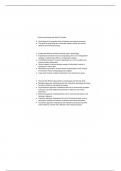
● Psychology is the scientific study of behavior and mental processes.
● The goals of psychology are to describe, explain, predict, and control
behavior and mental processes.
2. Explain the different research methods used in psychology.
● Experimental research: Involves manipulating one or more independent
variables to observe the effect on a dependent variable.
● Correlational research: Involves measuring two or more variables and
examining their relationship.
● Survey research: Involves asking a sample of individuals a series of
questions to collect data.
● Naturalistic observation: Involves observing individuals in their natural
environment without manipulating any variables.
● Case study: Involves in-depth examination of an individual or group.
3. Describe the different approaches to psychology and their key ideas.
● Biological approach: Emphasizes the role of genetics, physiology, and brain
function in behavior and mental processes.
● Psychodynamic approach: Emphasizes the role of unconscious thoughts,
emotions, and early childhood experiences in behavior and mental
processes.
● Behavioral approach: Emphasizes the role of environmental factors and
learning in behavior.
● Cognitive approach: Emphasizes the role of mental processes such as
perception, thinking, and memory in behavior and mental processes.
● Humanistic approach: Emphasizes the importance of personal growth,
self-awareness, and free will in behavior and mental processes.
● Psychology is the scientific study of behavior and mental processes.
● The goals of psychology are to describe, explain, predict, and control
behavior and mental processes.
2. Explain the different research methods used in psychology.
● Experimental research: Involves manipulating one or more independent
variables to observe the effect on a dependent variable.
● Correlational research: Involves measuring two or more variables and
examining their relationship.
● Survey research: Involves asking a sample of individuals a series of
questions to collect data.
● Naturalistic observation: Involves observing individuals in their natural
environment without manipulating any variables.
● Case study: Involves in-depth examination of an individual or group.
3. Describe the different approaches to psychology and their key ideas.
● Biological approach: Emphasizes the role of genetics, physiology, and brain
function in behavior and mental processes.
● Psychodynamic approach: Emphasizes the role of unconscious thoughts,
emotions, and early childhood experiences in behavior and mental
processes.
● Behavioral approach: Emphasizes the role of environmental factors and
learning in behavior.
● Cognitive approach: Emphasizes the role of mental processes such as
perception, thinking, and memory in behavior and mental processes.
● Humanistic approach: Emphasizes the importance of personal growth,
self-awareness, and free will in behavior and mental processes.