

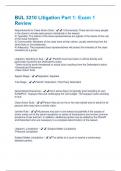
BUL 3310 Litigation Part 1: Exam 1
Review
Requirements for Class Action Suits - ✔️✔️1) Numerosity: There are too many people
in the class to include each person individually in the lawsuit.
2) Typicality: The claims of the class representatives are typical of the claims of the rest
of the class members.
3) Commonality: Members of the class have similar claims, usually stemming from the
same facts or circumstances.
4) Adequacy: The proposed class representatives will protect the interests of the class
members as a group.
Litigation: Standing to Sue - ✔️✔️-Plaintiff must have been or will be directly and
personally injured by the Defendant's action
-There must be some threatened or actual injury resulting from the Defendant's action.
-Generalized Grievances
-Class Action Suits
Appeal Stage - ✔️✔️Appellant, Appellee
Trial Stage - ✔️✔️Plaintiff, Defendant, Third Party Defendant
Generalized Grievances - ✔️✔️harm alone does not typically grant standing to sue!
EXAMPLE: Taxpayer files suit challenging the CIA budget. The taxpayer lacks standing
to sue.
Class Action Suits - ✔️✔️Person files suit on his or her own behalf and on behalf of all
persons who may have a similar claim.
Joinder Rule - ✔️✔️All persons may join in one lawsuit as plaintiffs if the causes of
action arises out of the same transaction or series of transactions and involve common
questions of law and fact. In addition, additional parties may be added by the Plaintiff
and Defendant who are necessary to a complete determination of the lawsuit.
Litigation: Jurisdiction - ✔️✔️-Subject Matter Jurisdiction
-Personal Jurisdiction
Subject Matter Jurisdiction - ✔️✔️The ability of a court to resolve a controversy
between parties.
Review
Requirements for Class Action Suits - ✔️✔️1) Numerosity: There are too many people
in the class to include each person individually in the lawsuit.
2) Typicality: The claims of the class representatives are typical of the claims of the rest
of the class members.
3) Commonality: Members of the class have similar claims, usually stemming from the
same facts or circumstances.
4) Adequacy: The proposed class representatives will protect the interests of the class
members as a group.
Litigation: Standing to Sue - ✔️✔️-Plaintiff must have been or will be directly and
personally injured by the Defendant's action
-There must be some threatened or actual injury resulting from the Defendant's action.
-Generalized Grievances
-Class Action Suits
Appeal Stage - ✔️✔️Appellant, Appellee
Trial Stage - ✔️✔️Plaintiff, Defendant, Third Party Defendant
Generalized Grievances - ✔️✔️harm alone does not typically grant standing to sue!
EXAMPLE: Taxpayer files suit challenging the CIA budget. The taxpayer lacks standing
to sue.
Class Action Suits - ✔️✔️Person files suit on his or her own behalf and on behalf of all
persons who may have a similar claim.
Joinder Rule - ✔️✔️All persons may join in one lawsuit as plaintiffs if the causes of
action arises out of the same transaction or series of transactions and involve common
questions of law and fact. In addition, additional parties may be added by the Plaintiff
and Defendant who are necessary to a complete determination of the lawsuit.
Litigation: Jurisdiction - ✔️✔️-Subject Matter Jurisdiction
-Personal Jurisdiction
Subject Matter Jurisdiction - ✔️✔️The ability of a court to resolve a controversy
between parties.


