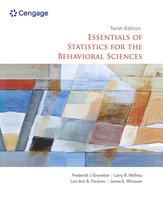
Solution Manual for
Essentials Of Statistics For The Behavioral Sciences 10th Edition Frederick J Gravetter, Larry B.
Wallnau, Lori Ann B. Forzano, James E. Witnauer
Chapter 1-15
cCommon deductions include rent, utilities, salaries, and professional fees.- **Limits on Deductions**: - Certain expenses, such as meals and entertainment, have specific limits (e.g., meals are typically only 50% deductible).
Understanding these limits is vital for effective tax planning.#### 3. Tax CreditsTax credits directly reduce the tax liability, providing a dollar-for-dollar reduction of taxes owed.- **Types of Tax Credits**: - Examples include the
Research and Development (R&D) tax credit, which encourages innovation, and the Work Opportunity Tax Credit (WOTC) for hiring individuals from certain target groups.### Specific Business Entity Taxation#### 1.
PartnershipsPartnerships are a popular choice for many businesses due to their flexible structure.- **Pass-Through Taxation**: - Income is reported on individual partners’ returns, preventing double taxation. However, partners must
pay self-employment taxes on their earnings.- **Distributions and Basis**: - When a partner receives a distribution, it is generally tax-free to the extent of their basis in the partnership. Understanding how basis is calculated is
critical for accurate tax reporting.#### 2. CorporationsCorporate taxation can be complex due to double taxation and various regulations.- **C-Corporations**: - Taxed at the corporate rate, profits are taxed at the entity level, and
dividends are taxed at the shareholder level. Corporations can reinvest profits to defer taxation, but shareholders may face immediate tax consequences upon dividend distribution.
- **S-Corporations**: - Limited to 100 shareholders and certain types of stock, S-Corps can only have eligible domestic individuals as shareholders. They provide the benefits of limited liability and pass-through taxation, making
them attractive for small businesses.#### 3. Limited Liability Companies (LLCs)LLCs offer flexibility in taxation and structure.- **Self-Employment Tax Considerations**: - Members of an LLC treated as a partnership are subject
to self-employment tax on their share of the income. Understanding how to minimize this liability is crucial for LLC members.- **Tax Elections**: - LLCs can elect to be taxed as a corporation, allowing for strategic tax planning
based on the members’ overall tax situations.### Special Topics in Business Taxation#### 1. International Tax ConsiderationsAs globalization increases, understanding international tax implications becomes essential.- **Foreign
Tax Credits**: - Businesses operating internationally may qualify for foreign tax credits, which help avoid double taxation on income earned abroad. Proper planning is crucial to maximize these benefits.- **Transfer Pricing**: -
Multinational corporations must ensure that transactions between subsidiaries in different countries adhere to arm's length principles to avoid tax penalties and ensure compliance with both domestic and international
Chapter 1: Introduction to Statistics
Chapter Outline
1.1 Statistics and Behavioral Science
Definitions of Statistics
Populations and Samples
Variables and Data
Parameters and Statistics
Descriptive and Inferential Statistical Methods
Statistics in the Context of Research
1.2 Observations, Measurement, and Variables
Observations and Measurements
Constructs and Operational Definitions
Discrete and Continuous Variables
Scales of Measurement
1.3 Three Data Structures, Research Methods, and Statistics
Data Structure 1. One Group with One or More Separate Variables Measured for Each
Individual: Descriptive Research
Relationships Between Variables
Data Structure 2. One Group with Two Variables Measured for Each Individual: The
Correlational Method
Data Structure 3. Comparing Two (or More) Groups of Scores: Experimental and
Nonexperimental Methods
Experimental and Nonexperimental Methods
The Experimental Method
Nonexperimental Methods: Nonequivalent Groups and Pre-Post Studies
1.4 Statistical Notation
Scores
Summation Notation
cCommon deductions include rent, utilities, salaries, and professional fees.- **Limits on Deductions**: - Certain expenses, such as meals and entertainment, have specific limits (e.g., meals are typically only 50% deductible).
Understanding these limits is vital for effective tax planning.#### 3. Tax CreditsTax credits directly reduce the tax liability, providing a dollar-for-dollar reduction of taxes owed.- **Types of Tax Credits**: - Examples include the
,Research and Development (R&D) tax credit, which encourages innovation, and the Work Opportunity Tax Credit (WOTC) for hiring individuals from certain target groups.### Specific Business Entity Taxation#### 1.
PartnershipsPartnerships are a popular choice for many businesses due to their flexible structure.- **Pass-Through Taxation**: - Income is reported on individual partners’ returns, preventing double taxation. However, partners must
pay self-employment taxes on their earnings.- **Distributions and Basis**: - When a partner receives a distribution, it is generally tax-free to the extent of their basis in the partnership. Understanding how basis is calculated is
critical for accurate tax reporting.#### 2. CorporationsCorporate taxation can be complex due to double taxation and various regulations.- **C-Corporations**: - Taxed at the corporate rate, profits are taxed at the entity level, and
dividends are taxed at the shareholder level. Corporations can reinvest profits to defer taxation, but shareholders may face immediate tax consequences upon dividend distribution.
- **S-Corporations**: - Limited to 100 shareholders and certain types of stock, S-Corps can only have eligible domestic individuals as shareholders. They provide the benefits of limited liability and pass-through taxation, making
them attractive for small businesses.#### 3. Limited Liability Companies (LLCs)LLCs offer flexibility in taxation and structure.- **Self-Employment Tax Considerations**: - Members of an LLC treated as a partnership are subject
to self-employment tax on their share of the income. Understanding how to minimize this liability is crucial for LLC members.- **Tax Elections**: - LLCs can elect to be taxed as a corporation, allowing for strategic tax planning
based on the members’ overall tax situations.### Special Topics in Business Taxation#### 1. International Tax ConsiderationsAs globalization increases, understanding international tax implications becomes essential.- **Foreign
Tax Credits**: - Businesses operating internationally may qualify for foreign tax credits, which help avoid double taxation on income earned abroad. Proper planning is crucial to maximize these benefits.- **Transfer Pricing**: -
Multinational corporations must ensure that transactions between subsidiaries in different countries adhere to arm's length principles to avoid tax penalties and ensure compliance with both domestic and international
Learning Objectives and Chapter Summary
1. Define the terms population, sample, parameter, and statistic, and describe the
relationship between them; identify examples of each.
2. Define the two general categories of statistics, descriptive and inferential statistics, and
describe how they are used to summarize and make decisions about data.
3. Describe the concept of sampling error and explain how sampling error creates the
fundamental problem that inferential statistics must address.
4. Explain why operational definitions are developed for constructs and identify the two
components of an operational definition.
5. Describe discrete and continuous variables and identify examples of each.
6. Define real limits and explain why they are needed to measure continuous variables.
7. Compare and contrast the four scales of measurement (nominal, ordinal, interval, and
ratio) and identify examples of each.
8. Describe, compare, and contrast correlational, experimental and nonexperimental
research, and identify the data structures associated with each.
9. Define independent, dependent, and quasi-independent variables and recognize examples
of each.
10. Identify what is represented by each of the following symbols: X, Y, N, n, and Σ.
11. Perform calculation
The following synthesizes the key ideas and takeaways from this chapter:
1. Students should be familiar with the terminology and special notation of statistical analysis.
Statistical Terms Measurement Terms Research Terms
population constructs descriptive research
sample operational definition correlational method
variable discrete variable experimental method
data continuous variable individual differences
data set real limits independent variable
datum upper real limit dependent variable
score/raw score lower real limit control condition
parameter nominal scale experimental condition
statistic ordinal scale quasi-independent variable
descriptive statistics interval scale
inferential statistics ratio scale
sampling error
, Figure 1.2 is useful for introducing the concepts of population and sample, and the related
concepts of parameter and statistic. Figure 1.3 helps differentiate descriptive statistics
that focus on the sample data and inferential statistics that generalize from samples to
populations.
2. Students should learn how statistical techniques fit into the general process of science.
Although the concept of sampling error is not critical at this time in the course, it is a
useful way to introduce and justify the need for inferential statistics. Figure 1.2 is a
simple demonstration of the concept that sample statistics are representative of but not
identical to the corresponding population parameters, and that two different samples will
tend to have different statistics. The idea that differences can occur just by chance is an
important concept. After the concept of sampling error is established, Figure 1.3 shows
the overall research process and identifies where descriptive and inferential statistics are
used.
Statistical techniques are mostly used near the end of the research process, after the
researcher has obtained research results and needs to organize, summarize, and interpret
the data. Chapter 1 includes discussion of two aspects of research that precede statistics:
(1) the process of measurement, and (2) the idea that measurements take place in the
context of a research study. The discussion includes the different scales of measurement
and the information they provide, as well as an introduction to continuous and discrete
variables. Research studies are described in terms of the kinds of data they produce:
correlational studies that produce data suitable for computing correlations (see Figure
1.5), and experimental studies that produce groups of scores to be compared, usually
looking for mean differences (see Figure 1.6). Other types of research (nonexperimental)
that also involve comparing groups of scores are discussed (see Figure 1.7).
cCommon deductions include rent, utilities, salaries, and professional fees.- **Limits on Deductions**: - Certain expenses, such as meals and entertainment, have specific limits (e.g., meals are typically only 50%
deductible). Understanding these limits is vital for effective tax planning.#### 3. Tax CreditsTax credits directly reduce the tax liability, providing a dollar-for-dollar reduction of taxes owed.- **Types of Tax
Credits**: - Examples include the Research and Development (R&D) tax credit, which encourages innovation, and the Work Opportunity Tax Credit (WOTC) for hiring individuals from certain target groups.###
Specific Business Entity Taxation#### 1. PartnershipsPartnerships are a popular choice for many businesses due to their flexible structure.- **Pass-Through Taxation**: - Income is reported on individual partners’
returns, preventing double taxation. However, partners must pay self-employment taxes on their earnings.- **Distributions and Basis**: - When a partner receives a distribution, it is generally tax-free to the extent
of their basis in the partnership. Understanding how basis is calculated is critical for accurate tax reporting.#### 2. CorporationsCorporate taxation can be complex due to double taxation and various regulations.-
**C-Corporations**: - Taxed at the corporate rate, profits are taxed at the entity level, and dividends are taxed at the shareholder level. Corporations can reinvest profits to defer taxation, but shareholders may face
immediate tax consequences upon dividend distribution.
- **S-Corporations**: - Limited to 100 shareholders and certain types of stock, S-Corps can only have eligible domestic individuals as shareholders. They provide the benefits of limited liability and pass-through
taxation, making them attractive for small businesses.#### 3. Limited Liability Companies (LLCs)LLCs offer flexibility in taxation and structure.- **Self-Employment Tax Considerations**: - Members of an LLC
treated as a partnership are subject to self-employment tax on their share of the income. Understanding how to minimize this liability is crucial for LLC members.- **Tax Elections**: - LLCs can elect to be taxed as
a corporation, allowing for strategic tax planning based on the members’ overall tax situations.### Special Topics in Business Taxation#### 1. International Tax ConsiderationsAs globalization increases,
understanding international tax implications becomes essential.- **Foreign Tax Credits**: - Businesses operating internationally may qualify for foreign tax credits, which help avoid double taxation on income
earned abroad. Proper planning is crucial to maximize these benefits.- **Transfer Pricing**: - Multinational corporations must ensure that transactions between subsidiaries in different countries adhere to arm's
length principles to avoid tax penalties and ensure compliance with both domestic and international
3. Students should learn the notation—particularly summation notation—that will be used
throughout the rest of the book.
There are three key concepts important to using summation notation:
1. Summation is a mathematical operation, just like addition or multiplication, and the
different mathematical operations must be performed in the correct order (see Order of
Mathematical Operations in Section 1.4).
2. In statistics, mathematical operations usually apply to a set of scores that can be
presented as a column of numbers.
, 3. Each operation, except for summation, creates a new column of numbers. Summation
calculates the sum for the column.
cCommon deductions include rent, utilities, salaries, and professional fees.- **Limits on Deductions**: - Certain expenses, such as meals and entertainment, have specific limits (e.g., meals are typically only 50%
deductible). Understanding these limits is vital for effective tax planning.#### 3. Tax CreditsTax credits directly reduce the tax liability, providing a dollar-for-dollar reduction of taxes owed.- **Types of Tax
Credits**: - Examples include the Research and Development (R&D) tax credit, which encourages innovation, and the Work Opportunity Tax Credit (WOTC) for hiring individuals from certain target
groups.### Specific Business Entity Taxation#### 1. PartnershipsPartnerships are a popular choice for many businesses due to their flexible structure.- **Pass-Through Taxation**: - Income is reported on
individual partners’ returns, preventing double taxation. However, partners must pay self-employment taxes on their earnings.- **Distributions and Basis**: - When a partner receives a distribution, it is
generally tax-free to the extent of their basis in the partnership. Understanding how basis is calculated is critical for accurate tax reporting.#### 2. CorporationsCorporate taxation can be complex due to double
taxation and various regulations.- **C-Corporations**: - Taxed at the corporate rate, profits are taxed at the entity level, and dividends are taxed at the shareholder level. Corporations can reinvest profits to
defer taxation, but shareholders may face immediate tax consequences upon dividend distribution.
- **S-Corporations**: - Limited to 100 shareholders and certain types of stock, S-Corps can only have eligible domestic individuals as shareholders. They provide the benefits of limited liability and pass-
through taxation, making them attractive for small businesses.#### 3. Limited Liability Companies (LLCs)LLCs offer flexibility in taxation and structure.- **Self-Employment Tax Considerations**: -
Members of an LLC treated as a partnership are subject to self-employment tax on their share of the income. Understanding how to minimize this liability is crucial for LLC members.- **Tax Elections**: -
LLCs can elect to be taxed as a corporation, allowing for strategic tax planning based on the members’ overall tax situations.### Special Topics in Business Taxation#### 1. International Tax
ConsiderationsAs globalization increases, understanding international tax implications becomes essential.- **Foreign Tax Credits**: - Businesses operating internationally may qualify for foreign tax credits,
which help avoid double taxation on income earned abroad. Proper planning is crucial to maximize these benefits.- **Transfer Pricing**: - Multinational corporations must ensure that transactions between
subsidiaries in different countries adhere to arm's length principles to avoid tax penalties and ensure compliance with both domestic and international
Other Lecture Suggestions
1. Early in the first class, I acknowledge that
a. Most students are not there by choice. (No one picked statistics as an elective because
it looked like a fun class.)
b. Many students have some anxiety about the course.
However, I also try to reassure them that the class will probably be easier and more enjoyable
(less painful) than they would predict, provided they follow a few simple rules:
a. Keep up. In statistics, each bit of new material builds on the previous material. As
long as you have mastered the old material, then the new stuff is just one small step
forward. On the other hand, if you do not know the old material, then the new stuff is
totally incomprehensible. (For example, try reading Chapter 10 on the first day of
class. It will make no sense at all. However, by the time we get to Chapter 10, you will
have enough background to understand it.) Keeping up means coming to class, asking
questions, and doing homework on a regular basis. If you are getting lost, then get
help immediately.
b. Test yourself. It is very easy to sit in class and watch an instructor work through
examples. Also, it is very easy to complete homework assignments if you can look
back at example problems in the book. Neither activity means that you really know the
material. For each chapter, try one or two of the end-of-chapter problems without
looking back at the examples in the book or checking your notes. Can you really do
the problems on your own? If not, pay attention to where you get stuck in the problem,
so you will know exactly what you still need to learn.
2. Give students a list of variables (for example, items from a survey such as age, gender,
education level, income, and occupation), and ask them to identify the scale of measurement
most likely to be used and whether the variable is discrete or continuous.
3. Describe a nonexperimental or correlational study and have students identify reasons that you
cannot make a cause-and-effect conclusion from the results. For example, a researcher finds that
children in the local school who regularly eat a nutritious breakfast have higher grades than
students who do not eat a nutritious breakfast. Does this mean that a nutritious breakfast causes
higher grades? Or a researcher finds that employees who regularly use the company’s new
Essentials Of Statistics For The Behavioral Sciences 10th Edition Frederick J Gravetter, Larry B.
Wallnau, Lori Ann B. Forzano, James E. Witnauer
Chapter 1-15
cCommon deductions include rent, utilities, salaries, and professional fees.- **Limits on Deductions**: - Certain expenses, such as meals and entertainment, have specific limits (e.g., meals are typically only 50% deductible).
Understanding these limits is vital for effective tax planning.#### 3. Tax CreditsTax credits directly reduce the tax liability, providing a dollar-for-dollar reduction of taxes owed.- **Types of Tax Credits**: - Examples include the
Research and Development (R&D) tax credit, which encourages innovation, and the Work Opportunity Tax Credit (WOTC) for hiring individuals from certain target groups.### Specific Business Entity Taxation#### 1.
PartnershipsPartnerships are a popular choice for many businesses due to their flexible structure.- **Pass-Through Taxation**: - Income is reported on individual partners’ returns, preventing double taxation. However, partners must
pay self-employment taxes on their earnings.- **Distributions and Basis**: - When a partner receives a distribution, it is generally tax-free to the extent of their basis in the partnership. Understanding how basis is calculated is
critical for accurate tax reporting.#### 2. CorporationsCorporate taxation can be complex due to double taxation and various regulations.- **C-Corporations**: - Taxed at the corporate rate, profits are taxed at the entity level, and
dividends are taxed at the shareholder level. Corporations can reinvest profits to defer taxation, but shareholders may face immediate tax consequences upon dividend distribution.
- **S-Corporations**: - Limited to 100 shareholders and certain types of stock, S-Corps can only have eligible domestic individuals as shareholders. They provide the benefits of limited liability and pass-through taxation, making
them attractive for small businesses.#### 3. Limited Liability Companies (LLCs)LLCs offer flexibility in taxation and structure.- **Self-Employment Tax Considerations**: - Members of an LLC treated as a partnership are subject
to self-employment tax on their share of the income. Understanding how to minimize this liability is crucial for LLC members.- **Tax Elections**: - LLCs can elect to be taxed as a corporation, allowing for strategic tax planning
based on the members’ overall tax situations.### Special Topics in Business Taxation#### 1. International Tax ConsiderationsAs globalization increases, understanding international tax implications becomes essential.- **Foreign
Tax Credits**: - Businesses operating internationally may qualify for foreign tax credits, which help avoid double taxation on income earned abroad. Proper planning is crucial to maximize these benefits.- **Transfer Pricing**: -
Multinational corporations must ensure that transactions between subsidiaries in different countries adhere to arm's length principles to avoid tax penalties and ensure compliance with both domestic and international
Chapter 1: Introduction to Statistics
Chapter Outline
1.1 Statistics and Behavioral Science
Definitions of Statistics
Populations and Samples
Variables and Data
Parameters and Statistics
Descriptive and Inferential Statistical Methods
Statistics in the Context of Research
1.2 Observations, Measurement, and Variables
Observations and Measurements
Constructs and Operational Definitions
Discrete and Continuous Variables
Scales of Measurement
1.3 Three Data Structures, Research Methods, and Statistics
Data Structure 1. One Group with One or More Separate Variables Measured for Each
Individual: Descriptive Research
Relationships Between Variables
Data Structure 2. One Group with Two Variables Measured for Each Individual: The
Correlational Method
Data Structure 3. Comparing Two (or More) Groups of Scores: Experimental and
Nonexperimental Methods
Experimental and Nonexperimental Methods
The Experimental Method
Nonexperimental Methods: Nonequivalent Groups and Pre-Post Studies
1.4 Statistical Notation
Scores
Summation Notation
cCommon deductions include rent, utilities, salaries, and professional fees.- **Limits on Deductions**: - Certain expenses, such as meals and entertainment, have specific limits (e.g., meals are typically only 50% deductible).
Understanding these limits is vital for effective tax planning.#### 3. Tax CreditsTax credits directly reduce the tax liability, providing a dollar-for-dollar reduction of taxes owed.- **Types of Tax Credits**: - Examples include the
,Research and Development (R&D) tax credit, which encourages innovation, and the Work Opportunity Tax Credit (WOTC) for hiring individuals from certain target groups.### Specific Business Entity Taxation#### 1.
PartnershipsPartnerships are a popular choice for many businesses due to their flexible structure.- **Pass-Through Taxation**: - Income is reported on individual partners’ returns, preventing double taxation. However, partners must
pay self-employment taxes on their earnings.- **Distributions and Basis**: - When a partner receives a distribution, it is generally tax-free to the extent of their basis in the partnership. Understanding how basis is calculated is
critical for accurate tax reporting.#### 2. CorporationsCorporate taxation can be complex due to double taxation and various regulations.- **C-Corporations**: - Taxed at the corporate rate, profits are taxed at the entity level, and
dividends are taxed at the shareholder level. Corporations can reinvest profits to defer taxation, but shareholders may face immediate tax consequences upon dividend distribution.
- **S-Corporations**: - Limited to 100 shareholders and certain types of stock, S-Corps can only have eligible domestic individuals as shareholders. They provide the benefits of limited liability and pass-through taxation, making
them attractive for small businesses.#### 3. Limited Liability Companies (LLCs)LLCs offer flexibility in taxation and structure.- **Self-Employment Tax Considerations**: - Members of an LLC treated as a partnership are subject
to self-employment tax on their share of the income. Understanding how to minimize this liability is crucial for LLC members.- **Tax Elections**: - LLCs can elect to be taxed as a corporation, allowing for strategic tax planning
based on the members’ overall tax situations.### Special Topics in Business Taxation#### 1. International Tax ConsiderationsAs globalization increases, understanding international tax implications becomes essential.- **Foreign
Tax Credits**: - Businesses operating internationally may qualify for foreign tax credits, which help avoid double taxation on income earned abroad. Proper planning is crucial to maximize these benefits.- **Transfer Pricing**: -
Multinational corporations must ensure that transactions between subsidiaries in different countries adhere to arm's length principles to avoid tax penalties and ensure compliance with both domestic and international
Learning Objectives and Chapter Summary
1. Define the terms population, sample, parameter, and statistic, and describe the
relationship between them; identify examples of each.
2. Define the two general categories of statistics, descriptive and inferential statistics, and
describe how they are used to summarize and make decisions about data.
3. Describe the concept of sampling error and explain how sampling error creates the
fundamental problem that inferential statistics must address.
4. Explain why operational definitions are developed for constructs and identify the two
components of an operational definition.
5. Describe discrete and continuous variables and identify examples of each.
6. Define real limits and explain why they are needed to measure continuous variables.
7. Compare and contrast the four scales of measurement (nominal, ordinal, interval, and
ratio) and identify examples of each.
8. Describe, compare, and contrast correlational, experimental and nonexperimental
research, and identify the data structures associated with each.
9. Define independent, dependent, and quasi-independent variables and recognize examples
of each.
10. Identify what is represented by each of the following symbols: X, Y, N, n, and Σ.
11. Perform calculation
The following synthesizes the key ideas and takeaways from this chapter:
1. Students should be familiar with the terminology and special notation of statistical analysis.
Statistical Terms Measurement Terms Research Terms
population constructs descriptive research
sample operational definition correlational method
variable discrete variable experimental method
data continuous variable individual differences
data set real limits independent variable
datum upper real limit dependent variable
score/raw score lower real limit control condition
parameter nominal scale experimental condition
statistic ordinal scale quasi-independent variable
descriptive statistics interval scale
inferential statistics ratio scale
sampling error
, Figure 1.2 is useful for introducing the concepts of population and sample, and the related
concepts of parameter and statistic. Figure 1.3 helps differentiate descriptive statistics
that focus on the sample data and inferential statistics that generalize from samples to
populations.
2. Students should learn how statistical techniques fit into the general process of science.
Although the concept of sampling error is not critical at this time in the course, it is a
useful way to introduce and justify the need for inferential statistics. Figure 1.2 is a
simple demonstration of the concept that sample statistics are representative of but not
identical to the corresponding population parameters, and that two different samples will
tend to have different statistics. The idea that differences can occur just by chance is an
important concept. After the concept of sampling error is established, Figure 1.3 shows
the overall research process and identifies where descriptive and inferential statistics are
used.
Statistical techniques are mostly used near the end of the research process, after the
researcher has obtained research results and needs to organize, summarize, and interpret
the data. Chapter 1 includes discussion of two aspects of research that precede statistics:
(1) the process of measurement, and (2) the idea that measurements take place in the
context of a research study. The discussion includes the different scales of measurement
and the information they provide, as well as an introduction to continuous and discrete
variables. Research studies are described in terms of the kinds of data they produce:
correlational studies that produce data suitable for computing correlations (see Figure
1.5), and experimental studies that produce groups of scores to be compared, usually
looking for mean differences (see Figure 1.6). Other types of research (nonexperimental)
that also involve comparing groups of scores are discussed (see Figure 1.7).
cCommon deductions include rent, utilities, salaries, and professional fees.- **Limits on Deductions**: - Certain expenses, such as meals and entertainment, have specific limits (e.g., meals are typically only 50%
deductible). Understanding these limits is vital for effective tax planning.#### 3. Tax CreditsTax credits directly reduce the tax liability, providing a dollar-for-dollar reduction of taxes owed.- **Types of Tax
Credits**: - Examples include the Research and Development (R&D) tax credit, which encourages innovation, and the Work Opportunity Tax Credit (WOTC) for hiring individuals from certain target groups.###
Specific Business Entity Taxation#### 1. PartnershipsPartnerships are a popular choice for many businesses due to their flexible structure.- **Pass-Through Taxation**: - Income is reported on individual partners’
returns, preventing double taxation. However, partners must pay self-employment taxes on their earnings.- **Distributions and Basis**: - When a partner receives a distribution, it is generally tax-free to the extent
of their basis in the partnership. Understanding how basis is calculated is critical for accurate tax reporting.#### 2. CorporationsCorporate taxation can be complex due to double taxation and various regulations.-
**C-Corporations**: - Taxed at the corporate rate, profits are taxed at the entity level, and dividends are taxed at the shareholder level. Corporations can reinvest profits to defer taxation, but shareholders may face
immediate tax consequences upon dividend distribution.
- **S-Corporations**: - Limited to 100 shareholders and certain types of stock, S-Corps can only have eligible domestic individuals as shareholders. They provide the benefits of limited liability and pass-through
taxation, making them attractive for small businesses.#### 3. Limited Liability Companies (LLCs)LLCs offer flexibility in taxation and structure.- **Self-Employment Tax Considerations**: - Members of an LLC
treated as a partnership are subject to self-employment tax on their share of the income. Understanding how to minimize this liability is crucial for LLC members.- **Tax Elections**: - LLCs can elect to be taxed as
a corporation, allowing for strategic tax planning based on the members’ overall tax situations.### Special Topics in Business Taxation#### 1. International Tax ConsiderationsAs globalization increases,
understanding international tax implications becomes essential.- **Foreign Tax Credits**: - Businesses operating internationally may qualify for foreign tax credits, which help avoid double taxation on income
earned abroad. Proper planning is crucial to maximize these benefits.- **Transfer Pricing**: - Multinational corporations must ensure that transactions between subsidiaries in different countries adhere to arm's
length principles to avoid tax penalties and ensure compliance with both domestic and international
3. Students should learn the notation—particularly summation notation—that will be used
throughout the rest of the book.
There are three key concepts important to using summation notation:
1. Summation is a mathematical operation, just like addition or multiplication, and the
different mathematical operations must be performed in the correct order (see Order of
Mathematical Operations in Section 1.4).
2. In statistics, mathematical operations usually apply to a set of scores that can be
presented as a column of numbers.
, 3. Each operation, except for summation, creates a new column of numbers. Summation
calculates the sum for the column.
cCommon deductions include rent, utilities, salaries, and professional fees.- **Limits on Deductions**: - Certain expenses, such as meals and entertainment, have specific limits (e.g., meals are typically only 50%
deductible). Understanding these limits is vital for effective tax planning.#### 3. Tax CreditsTax credits directly reduce the tax liability, providing a dollar-for-dollar reduction of taxes owed.- **Types of Tax
Credits**: - Examples include the Research and Development (R&D) tax credit, which encourages innovation, and the Work Opportunity Tax Credit (WOTC) for hiring individuals from certain target
groups.### Specific Business Entity Taxation#### 1. PartnershipsPartnerships are a popular choice for many businesses due to their flexible structure.- **Pass-Through Taxation**: - Income is reported on
individual partners’ returns, preventing double taxation. However, partners must pay self-employment taxes on their earnings.- **Distributions and Basis**: - When a partner receives a distribution, it is
generally tax-free to the extent of their basis in the partnership. Understanding how basis is calculated is critical for accurate tax reporting.#### 2. CorporationsCorporate taxation can be complex due to double
taxation and various regulations.- **C-Corporations**: - Taxed at the corporate rate, profits are taxed at the entity level, and dividends are taxed at the shareholder level. Corporations can reinvest profits to
defer taxation, but shareholders may face immediate tax consequences upon dividend distribution.
- **S-Corporations**: - Limited to 100 shareholders and certain types of stock, S-Corps can only have eligible domestic individuals as shareholders. They provide the benefits of limited liability and pass-
through taxation, making them attractive for small businesses.#### 3. Limited Liability Companies (LLCs)LLCs offer flexibility in taxation and structure.- **Self-Employment Tax Considerations**: -
Members of an LLC treated as a partnership are subject to self-employment tax on their share of the income. Understanding how to minimize this liability is crucial for LLC members.- **Tax Elections**: -
LLCs can elect to be taxed as a corporation, allowing for strategic tax planning based on the members’ overall tax situations.### Special Topics in Business Taxation#### 1. International Tax
ConsiderationsAs globalization increases, understanding international tax implications becomes essential.- **Foreign Tax Credits**: - Businesses operating internationally may qualify for foreign tax credits,
which help avoid double taxation on income earned abroad. Proper planning is crucial to maximize these benefits.- **Transfer Pricing**: - Multinational corporations must ensure that transactions between
subsidiaries in different countries adhere to arm's length principles to avoid tax penalties and ensure compliance with both domestic and international
Other Lecture Suggestions
1. Early in the first class, I acknowledge that
a. Most students are not there by choice. (No one picked statistics as an elective because
it looked like a fun class.)
b. Many students have some anxiety about the course.
However, I also try to reassure them that the class will probably be easier and more enjoyable
(less painful) than they would predict, provided they follow a few simple rules:
a. Keep up. In statistics, each bit of new material builds on the previous material. As
long as you have mastered the old material, then the new stuff is just one small step
forward. On the other hand, if you do not know the old material, then the new stuff is
totally incomprehensible. (For example, try reading Chapter 10 on the first day of
class. It will make no sense at all. However, by the time we get to Chapter 10, you will
have enough background to understand it.) Keeping up means coming to class, asking
questions, and doing homework on a regular basis. If you are getting lost, then get
help immediately.
b. Test yourself. It is very easy to sit in class and watch an instructor work through
examples. Also, it is very easy to complete homework assignments if you can look
back at example problems in the book. Neither activity means that you really know the
material. For each chapter, try one or two of the end-of-chapter problems without
looking back at the examples in the book or checking your notes. Can you really do
the problems on your own? If not, pay attention to where you get stuck in the problem,
so you will know exactly what you still need to learn.
2. Give students a list of variables (for example, items from a survey such as age, gender,
education level, income, and occupation), and ask them to identify the scale of measurement
most likely to be used and whether the variable is discrete or continuous.
3. Describe a nonexperimental or correlational study and have students identify reasons that you
cannot make a cause-and-effect conclusion from the results. For example, a researcher finds that
children in the local school who regularly eat a nutritious breakfast have higher grades than
students who do not eat a nutritious breakfast. Does this mean that a nutritious breakfast causes
higher grades? Or a researcher finds that employees who regularly use the company’s new