

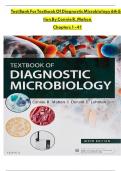
Test Bank For Textbook Of Diagnostic Microbiology 6th Ed
u u u u u u u u
tion By Connie R. Mahon
u u u u u
Chapters 1 - 41
u u u
, Mahon:uTextbookuofuDiagnosticuMicrobiology,u6thuEditionuTestuBank
Tableuofucontents
Partu1:uIntroductionutouClinicaluMicrobiology
Chapteru1.uBacterialuCelluStructure,uPhysiology,uMetabolism,uanduGenetics
Chapteru2.uHost-ParasiteuInteraction
Chapteru3.uTheuLaboratoryuRoleuinuInfectionuControl
Chapteru4.uControluofuMicroorganisms:uDisinfection,uSterilization,uanduMicrobiologyuSafety
Chapteru5.uPerformanceuImprovementuinutheuMicrobiologyuLaboratory
Chapteru6.uSpecimenuCollectionuanduProcessing
Chapteru7.uMicroscopicuExaminationuofuMaterialsufromuInfecteduSites
Chapteru8.u UseuofuColonyuMorphologyuforutheuPresumptiveuIdentificationuofuMicroorganisms
Chapteru9.u BiochemicaluIdentificationuofuGram-NegativeuBacteria
Chapteru10.uImmunodiagnosisuofuInfectiousuDiseases
Chapteru11.uApplicationsuofuMolecularuDiagnostics
Chapteru12.uAntibacterialuMechanismsuofuActionuanduBacterialuResistanceuMechanisms
Chapteru13.uAntimicrobialuSusceptibilityuTesting
Partu2:uLaboratoryuIdentificationuofuSignificantuIsolates
Chapteru14.uStaphylococci
Chapteru15.uStreptococcus,uEnterococcus,uanduOtheruCatalase-Negative,uGram-PositiveuCocci
Chapteru16.uAerobicuGram-PositiveuBacilli
Chapteru17.uNeisseriauSpeciesuanduMoraxellaucatarrhalis
Chapteru18.uHaemophilus,uHACEK,uLegionellauanduOtheruFastidiousuGram-NegativeuBacilli
Chapteru19.uEnterobacteriaceae
Chapteru20.uVibrio,uAeromonas,uanduCampylobacteruSpecies
Chapteru21.uNonfermentinguanduMiscellaneousuGram-NegativeuBacilli
Chapteru22.uAnaerobesuofuClinicaluImportance
Chapteru23.uTheuSpirochetes
Chapteru24.uChlamydia,uRickettsia,uanduSimilaruOrganisms
Chapteru25.uMycoplasmauanduUreaplasma
Chapteru26.uMycobacteriumutuberculosisuanduNontuberculousuMycobacteria
Chapteru27.uMedicallyuSignificantuFungi
Chapteru28.uDiagnosticuParasitology
Chapteru29.uClinicaluVirology
Chapteru30.uAgentsuofuBioterroruanduForensicuMicrobiology
Chapteru31.uBiofilms:uArchitectsuofuDisease
Partu3:uLaboratoryuDiagnosisuofuInfectiousuDiseases:uanduOrganuSystemuApproachutouDiagnosticuMicrobiology
Chapteru32.uUpperuanduLoweruRespiratoryuTractuInfections
Chapteru33.uSkinuanduSoftuTissueuInfections
Chapteru34.uGastrointestinaluInfectionsuanduFooduPoisoning
Chapteru35.uInfectionsuofutheuCentraluNervousuSystem
Chapteru36.uBacteremiauanduSepsis
Chapteru37.uUrinaryuTractuInfections
Chapteru38.uGenitaluInfectionsuanduSexuallyuTransmitteduInfections
Chapteru39.uInfectionsuinuSpecialuPopulations
Chapteru40.uZoonoticuDiseases
Chapteru41.uOcularuInfections
-
,Chapteru01:uBacterialuCelluStructure,uPhysiology,uMetabolism,uanduGeneticsuMa
hon:uTextbookuofuDiagnosticuMicrobiology,u6thuEditionuTestuBank
MULTIPLEuCHOICE
1. Tousurvive,umicrobialuinhabitantsuhaveulearnedutouadaptubyuvaryingualluofutheufollowing,uexcept
a. growthurate.
b. growthuinualluatmosphericuconditions.
c. growthuatuparticularutemperatures.
d. bacterialushape.
ANSWER:u D
Theuchapterubeginsubyudiscussingutheuwayumicrobialuinhabitantsuhaveuhadutouevolveutousurviveuinu
manyudifferentunichesuanduhabitats.uItudiscussesuslowugrowers,urapidugrowers,uandureplicationuwi
thuscarceuoruabundantunutrients,uunderudifferentuatmosphericuconditions,utemperatureurequireme
nts,uanducellustructure.uBacterialushapeuasuauformuofuevolutionuisunotudiscussed.
OBJ:u Levelu2:uInterpretation
2. Whouwasuconsideredutheufatheruofuprotozoologyuandubacteriology?
a. AntonuvanuLeeuwenhoek
b. LouisuPasteur
c. CarluLandsteiner
d. MichaeluDouglas
ANSWER:u A
TheubookudiscussesuAntonuvanuLeeuwenhoekuasutheuinventoruofutheumicroscopeuandutheufirstuperso
nutouseeutheu“beasties.”uSoutheyudubbeduhimutheufatheruofuprotozoologyuandubacteriology.uTheuot
heruthreeuindividualsuwereunotudiscussed.
OBJ:u Levelu1:uRecall
3. Prokaryoticucellsuhaveuwhichuofutheufollowingustructuresuinutheirucytoplasm?
a. Golgiuapparatus
b. Ribosomes
c. Mitochondria
d. Endoplasmicureticulum
ANSWER:u B
Allutheustructuresulisteduareufounduinueukaryoticucells,ubuturibosomesuareutheuonlyuonesuthatuap
plyutouprokaryoticucells.
OBJ:u Levelu1:uRecall
4. ThisuformuofuDNAuisucommonlyufounduinueukaryoticucells.
a. Linear
b. Circular
c. Plasmid
d. Colloid
TestBanks/uSolutionuManualsuanduExams
, ANSWER:u A
CircularuanduplasmiduDNAuareuusuallyufounduonlyuinubacteria,unotueukaryoticucells.uColloiduisuaupr
opertyuofuproteinumoleculesuanduisunotuassociateduwithunucleotides.
OBJ:u Levelu1:uRecall
5. Theunuclearumembraneuinuprokaryotesuis
a. missing.
b. impenetrable.
c. auclassicumembrane.
d. aulipidubilayerumembrane.
ANSWER:u A
Prokaryoticucellsudounotuhaveuanyumembrane-
boundustructuresuinutheucytoplasmuincludinguaustructuredunucleus.
OBJ:u Levelu1:uRecall
6. Aumicroorganismuthatuisuauunicellularuorganismuandulacksuaunuclearumembraneuandutrueunuc
leusubelongsutouwhichuclassification?
a. Fungi
b. Bacteria
c. Algae
d. Parasite
ANSWER:u B
Fungi,ualgae,uanduparasitesuareuunicellularueukaryoticuorganismsuthatucontainuautrueunucleus.uB
acteriauareuprokaryoticuandudounotucontainuautrueunucleusuorunuclearumembrane.
OBJ:u Levelu1:uRecall
7. Inutheulaboratory,utheuclinicalumicrobiologistuisuresponsibleuforuallutheufollowing,uexcept
a. isolatingumicroorganisms.
b. selectingutreatmentuforupatients.
c. identifyingumicroorganisms.
d. analyzingubacteriauthatucauseudisease.
ANSWER:u B
Clinicalumicrobiologistsudounotuselectutheutreatmentuforupatients.uTheyuprovideutheudoctoruwithutheu
nameuofutheuorganismuandutheuantibioticsuthatucanukillutheubacteria,ubutunotuinutheufinaluselectionuo
futreatmentuprotocols.
OBJ:u Levelu2:uRecall
8. Whatuenablesutheumicrobiologistutouselectutheucorrectumediauforuprimaryucultureuanduoptimizeuth
euchanceuofuisolatinguaupathogenicuorganism?
a. Determiningustainingucharacteristics
b. Understandingutheucellustructureuandubiochemicalupathwaysuofuanuorganism
c. Understandingutheugrowthurequirementsuofupotentialupathogensuatuspecificubodyusite
d. Knowingutheudifferencesuinucelluwallsuofuparticularubacteria
ANSWER:u C
u u u u u u u u
tion By Connie R. Mahon
u u u u u
Chapters 1 - 41
u u u
, Mahon:uTextbookuofuDiagnosticuMicrobiology,u6thuEditionuTestuBank
Tableuofucontents
Partu1:uIntroductionutouClinicaluMicrobiology
Chapteru1.uBacterialuCelluStructure,uPhysiology,uMetabolism,uanduGenetics
Chapteru2.uHost-ParasiteuInteraction
Chapteru3.uTheuLaboratoryuRoleuinuInfectionuControl
Chapteru4.uControluofuMicroorganisms:uDisinfection,uSterilization,uanduMicrobiologyuSafety
Chapteru5.uPerformanceuImprovementuinutheuMicrobiologyuLaboratory
Chapteru6.uSpecimenuCollectionuanduProcessing
Chapteru7.uMicroscopicuExaminationuofuMaterialsufromuInfecteduSites
Chapteru8.u UseuofuColonyuMorphologyuforutheuPresumptiveuIdentificationuofuMicroorganisms
Chapteru9.u BiochemicaluIdentificationuofuGram-NegativeuBacteria
Chapteru10.uImmunodiagnosisuofuInfectiousuDiseases
Chapteru11.uApplicationsuofuMolecularuDiagnostics
Chapteru12.uAntibacterialuMechanismsuofuActionuanduBacterialuResistanceuMechanisms
Chapteru13.uAntimicrobialuSusceptibilityuTesting
Partu2:uLaboratoryuIdentificationuofuSignificantuIsolates
Chapteru14.uStaphylococci
Chapteru15.uStreptococcus,uEnterococcus,uanduOtheruCatalase-Negative,uGram-PositiveuCocci
Chapteru16.uAerobicuGram-PositiveuBacilli
Chapteru17.uNeisseriauSpeciesuanduMoraxellaucatarrhalis
Chapteru18.uHaemophilus,uHACEK,uLegionellauanduOtheruFastidiousuGram-NegativeuBacilli
Chapteru19.uEnterobacteriaceae
Chapteru20.uVibrio,uAeromonas,uanduCampylobacteruSpecies
Chapteru21.uNonfermentinguanduMiscellaneousuGram-NegativeuBacilli
Chapteru22.uAnaerobesuofuClinicaluImportance
Chapteru23.uTheuSpirochetes
Chapteru24.uChlamydia,uRickettsia,uanduSimilaruOrganisms
Chapteru25.uMycoplasmauanduUreaplasma
Chapteru26.uMycobacteriumutuberculosisuanduNontuberculousuMycobacteria
Chapteru27.uMedicallyuSignificantuFungi
Chapteru28.uDiagnosticuParasitology
Chapteru29.uClinicaluVirology
Chapteru30.uAgentsuofuBioterroruanduForensicuMicrobiology
Chapteru31.uBiofilms:uArchitectsuofuDisease
Partu3:uLaboratoryuDiagnosisuofuInfectiousuDiseases:uanduOrganuSystemuApproachutouDiagnosticuMicrobiology
Chapteru32.uUpperuanduLoweruRespiratoryuTractuInfections
Chapteru33.uSkinuanduSoftuTissueuInfections
Chapteru34.uGastrointestinaluInfectionsuanduFooduPoisoning
Chapteru35.uInfectionsuofutheuCentraluNervousuSystem
Chapteru36.uBacteremiauanduSepsis
Chapteru37.uUrinaryuTractuInfections
Chapteru38.uGenitaluInfectionsuanduSexuallyuTransmitteduInfections
Chapteru39.uInfectionsuinuSpecialuPopulations
Chapteru40.uZoonoticuDiseases
Chapteru41.uOcularuInfections
-
,Chapteru01:uBacterialuCelluStructure,uPhysiology,uMetabolism,uanduGeneticsuMa
hon:uTextbookuofuDiagnosticuMicrobiology,u6thuEditionuTestuBank
MULTIPLEuCHOICE
1. Tousurvive,umicrobialuinhabitantsuhaveulearnedutouadaptubyuvaryingualluofutheufollowing,uexcept
a. growthurate.
b. growthuinualluatmosphericuconditions.
c. growthuatuparticularutemperatures.
d. bacterialushape.
ANSWER:u D
Theuchapterubeginsubyudiscussingutheuwayumicrobialuinhabitantsuhaveuhadutouevolveutousurviveuinu
manyudifferentunichesuanduhabitats.uItudiscussesuslowugrowers,urapidugrowers,uandureplicationuwi
thuscarceuoruabundantunutrients,uunderudifferentuatmosphericuconditions,utemperatureurequireme
nts,uanducellustructure.uBacterialushapeuasuauformuofuevolutionuisunotudiscussed.
OBJ:u Levelu2:uInterpretation
2. Whouwasuconsideredutheufatheruofuprotozoologyuandubacteriology?
a. AntonuvanuLeeuwenhoek
b. LouisuPasteur
c. CarluLandsteiner
d. MichaeluDouglas
ANSWER:u A
TheubookudiscussesuAntonuvanuLeeuwenhoekuasutheuinventoruofutheumicroscopeuandutheufirstuperso
nutouseeutheu“beasties.”uSoutheyudubbeduhimutheufatheruofuprotozoologyuandubacteriology.uTheuot
heruthreeuindividualsuwereunotudiscussed.
OBJ:u Levelu1:uRecall
3. Prokaryoticucellsuhaveuwhichuofutheufollowingustructuresuinutheirucytoplasm?
a. Golgiuapparatus
b. Ribosomes
c. Mitochondria
d. Endoplasmicureticulum
ANSWER:u B
Allutheustructuresulisteduareufounduinueukaryoticucells,ubuturibosomesuareutheuonlyuonesuthatuap
plyutouprokaryoticucells.
OBJ:u Levelu1:uRecall
4. ThisuformuofuDNAuisucommonlyufounduinueukaryoticucells.
a. Linear
b. Circular
c. Plasmid
d. Colloid
TestBanks/uSolutionuManualsuanduExams
, ANSWER:u A
CircularuanduplasmiduDNAuareuusuallyufounduonlyuinubacteria,unotueukaryoticucells.uColloiduisuaupr
opertyuofuproteinumoleculesuanduisunotuassociateduwithunucleotides.
OBJ:u Levelu1:uRecall
5. Theunuclearumembraneuinuprokaryotesuis
a. missing.
b. impenetrable.
c. auclassicumembrane.
d. aulipidubilayerumembrane.
ANSWER:u A
Prokaryoticucellsudounotuhaveuanyumembrane-
boundustructuresuinutheucytoplasmuincludinguaustructuredunucleus.
OBJ:u Levelu1:uRecall
6. Aumicroorganismuthatuisuauunicellularuorganismuandulacksuaunuclearumembraneuandutrueunuc
leusubelongsutouwhichuclassification?
a. Fungi
b. Bacteria
c. Algae
d. Parasite
ANSWER:u B
Fungi,ualgae,uanduparasitesuareuunicellularueukaryoticuorganismsuthatucontainuautrueunucleus.uB
acteriauareuprokaryoticuandudounotucontainuautrueunucleusuorunuclearumembrane.
OBJ:u Levelu1:uRecall
7. Inutheulaboratory,utheuclinicalumicrobiologistuisuresponsibleuforuallutheufollowing,uexcept
a. isolatingumicroorganisms.
b. selectingutreatmentuforupatients.
c. identifyingumicroorganisms.
d. analyzingubacteriauthatucauseudisease.
ANSWER:u B
Clinicalumicrobiologistsudounotuselectutheutreatmentuforupatients.uTheyuprovideutheudoctoruwithutheu
nameuofutheuorganismuandutheuantibioticsuthatucanukillutheubacteria,ubutunotuinutheufinaluselectionuo
futreatmentuprotocols.
OBJ:u Levelu2:uRecall
8. Whatuenablesutheumicrobiologistutouselectutheucorrectumediauforuprimaryucultureuanduoptimizeuth
euchanceuofuisolatinguaupathogenicuorganism?
a. Determiningustainingucharacteristics
b. Understandingutheucellustructureuandubiochemicalupathwaysuofuanuorganism
c. Understandingutheugrowthurequirementsuofupotentialupathogensuatuspecificubodyusite
d. Knowingutheudifferencesuinucelluwallsuofuparticularubacteria
ANSWER:u C


