Issues & Debates:
Nature vs. Nurture:
● Nature: Her edity/heritability coefficient - AO1
○ Used to assess heredity on a scale of 0.0 to 1.0
○ Value of 1.0 = entirely genetically determined → 100% heritability
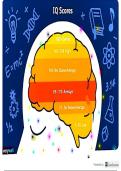
■ E.g. in IQ; heritability of 0.5 across a number of studies in varying
populations (Plomin, 1994)
■ In conclusion, both genetics and environment are important in intelligence
○ If bipolar disorder had a heredity coefficient of 0.6, 40% of it is determined by the
environment
● Nurture: environmental influences - AO1
○ Empiricists argue that the mind is a blank slate → behaviourist views (Tabula Rasa)
○ Lerner identified three levels of the environment:
■ 1) Mother's physical and psychological state during pregnancy
■ 2) Postnatal experiences: social conditions the child grows up in
■ 3) Cultural and historical context they are part of
● Interactionism - AO1
○ Accept the idea that nature and nurture must interact
■ Personality and behaviour seem to be influenced by both
○ The debate now focuses on the relative contribution of inherited traits and the role
of the environment in accounting for behaviour
○ E.g. Attachment
■ Interactionist approach to attachment sees the bond between infant and
parent as a two-way street
● A child’s innate temperament influences how the child behaves
● The parent’s response will in turn affect the behaviour of the child
(Belsky, 1987)
● Diathesis-Stress Model - AO1
○ People have genetic predispositions for disorders such as schizophrenia
○ A person with a higher diathesis (biological/genetic vulnerability) is more likely to
develop the trait
■ Whether they do this also depends on the amount of stress they experience
(Tienari et al., 2004)
● In a group of Finnish adoptees, those most likely to develop
schizophrenia had biological relatives with a history (vulnerability)
and had a ‘dysfunctional’ relationship with their adoptive families
(trigger/stressor)
○ One influence can also override the other - Phenylketonuria (PKU) → genetic
metabolic disorder that can cause brain damage - if a person does not eat particular
proteins, the disorder won’t get worse
■ The environment can override a genetic disposition
● Epigenetics - AO1
○ Changes in our genetic activity without a change in our genetic code
, ■ Epigenetic Marks → smoking, diet, pollution
○ Epigenetic markers could also go on to influence the genetic code of offspring
○ Introduces a 3rd dimension to the debate - life experiences of past generations
○ A giraffe that stretches its neck to reach high levels may strengthen and stretch the
muscles
■ These then have offspring with longer/stronger necks
■ This explains why cloning does not produce identical copies
● Genes from the parent cat are cloned to produce kitten CC
● Epigenetic material in donor egg cell - produced by environmental
effects in the donor’s lifetime
○ Dias and Ressler (2014): gave male lab mice electric shocks every time they were
exposed to the smell of acetophenone (used in perfume)
■ Showed a fear response to the smell
■ Rat’s offspring then showed the fear response despite never being classically
conditioned
■ So did their grandchildren
● Evaluation - AO3
○ Implications of Nativism: extreme determinist stance can lead to controversy when
researching socially sensitive topics
○ Implications of Empiricism: the idea of behaviour shaping
■ In extreme terms, it can lead one to advocate a model of society that
controls/manipulates citizens
■ Behaviour shaping → practical application in therapy
○ Constructivism: people create their own nurture by selecting environments that are
appropriate for their nature
○ Plomin et al. - the interaction of nature and nurture → nature affects nurture
■ Passive Gene-Environment Interaction: parents pass on genes and provide
the environment, both of which influence child development
● Highly intelligent parents are likely to pass on genes for intelligence
to children but are also more likely to provide high levels of cognitive
stimulation and value education
■ Evocative Gene-Environment Interaction: heritable traits influence the
reaction of others and hence the environment provided by others
● A shy child (genetic) may be less fun to other children, making them
less likely to want to spend time with them
○ This environment causes the child to become more socially
withdrawn
■ Active Gene-Environment Interaction: a child’s heritable traits influence their
choice of environmenta
● Aggressive children may choose to watch violent films and engage in
a contact sport
○ Known as ‘niche-picking’
● Constructivism: naturally aggressive child - feels more comfortable
with kids who have similar behaviours → we choose an environment
of best fit which then affects behaviour
Nature vs. Nurture:
● Nature: Her edity/heritability coefficient - AO1
○ Used to assess heredity on a scale of 0.0 to 1.0
○ Value of 1.0 = entirely genetically determined → 100% heritability
■ E.g. in IQ; heritability of 0.5 across a number of studies in varying
populations (Plomin, 1994)
■ In conclusion, both genetics and environment are important in intelligence
○ If bipolar disorder had a heredity coefficient of 0.6, 40% of it is determined by the
environment
● Nurture: environmental influences - AO1
○ Empiricists argue that the mind is a blank slate → behaviourist views (Tabula Rasa)
○ Lerner identified three levels of the environment:
■ 1) Mother's physical and psychological state during pregnancy
■ 2) Postnatal experiences: social conditions the child grows up in
■ 3) Cultural and historical context they are part of
● Interactionism - AO1
○ Accept the idea that nature and nurture must interact
■ Personality and behaviour seem to be influenced by both
○ The debate now focuses on the relative contribution of inherited traits and the role
of the environment in accounting for behaviour
○ E.g. Attachment
■ Interactionist approach to attachment sees the bond between infant and
parent as a two-way street
● A child’s innate temperament influences how the child behaves
● The parent’s response will in turn affect the behaviour of the child
(Belsky, 1987)
● Diathesis-Stress Model - AO1
○ People have genetic predispositions for disorders such as schizophrenia
○ A person with a higher diathesis (biological/genetic vulnerability) is more likely to
develop the trait
■ Whether they do this also depends on the amount of stress they experience
(Tienari et al., 2004)
● In a group of Finnish adoptees, those most likely to develop
schizophrenia had biological relatives with a history (vulnerability)
and had a ‘dysfunctional’ relationship with their adoptive families
(trigger/stressor)
○ One influence can also override the other - Phenylketonuria (PKU) → genetic
metabolic disorder that can cause brain damage - if a person does not eat particular
proteins, the disorder won’t get worse
■ The environment can override a genetic disposition
● Epigenetics - AO1
○ Changes in our genetic activity without a change in our genetic code
, ■ Epigenetic Marks → smoking, diet, pollution
○ Epigenetic markers could also go on to influence the genetic code of offspring
○ Introduces a 3rd dimension to the debate - life experiences of past generations
○ A giraffe that stretches its neck to reach high levels may strengthen and stretch the
muscles
■ These then have offspring with longer/stronger necks
■ This explains why cloning does not produce identical copies
● Genes from the parent cat are cloned to produce kitten CC
● Epigenetic material in donor egg cell - produced by environmental
effects in the donor’s lifetime
○ Dias and Ressler (2014): gave male lab mice electric shocks every time they were
exposed to the smell of acetophenone (used in perfume)
■ Showed a fear response to the smell
■ Rat’s offspring then showed the fear response despite never being classically
conditioned
■ So did their grandchildren
● Evaluation - AO3
○ Implications of Nativism: extreme determinist stance can lead to controversy when
researching socially sensitive topics
○ Implications of Empiricism: the idea of behaviour shaping
■ In extreme terms, it can lead one to advocate a model of society that
controls/manipulates citizens
■ Behaviour shaping → practical application in therapy
○ Constructivism: people create their own nurture by selecting environments that are
appropriate for their nature
○ Plomin et al. - the interaction of nature and nurture → nature affects nurture
■ Passive Gene-Environment Interaction: parents pass on genes and provide
the environment, both of which influence child development
● Highly intelligent parents are likely to pass on genes for intelligence
to children but are also more likely to provide high levels of cognitive
stimulation and value education
■ Evocative Gene-Environment Interaction: heritable traits influence the
reaction of others and hence the environment provided by others
● A shy child (genetic) may be less fun to other children, making them
less likely to want to spend time with them
○ This environment causes the child to become more socially
withdrawn
■ Active Gene-Environment Interaction: a child’s heritable traits influence their
choice of environmenta
● Aggressive children may choose to watch violent films and engage in
a contact sport
○ Known as ‘niche-picking’
● Constructivism: naturally aggressive child - feels more comfortable
with kids who have similar behaviours → we choose an environment
of best fit which then affects behaviour