NURSING MS NSG/512 ll ll ll
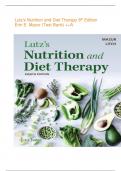
Test Bank Lutz’s Nutrition and Diet Therapy 7th
ll ll ll ll ll ll ll
ll Edition Erin E. Mazur ll ll ll
Chapter 1. Nutrition in Human Healthll ll ll ll ll
Multiple Choice ll
Identify the choice that best completes the statement or answers the question.
ll ll ll ll ll ll ll ll ll ll ll
ll
____ 1. A nurse is leading a seminar with middle school students on healthy food choices
ll ll ll ll ll ll ll ll ll ll ll ll ll ll ll ll ll ll ll ll
ll at the community health center every Tuesday. The nurse knows that the seminar is a form
ll ll ll ll ll ll ll ll ll ll ll ll ll ll ll
ll of:
1. Secondary prevention ll
2. Primary prevention ll
3. Tertiary prevention ll
4. Complication prevention ll
____ 2. A nurse knows that energy nutrients are measured in which of the following
ll ll ll ll ll ll ll ll ll ll ll ll ll ll ll ll ll ll ll
ll ways?
1. Kilocalories
2. Proteins
3. Heat (thermal) ll
4. Electric signals ll
ll
ll
,____ 3. A nurse is caring for a client with Crohn disease. The nurse notes that the health-
ll ll ll ll ll ll ll ll ll ll ll ll ll ll ll ll ll ll ll ll ll ll
care provider has ordered the addition of omega-3 fatty acids to the diet and omega-3 fatty
ll ll ll ll ll ll ll ll ll ll ll ll ll ll ll
ll acid supplement to the medication regimen. The nurse suspects the health-care provider
ll ll ll ll ll ll ll ll ll ll ll
ll is applying which process to help this client minimize chronic inflammation from the
ll ll ll ll ll ll ll ll ll ll ll ll
ll disease?
1. Nutrigenetics
2. Epigenetics
3. Nutrigenomics
4. Epigenomics
ll
ll
____ 4. Which is the main focus of the 2015–2020 Dietary Guidelines?
ll ll ll ll ll ll ll ll ll ll ll ll ll ll ll ll
1. Overall eating patterns should be based on personal and cultural choice.
ll ll ll ll ll ll ll ll ll ll
2. Provide simple instructions that promote healthy eating patterns.
ll ll ll ll ll ll ll
3. Monitor dietary intake through a telephone survey. ll ll ll ll ll ll
4. Increase the number of schools providing fruits and vegetables.
ll ll ll ll ll ll ll ll
ll
ll
____ 5. Which statement made to a nurse about food insecurity is concerning?
ll ll ll ll ll ll ll ll ll ll ll ll ll ll ll ll ll
1. “My mom cooks once a week and we go out to eat the other days.”
ll ll ll ll ll ll ll ll ll ll ll ll ll ll
2. “We often eat at the local shelter when we can.”
ll ll ll ll ll ll ll ll ll
3. “I often feel like I don’t want to eat; I’m getting so fat!”
ll ll ll ll ll ll ll ll ll ll ll ll
4. “I love to cook. I often cook for my friends and family.”
ll ll ll ll ll ll ll ll ll ll ll
ll
ll
____ 6. In order to make suitable recommendations about nutritional status, which
ll ll ll ll ll ll ll ll ll ll ll ll ll ll ll ll
ll criteria must the nurse gather during assessment from a client diagnosed with diabetes?
ll ll ll ll ll ll ll ll ll ll ll ll
,1. Reported dietary intake and physical examination ll ll ll ll ll
2. Anthropomorphic measurements and physical examination ll ll ll ll
3. Food diary and interview ll ll ll
4. Dietary recalls and self-report ll ll ll
ll
ll
____ 7. A nurse is caring for a client diagnosed with diverticulitis. Which question asked
ll ll ll ll ll ll ll ll ll ll ll ll ll ll ll ll ll ll ll
ll during nutritional assessment is most appropriate for the nurse to ask?
ll ll ll ll ll ll ll ll ll ll
1. “Do you consume meat at most of your meals?”
ll ll ll ll ll ll ll ll
2. “Doesn’t everyone like grilled chicken?” ll ll ll ll
3. “What comfort foods do you enjoy?” ll ll ll ll ll
4. “What types of food do you do you consume regularly?”
ll ll ll ll ll ll ll ll ll
ll
ll
____ 8. A nurse is caring for a client admitted to the emergency department (ED). When
ll ll ll ll ll ll ll ll ll ll ll ll ll ll ll ll ll ll ll ll
ll the nurse learns that the client is an Alaskan native, which diagnosis of acculturation does
ll ll ll ll ll ll ll ll ll ll ll ll ll ll
ll the nurse suspect?
ll ll
1. COPD
2. Diabetes
3. Crohn disease ll
4. Gastrointestinal bleeding ll
ll
ll
____ 9. When taking care of a client with irritable bowel syndrome (IBS), the nurse talks
ll ll ll ll ll ll ll ll ll ll ll ll ll ll ll ll ll ll ll ll
ll about new genetic knowledge that could personalize nutrition prescriptions. The nurse
ll ll ll ll ll ll ll ll ll ll
ll does this to:
ll ll
1. Cure the disease ll ll
, 2. Research proper use of prescriptions ll ll ll ll
3. Utilize nutrients properly ll ll
4. Help address nutritional needs ll ll ll
ll
ll
Multiple Response ll
Identify one or more choices that best complete the statement or answer the question.
ll ll ll ll ll ll ll ll ll ll ll ll ll
ll
____ 10. A nurse is caring for a client diagnosed with bulimia. In addition to the nurse,
ll ll ll ll ll ll ll ll ll ll ll ll ll ll ll ll ll ll ll
ll which other members of the health-care team are involved in the comprehensive
ll ll ll ll ll ll ll ll ll ll ll
ll nutritional assessment? Select all that apply. ll ll ll ll ll
1. Social worker ll
2. Laboratory staff ll
3. Dietitian
4. Physician
5. Physical therapist ll
ll
ll
____ 11. When discharging a client who had gastric-bypass surgery, the nurse makes
ll ll ll ll ll ll ll ll ll ll ll ll ll ll ll
ll sure to include which information in the client’s discharge planning? Select all that apply.
ll ll ll ll ll ll ll ll ll ll ll ll ll
1. Take vitamins daily. ll ll
2. Drink plenty of water. ll ll ll
3. Include polyphenols in the diet. ll ll ll ll
4. Limit carbohydrates and fats. ll ll ll
5. Eat plenty of protein shakes.
ll ll ll ll
ll
ll
Test Bank Lutz’s Nutrition and Diet Therapy 7th
ll ll ll ll ll ll ll
ll Edition Erin E. Mazur ll ll ll
Chapter 1. Nutrition in Human Healthll ll ll ll ll
Multiple Choice ll
Identify the choice that best completes the statement or answers the question.
ll ll ll ll ll ll ll ll ll ll ll
ll
____ 1. A nurse is leading a seminar with middle school students on healthy food choices
ll ll ll ll ll ll ll ll ll ll ll ll ll ll ll ll ll ll ll ll
ll at the community health center every Tuesday. The nurse knows that the seminar is a form
ll ll ll ll ll ll ll ll ll ll ll ll ll ll ll
ll of:
1. Secondary prevention ll
2. Primary prevention ll
3. Tertiary prevention ll
4. Complication prevention ll
____ 2. A nurse knows that energy nutrients are measured in which of the following
ll ll ll ll ll ll ll ll ll ll ll ll ll ll ll ll ll ll ll
ll ways?
1. Kilocalories
2. Proteins
3. Heat (thermal) ll
4. Electric signals ll
ll
ll
,____ 3. A nurse is caring for a client with Crohn disease. The nurse notes that the health-
ll ll ll ll ll ll ll ll ll ll ll ll ll ll ll ll ll ll ll ll ll ll
care provider has ordered the addition of omega-3 fatty acids to the diet and omega-3 fatty
ll ll ll ll ll ll ll ll ll ll ll ll ll ll ll
ll acid supplement to the medication regimen. The nurse suspects the health-care provider
ll ll ll ll ll ll ll ll ll ll ll
ll is applying which process to help this client minimize chronic inflammation from the
ll ll ll ll ll ll ll ll ll ll ll ll
ll disease?
1. Nutrigenetics
2. Epigenetics
3. Nutrigenomics
4. Epigenomics
ll
ll
____ 4. Which is the main focus of the 2015–2020 Dietary Guidelines?
ll ll ll ll ll ll ll ll ll ll ll ll ll ll ll ll
1. Overall eating patterns should be based on personal and cultural choice.
ll ll ll ll ll ll ll ll ll ll
2. Provide simple instructions that promote healthy eating patterns.
ll ll ll ll ll ll ll
3. Monitor dietary intake through a telephone survey. ll ll ll ll ll ll
4. Increase the number of schools providing fruits and vegetables.
ll ll ll ll ll ll ll ll
ll
ll
____ 5. Which statement made to a nurse about food insecurity is concerning?
ll ll ll ll ll ll ll ll ll ll ll ll ll ll ll ll ll
1. “My mom cooks once a week and we go out to eat the other days.”
ll ll ll ll ll ll ll ll ll ll ll ll ll ll
2. “We often eat at the local shelter when we can.”
ll ll ll ll ll ll ll ll ll
3. “I often feel like I don’t want to eat; I’m getting so fat!”
ll ll ll ll ll ll ll ll ll ll ll ll
4. “I love to cook. I often cook for my friends and family.”
ll ll ll ll ll ll ll ll ll ll ll
ll
ll
____ 6. In order to make suitable recommendations about nutritional status, which
ll ll ll ll ll ll ll ll ll ll ll ll ll ll ll ll
ll criteria must the nurse gather during assessment from a client diagnosed with diabetes?
ll ll ll ll ll ll ll ll ll ll ll ll
,1. Reported dietary intake and physical examination ll ll ll ll ll
2. Anthropomorphic measurements and physical examination ll ll ll ll
3. Food diary and interview ll ll ll
4. Dietary recalls and self-report ll ll ll
ll
ll
____ 7. A nurse is caring for a client diagnosed with diverticulitis. Which question asked
ll ll ll ll ll ll ll ll ll ll ll ll ll ll ll ll ll ll ll
ll during nutritional assessment is most appropriate for the nurse to ask?
ll ll ll ll ll ll ll ll ll ll
1. “Do you consume meat at most of your meals?”
ll ll ll ll ll ll ll ll
2. “Doesn’t everyone like grilled chicken?” ll ll ll ll
3. “What comfort foods do you enjoy?” ll ll ll ll ll
4. “What types of food do you do you consume regularly?”
ll ll ll ll ll ll ll ll ll
ll
ll
____ 8. A nurse is caring for a client admitted to the emergency department (ED). When
ll ll ll ll ll ll ll ll ll ll ll ll ll ll ll ll ll ll ll ll
ll the nurse learns that the client is an Alaskan native, which diagnosis of acculturation does
ll ll ll ll ll ll ll ll ll ll ll ll ll ll
ll the nurse suspect?
ll ll
1. COPD
2. Diabetes
3. Crohn disease ll
4. Gastrointestinal bleeding ll
ll
ll
____ 9. When taking care of a client with irritable bowel syndrome (IBS), the nurse talks
ll ll ll ll ll ll ll ll ll ll ll ll ll ll ll ll ll ll ll ll
ll about new genetic knowledge that could personalize nutrition prescriptions. The nurse
ll ll ll ll ll ll ll ll ll ll
ll does this to:
ll ll
1. Cure the disease ll ll
, 2. Research proper use of prescriptions ll ll ll ll
3. Utilize nutrients properly ll ll
4. Help address nutritional needs ll ll ll
ll
ll
Multiple Response ll
Identify one or more choices that best complete the statement or answer the question.
ll ll ll ll ll ll ll ll ll ll ll ll ll
ll
____ 10. A nurse is caring for a client diagnosed with bulimia. In addition to the nurse,
ll ll ll ll ll ll ll ll ll ll ll ll ll ll ll ll ll ll ll
ll which other members of the health-care team are involved in the comprehensive
ll ll ll ll ll ll ll ll ll ll ll
ll nutritional assessment? Select all that apply. ll ll ll ll ll
1. Social worker ll
2. Laboratory staff ll
3. Dietitian
4. Physician
5. Physical therapist ll
ll
ll
____ 11. When discharging a client who had gastric-bypass surgery, the nurse makes
ll ll ll ll ll ll ll ll ll ll ll ll ll ll ll
ll sure to include which information in the client’s discharge planning? Select all that apply.
ll ll ll ll ll ll ll ll ll ll ll ll ll
1. Take vitamins daily. ll ll
2. Drink plenty of water. ll ll ll
3. Include polyphenols in the diet. ll ll ll ll
4. Limit carbohydrates and fats. ll ll ll
5. Eat plenty of protein shakes.
ll ll ll ll
ll
ll