

CEIIIS : TE LIVING UNITSS
a
-
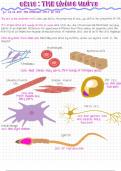
. I cells are the smallest unit of life
3
The cell is the smallest unit when you define the of cells you define the properties of life
I
properties ,
.
All organisms are made of one or more cells Cells are the structural and functional building
.
. Different cell types have different functions within an organism and the
blocks of an organism ,
activity of an organism depends on the activities of individual cells and of all of the cells together.
cells only arise from other cells
. Most body cells arise by mitosis ,
which we explore later in the
chapter .
·
- erythrocytes
! Y
m
·
T
epithelial cells
· ·- (
- Am
· ··
=>
·
· =
>
· mip ··
··
e
·
e
·
e
·-
-
g
e
·
# #
↑ ⑭
- ⑭
·
· ·
-
-
&
mm
-
pe
·
-
er A
·
-
ex
·
ree
·
· prem
= ·(
T
·· ·
S
#
·
- · e
fibroblasts
⑭ · #
A
-
linings, or
⑤
cells that connect body parts , form transport gases
-T
-
=a
g
-
-
·
f
S
-
-
F
·
S
Skeletal muscle
S
fat cell
Fr
smooth muscle
· D
h
·C&*
· ·
Cell that store
Cell
F Cells
a
#% >
nutrients
S
-
m
-
-
·
=>
-=
-
--
-
--
W
·-
-
=> -
- -
- >
·
--
·
=
-
-
-
E cells that
move organs and
body parts
m
--
i &-
*
&
S
nm- Up·
··
cell
· 2 nerve
&
-
- -
W
↳ A
)#⑰-
- ·
[
↓ ·
- ·
·
=·
-
-
-
-
- ·Y &
I
that gathers info
=
A
# cell
#Y ↑D
and controls
** body I1
-
⑧
·
-
functions ·
·
macrophage
a
light disease
⑳
sperm
#
S
-
cell of reproduction
, A human cell has three main parts :
The boundary the cell which barrier.
plasma membrane : the outer of ,
acts as a
selectively permeable
The cytoplasm : the intracellular fluid packed with organelles ,
small structures that perform specific ce
functions
The organelle that controls cellular activities the nucleus lies near the cell's
nucleus : an
.
Typically
Center .
Extracellular Materials
Extracellular fluid internal fluid located outside cells includes interstitial fluid ,
,
blood plasma and ,
cerebrospinal fluid .
cellular secretions these secretions include substances that did in digestion and some that act a
lubricants (Saliva ,
mucus and serous
,
fluids)
Extracellular material
matrix most abundant extracellular . Nonliving material in connective tissu
consisting of ground substance and fibers ; separates the living cells .
Part 1 Plasma Membrane
plasma membrane separates two of the body's major fluid compartments the intracellular fluid -
within cells and the extracellular fluid outside . Its a membrane
cells composed of phospholipids
, ,
cholesterol and proteins that encloses , ,
cell contents ,
outer lining cell membrane
.
.2
3 The plasma membrane is a double
layer of phospholipids with embedded proteins
The fluid mosaic model is a
depiction of the structure of the membranes of a cell a
phospholipid
bilayers in which proteins are .
dispersed
Membrane Lipids
The lipid bilayer forms the basic "fabric" of the membrane It is constructed .
largely of
phospholipids ,
with smaller amounts of cholesterol
Phospholids have hydrophilic heads that are attracted to water the main constituent of
·
schematic plasma membrane
Cinclu des phosphate group) I extracellular fluid
acids) polar heads Nonpolar tails "hide"
face the water from the water
inside outside
the cell
a
-
. I cells are the smallest unit of life
3
The cell is the smallest unit when you define the of cells you define the properties of life
I
properties ,
.
All organisms are made of one or more cells Cells are the structural and functional building
.
. Different cell types have different functions within an organism and the
blocks of an organism ,
activity of an organism depends on the activities of individual cells and of all of the cells together.
cells only arise from other cells
. Most body cells arise by mitosis ,
which we explore later in the
chapter .
·
- erythrocytes
! Y
m
·
T
epithelial cells
· ·- (
- Am
· ··
=>
·
· =
>
· mip ··
··
e
·
e
·
e
·-
-
g
e
·
# #
↑ ⑭
- ⑭
·
· ·
-
-
&
mm
-
pe
·
-
er A
·
-
ex
·
ree
·
· prem
= ·(
T
·· ·
S
#
·
- · e
fibroblasts
⑭ · #
A
-
linings, or
⑤
cells that connect body parts , form transport gases
-T
-
=a
g
-
-
·
f
S
-
-
F
·
S
Skeletal muscle
S
fat cell
Fr
smooth muscle
· D
h
·C&*
· ·
Cell that store
Cell
F Cells
a
#% >
nutrients
S
-
m
-
-
·
=>
-=
-
--
-
--
W
·-
-
=> -
- -
- >
·
--
·
=
-
-
-
E cells that
move organs and
body parts
m
--
i &-
*
&
S
nm- Up·
··
cell
· 2 nerve
&
-
- -
W
↳ A
)#⑰-
- ·
[
↓ ·
- ·
·
=·
-
-
-
-
- ·Y &
I
that gathers info
=
A
# cell
#Y ↑D
and controls
** body I1
-
⑧
·
-
functions ·
·
macrophage
a
light disease
⑳
sperm
#
S
-
cell of reproduction
, A human cell has three main parts :
The boundary the cell which barrier.
plasma membrane : the outer of ,
acts as a
selectively permeable
The cytoplasm : the intracellular fluid packed with organelles ,
small structures that perform specific ce
functions
The organelle that controls cellular activities the nucleus lies near the cell's
nucleus : an
.
Typically
Center .
Extracellular Materials
Extracellular fluid internal fluid located outside cells includes interstitial fluid ,
,
blood plasma and ,
cerebrospinal fluid .
cellular secretions these secretions include substances that did in digestion and some that act a
lubricants (Saliva ,
mucus and serous
,
fluids)
Extracellular material
matrix most abundant extracellular . Nonliving material in connective tissu
consisting of ground substance and fibers ; separates the living cells .
Part 1 Plasma Membrane
plasma membrane separates two of the body's major fluid compartments the intracellular fluid -
within cells and the extracellular fluid outside . Its a membrane
cells composed of phospholipids
, ,
cholesterol and proteins that encloses , ,
cell contents ,
outer lining cell membrane
.
.2
3 The plasma membrane is a double
layer of phospholipids with embedded proteins
The fluid mosaic model is a
depiction of the structure of the membranes of a cell a
phospholipid
bilayers in which proteins are .
dispersed
Membrane Lipids
The lipid bilayer forms the basic "fabric" of the membrane It is constructed .
largely of
phospholipids ,
with smaller amounts of cholesterol
Phospholids have hydrophilic heads that are attracted to water the main constituent of
·
schematic plasma membrane
Cinclu des phosphate group) I extracellular fluid
acids) polar heads Nonpolar tails "hide"
face the water from the water
inside outside
the cell


