100% satisfaction guarantee Immediately available after payment Both online and in PDF No strings attached 4.2 TrustPilot
logo-home
Exam (elaborations)

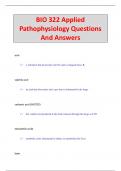
BIO 322 Applied Pathophysiology Questions And Answers

Rating
-
Sold
-
Pages
13
Grade
A+
Uploaded on
07-08-2024
Written in
2024/2025

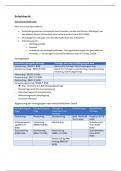
hypoxemia ~ low oxygen in the blood hypoxemic hypoxia ~ most common type of hypoxia, occurs when PaO2 drops below 80mmHg (such as due to altitude or disease impairing lung function) ischemic hypoxia ~ impaired tissue perfusion due to a cardiac or vascular disorder anemic hypoxia ~ oxygen carrying capacity of blood is reduced histoxic hypoxemia ~ tissues are unable to use the oxygen due to poisoning, such in the case of cyanide which prevents mitochondrial enzymes from synthesizing ATP using oxygen dyoxia ~ imbalance between oxygen supply and demand causes of decreased oxygen supply ~ peumonia, pulmonary edema, asthma, drowning, heart failure, anemia causes of increased oxygen demand ~ pregnancy, wound healing, exercise oxidative stress ~ an imbalance between the production of reactive oxygen species (ROS) such as free radicals and the ability of the body to counteract their harmful effects through neutralization via antioxidants carbon monoxide (CO) poisoning ~ -CO binds to hemoglobin significantly reducing the O2 carrying capacity of blood -acute CO poisoning sx: nausea, vomiting, weakness, throbbing headache -severe CO poisoning sx: dyspnea, confusion, cardiac dysrhythmias, coma lead poisoning ~ -absorbed through inhalation or ingestion -sx: seizures, delirium, vomiting, coma, issues with cognition and attention span -can cause renal kidney injury how can acidosis affect the heart? ~ decreased contractility

Show more Read less
Institution
BIO 322
Course
BIO 322


Whoops! We can’t load your doc right now. Try again or contact support.

Written for

Institution
BIO 322
Course
BIO 322

Document information

Uploaded on
August 7, 2024
Number of pages
13
Written in
2024/2025
Type
Exam (elaborations)
Contains
Questions & answers

Subjects

Content preview

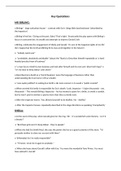
BIO 322 Applied
Pathophysiology Questions
And Answers

acid


✓~ a substance that dissociates into H+ and a conjugate base, B-


volatile acid


✓~ an acid that dissociates into a gas that is eliminated by the lungs


carbonic acid (H2CO3)


✓~ the volatile acid produced in the body released through the lungs as CO2


nonvolatile acids


✓~ metabolic acids eliminated by kidney or metabolized by liver


base

, ✓~ H+ acceptor


bicarbonate (HCO3-)


✓~ weak base


alkalosis


✓~ pH > 7.45


three ways the body regulates pH


✓~ -intracellular and extracellular chemical buffers that neutralize excess acids and

bases

-respiratory elimination of carbonic acid


-renal excretion of bicarbonate and H+ from nonvolatile acids


pH of urine


✓~ average: 6

can range 4-8

Get to know the seller

Seller avatar
Reputation scores are based on the amount of documents a seller has sold for a fee and the reviews they have received for those documents. There are three levels: Bronze, Silver and Gold. The better the reputation, the more your can rely on the quality of the sellers work.
Guru01 Chamberlain College Nursing
View profile
Follow You need to be logged in order to follow users or courses
Sold
216
Member since
1 year
Number of followers
32
Documents
20944
Last sold
1 week ago

3.8

36 reviews

5
15
4
8
3
7
2
1
1
5

Recently viewed by you

Why students choose Stuvia

Created by fellow students, verified by reviews

Quality you can trust: written by students who passed their tests and reviewed by others who've used these notes.

Didn't get what you expected? Choose another document

No worries! You can instantly pick a different document that better fits what you're looking for.

Pay as you like, start learning right away

No subscription, no commitments. Pay the way you're used to via credit card and download your PDF document instantly.

Student with book image

“Bought, downloaded, and aced it. It really can be that simple.”

Alisha Student

Frequently asked questions