Chemistry Key Topic 4
4.4 Chemical changes
4.4.1 Reactivity of metals
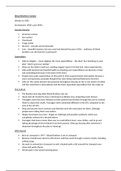
Equations must be balanced to agree with the law of conservation of mass which
states that no matter is created or destroyed, only transferred. So there needs to be
the same type and number of chemical atoms and the same mass of the reactants at
the beginning and end of the reaction
Metal + oxygen metal oxide
Metal + water metal hydroxide + hydrogen
Metal + acid salt + hydrogen
Metal + carbonate salt + carbon dioxide + water
4.4.1.1 Metal oxides
Metals react with oxygen to produce metal oxides. The reactions are oxidation
reactions because the metals gain oxygen
Most metal in ores are chemically bonded to other elements in compounds. Many of
these metals have been oxidised by oxygen in the air to form oxides. So to extract the
metals from their oxides, the metal oxide must be reduced
4.4.1.2 The reactivity series
, When metals react with other substances the metal atoms form positive ions. The
reactivity of a metal is related to its tendency to form positive ions. Metals can be
arranged in order of their reactivity in a reactivity series. The metals potassium,
sodium, lithium, calcium, magnesium, zinc, iron and copper can be put in their order
of reactivity from their reactions with water and dilute acids
The non-metals hydrogen and carbon are often included in the reactivity series
Displacement reactions
A more reactive metal can displace a less reactive metals from a compound
A displacement reaction is when a more reactive metal will displace a less reactive
metal from a solution of ions of the less reactive metals (ie a compound)
You will know if a displacement reaction has occurred if there is a permanent colour
change, bubbles, temperature change and a precipitate formed
You can work out which metal is the most reactive by:
- reacting the metals with water and see which reacts the most violently
- react the metals with acid and see which produces the most gas in a given time
- react the metals with other metal salts
4.4.1.3 Extraction of metals and reduction
Unreactive metals such as gold are found in the earth as the metal itself because they
do not bind to anything but most metals are found as compounds that require
chemical reactions to extract the metal.
Metals less reactive that carbon can be extracted from their oxides using carbon. The
oxides are often the ores that the metals need to be extracted from.
- Ores are rocks from which it is economical to extract the metals that they contain.
- Some need to be concentrated before the metal is extracted and purified
Whether a metal is worth extracting depends on:
- how easy it is to extract from its ore
- how much metal the ore contains
- the changing demands for a particular metal
4.4.1.4 Oxidation and reduction in terms of electrons
4.4 Chemical changes
4.4.1 Reactivity of metals
Equations must be balanced to agree with the law of conservation of mass which
states that no matter is created or destroyed, only transferred. So there needs to be
the same type and number of chemical atoms and the same mass of the reactants at
the beginning and end of the reaction
Metal + oxygen metal oxide
Metal + water metal hydroxide + hydrogen
Metal + acid salt + hydrogen
Metal + carbonate salt + carbon dioxide + water
4.4.1.1 Metal oxides
Metals react with oxygen to produce metal oxides. The reactions are oxidation
reactions because the metals gain oxygen
Most metal in ores are chemically bonded to other elements in compounds. Many of
these metals have been oxidised by oxygen in the air to form oxides. So to extract the
metals from their oxides, the metal oxide must be reduced
4.4.1.2 The reactivity series
, When metals react with other substances the metal atoms form positive ions. The
reactivity of a metal is related to its tendency to form positive ions. Metals can be
arranged in order of their reactivity in a reactivity series. The metals potassium,
sodium, lithium, calcium, magnesium, zinc, iron and copper can be put in their order
of reactivity from their reactions with water and dilute acids
The non-metals hydrogen and carbon are often included in the reactivity series
Displacement reactions
A more reactive metal can displace a less reactive metals from a compound
A displacement reaction is when a more reactive metal will displace a less reactive
metal from a solution of ions of the less reactive metals (ie a compound)
You will know if a displacement reaction has occurred if there is a permanent colour
change, bubbles, temperature change and a precipitate formed
You can work out which metal is the most reactive by:
- reacting the metals with water and see which reacts the most violently
- react the metals with acid and see which produces the most gas in a given time
- react the metals with other metal salts
4.4.1.3 Extraction of metals and reduction
Unreactive metals such as gold are found in the earth as the metal itself because they
do not bind to anything but most metals are found as compounds that require
chemical reactions to extract the metal.
Metals less reactive that carbon can be extracted from their oxides using carbon. The
oxides are often the ores that the metals need to be extracted from.
- Ores are rocks from which it is economical to extract the metals that they contain.
- Some need to be concentrated before the metal is extracted and purified
Whether a metal is worth extracting depends on:
- how easy it is to extract from its ore
- how much metal the ore contains
- the changing demands for a particular metal
4.4.1.4 Oxidation and reduction in terms of electrons