CNA TEST BANK 1ST EDITION FOR AUGUST 2024/2025
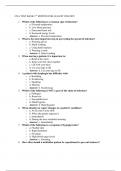
1. Which of the following is a common sign of infection?
o a. Elevated temperature
o b. Low blood pressure
o c. Decreased heart rate
o d. Increased energy levels
o Answer: a. Elevated temperature
2. What is the most important step in preventing the spread of infection?
o a. Wearing gloves
o b. Hand washing
o c. Using hand sanitizer
o d. Wearing a mask
o Answer: b. Hand washing
3. When moving a patient, it is important to:
o a. Bend at the waist
o b. Keep your feet close together
o c. Lift with your back
o d. Use your legs to lift
o Answer: d. Use your legs to lift
4. A patient with dysphagia has difficulty with:
o a. Breathing
o b. Swallowing
o c. Speaking
o d. Hearing
o Answer: b. Swallowing
5. Which of the following is NOT a part of the chain of infection?
o a. Pathogen
o b. Reservoir
o c. Susceptible host
o d. Hand hygiene
o Answer: d. Hand hygiene
6. When should you report changes in a patient's condition?
o a. At the end of your shift
o b. When the patient requests it
o c. Immediately
o d. During the next scheduled meeting
o Answer: c. Immediately
7. Which of the following is a symptom of hypoglycemia?
o a. Flushed skin
o b. Rapid heartbeat
o c. Sweating
o d. High blood sugar levels
o Answer: c. Sweating
8. How often should a bedridden patient be repositioned to prevent bedsores?
1. Which of the following is a common sign of infection?
o a. Elevated temperature
o b. Low blood pressure
o c. Decreased heart rate
o d. Increased energy levels
o Answer: a. Elevated temperature
2. What is the most important step in preventing the spread of infection?
o a. Wearing gloves
o b. Hand washing
o c. Using hand sanitizer
o d. Wearing a mask
o Answer: b. Hand washing
3. When moving a patient, it is important to:
o a. Bend at the waist
o b. Keep your feet close together
o c. Lift with your back
o d. Use your legs to lift
o Answer: d. Use your legs to lift
4. A patient with dysphagia has difficulty with:
o a. Breathing
o b. Swallowing
o c. Speaking
o d. Hearing
o Answer: b. Swallowing
5. Which of the following is NOT a part of the chain of infection?
o a. Pathogen
o b. Reservoir
o c. Susceptible host
o d. Hand hygiene
o Answer: d. Hand hygiene
6. When should you report changes in a patient's condition?
o a. At the end of your shift
o b. When the patient requests it
o c. Immediately
o d. During the next scheduled meeting
o Answer: c. Immediately
7. Which of the following is a symptom of hypoglycemia?
o a. Flushed skin
o b. Rapid heartbeat
o c. Sweating
o d. High blood sugar levels
o Answer: c. Sweating
8. How often should a bedridden patient be repositioned to prevent bedsores?