

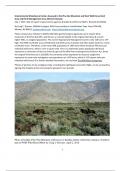
Environmental Disturbance Factors Assessed in the Pine Nut Mountain and their Wild Horse Herd Area and Herd Management Area, Western Nevada July 7, 2015: date of report to government agencies & p
Table 1. Disturbance Factor Number of Ecological Evaluations (N = 35) in which factor was major 1. Fire, resultant Cheat Grass 31 2. Wind Erosion, soil scouring 29 3. Water Erosion/Flood 28 Washes/Gullies/Rills 4. Road/Off Road Vehicles/ 26 4WD Vehicles/Cheat Grass 5. Livestock/Cattle/Sheep/ 21 resultant Cheat Grass 6. Hunters/Shooters/Tar- 20 get Practice/Trappers/ Predator Control 7. Campers/Visitors/Litter/ 18 Garbage/Oil & Battery dump 8. Pinyon-Juniper Clearance 16 projects/Woodcutters/resultant Cheat Grass 9. Mining/Open & Borrow Pits/ 15 Mining Roads/resultant Cheat Grass Vehicle Related Damage: The most pervasively destructive, “root cause” disturbance factor concerned the entrance of vehicles into the Pine Nut Mountain ecosystem. Such entrance by vehicles, whether four-wheel, all terrain, motorcycles, or even mountain bike, nearly always accompanies the majority of the other disturbances such as livestock, hunting, pinyon-juniper clearance, woodcutting, camping and mining – and even the instigation of major wildfires, whether by means of an overheated catalytic converter, or a spark from a rock that is somehow impacted by the vehicle. It should also be emphasized that the pervasive Cheat Grass, aka Downy Brome (Bromus tectorum) takes hold on disturbed soils; and vehicles, wherever the vehicles go – especially off-road. This ends up creating these perfect germination sites for this and other hardy invaders, often primary successional plants. Livestock Related Damage: Brought in to strip the vegetation, usually during late spring and early summer when forage is most abundant and nutritious, cattle and sheep are also major disturbers of soils, thus helping to spread the cheat grass and other invading species such as thistle. (See Species List for many invader type plants.) Cheat grass is highly flammable and the ever more frequent wildfires here, such as the enormous Bison fire of 2013, are definitely related to this extensive cheat grass invasion. Cheat grass and other highly flammable grasses and forbs, often not of North American origin, are often referred to as “flash fuel”. Reduction of Wild Horse Population and Its Adverse Ecological Effects, Rationale: Also related to increased wildfires is the great reduction of wild horses throughout the original Pine Nut Mountains Herd Area. This is due to the fact that wild horses are ideal reducers of dry flammable vegetation and convert such into moisture
Document information
- Uploaded on
- July 18, 2024
- Number of pages
- 13
- Written in
- 2023/2024
- Type
- Exam (elaborations)
- Contains
- Questions & answers


