The only app you need to prepare for
JEE Main JEE Adv. BITSAT WBJEE MHT CET and more...
4.8 50,000+ 2,00,000+
Rating on Google Play Students using daily Questions available
With MARKS app you can do all these things for free
Solve Chapter-wise PYQ of JEE Main, JEE Advanced, NEET, BITSAT, WBJEE, MHT CET & more
Create Unlimited Custom Tests for any exam
Attempt Top Questions for JEE Main which can boost your rank
Track your exam preparation with Preparation Trackers
Complete daily goals, rank up on the leaderboard & compete with other aspirants
4.8 50,000+ 2,00,000+
Rating on Google Play Students using daily Questions available
,ROTATIONAL
MECHANICS
, MARKS 3
ROT
OTAATIONAL ME
MECCHANI
NICCS
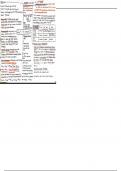
Linear Motion Rotational Motion
Position x Angular position
Velocity v Angular velocity
Acceleration a Angular acceleration
Motion equations x = v t t
= Motion equations
v = v0 + at = 0 + t
1 2 1 2
x = v0t at 0 t t
2 2
v2 = v02 2ax 2 = 20 2
Mass (linear inertia) m I Moment of inertia
NewtonÊs second law F = ma = I
Momentum p = mv L = I Angular momentum
Work Fd Work
1 1 2
Kinetic energy mv2 I Kinetic energy
2 2
Power Fv Power
1. INTR ODUC TION
Consider a disk rotating on a stationary rod.
If we now view this disk from the top,
S
r
ROTATIONAL MECHANICS
, 4 MARKS
we see that when the disk rotates so that the arc length (s) equals the length of the radius of
the disk (r ), the subtended central angle () will equal 1 radian. The resulting equation is
s = r
or
= s/r
where the unit of a radian represents the dimensionless measure of the ratio of the circleÊs arc
length to its radius.
If the disk rotates through one complete revolution, then s equals the entire circumference and
equals 2 radians.
s = r
2r = r
= 2 radians
Differentiating the basic equation s = r results in the next two relationships between the tangential
motion of a point along the circumference and the angular behavior of the disk itself.
s = r
ds/dt = r (d /dt)
v = r
The Greek letter represents the angular velocity of the disk. It is measured in the unit
radians/sec. Differentiating one more time, we have
v = r
dv/dt = r (d /dt)
a = r
The Greek letter represents the angular acceleration of the disk. It is measured in the unit
radian/sec2.
Summ a r y
These three equations
s = r
v = r
a = r
allow us to relate the linear motion (s, v, a) of a point moving in circular motion on a rotating
platform with the the rotational motion (, , ) of the platform itself.
ROTATIONAL MECHANICS
JEE Main JEE Adv. BITSAT WBJEE MHT CET and more...
4.8 50,000+ 2,00,000+
Rating on Google Play Students using daily Questions available
With MARKS app you can do all these things for free
Solve Chapter-wise PYQ of JEE Main, JEE Advanced, NEET, BITSAT, WBJEE, MHT CET & more
Create Unlimited Custom Tests for any exam
Attempt Top Questions for JEE Main which can boost your rank
Track your exam preparation with Preparation Trackers
Complete daily goals, rank up on the leaderboard & compete with other aspirants
4.8 50,000+ 2,00,000+
Rating on Google Play Students using daily Questions available
,ROTATIONAL
MECHANICS
, MARKS 3
ROT
OTAATIONAL ME
MECCHANI
NICCS
Linear Motion Rotational Motion
Position x Angular position
Velocity v Angular velocity
Acceleration a Angular acceleration
Motion equations x = v t t
= Motion equations
v = v0 + at = 0 + t
1 2 1 2
x = v0t at 0 t t
2 2
v2 = v02 2ax 2 = 20 2
Mass (linear inertia) m I Moment of inertia
NewtonÊs second law F = ma = I
Momentum p = mv L = I Angular momentum
Work Fd Work
1 1 2
Kinetic energy mv2 I Kinetic energy
2 2
Power Fv Power
1. INTR ODUC TION
Consider a disk rotating on a stationary rod.
If we now view this disk from the top,
S
r
ROTATIONAL MECHANICS
, 4 MARKS
we see that when the disk rotates so that the arc length (s) equals the length of the radius of
the disk (r ), the subtended central angle () will equal 1 radian. The resulting equation is
s = r
or
= s/r
where the unit of a radian represents the dimensionless measure of the ratio of the circleÊs arc
length to its radius.
If the disk rotates through one complete revolution, then s equals the entire circumference and
equals 2 radians.
s = r
2r = r
= 2 radians
Differentiating the basic equation s = r results in the next two relationships between the tangential
motion of a point along the circumference and the angular behavior of the disk itself.
s = r
ds/dt = r (d /dt)
v = r
The Greek letter represents the angular velocity of the disk. It is measured in the unit
radians/sec. Differentiating one more time, we have
v = r
dv/dt = r (d /dt)
a = r
The Greek letter represents the angular acceleration of the disk. It is measured in the unit
radian/sec2.
Summ a r y
These three equations
s = r
v = r
a = r
allow us to relate the linear motion (s, v, a) of a point moving in circular motion on a rotating
platform with the the rotational motion (, , ) of the platform itself.
ROTATIONAL MECHANICS