Social Evolution Revision Notes
Glossary
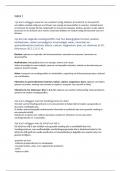
Sentinel behaviour Member of group watches out for predators and gives a warning
if needed (cooperative)
Kleptoparasitism Form of parasitism wherein one organism takes resources
collected, caught, prepared or stored by another
Cooperation/ social behaviours that are costly and reduce the actor’s fitness
altruism but increase the fitness of others
Inclusive fitness Natural selection shapes individual behaviour according to the
effects the behaviour has on the reproductive success of the
actor’s relatives, as well as their own.
Group selection Natural selection favours traits because they benefit the whole
group, rather than individuals
Multi-level selection Natural selection operates on more than one hierarchical level,
e.g. individual, group, species
Price equation Traits with higher differential fitness advantages should spread in
a population
Social group Stable group of any entities that cooperate in ways that make the
group a potential candidate for consideration as an individual
Social group Processes involved in the origin of social living
formation
Social group Processes that ensure stable group persistence following
maintenance establishment
Social group Processes that turn stable social groups into more cohesive,
transformation integrated entities
Integrative approach:
Tinbergen’s 4 whys
1. Adaptation/function what is the function of a behaviour? Why is it
adaptive/increase fitness?
2. Experience/development what experiences are necessary to cause that
behaviour to develop? (e.g. access to food)
3. Causation reasons why those behaviours specifically happen (e.g. protein or gene
expression)
1
Glossary
Sentinel behaviour Member of group watches out for predators and gives a warning
if needed (cooperative)
Kleptoparasitism Form of parasitism wherein one organism takes resources
collected, caught, prepared or stored by another
Cooperation/ social behaviours that are costly and reduce the actor’s fitness
altruism but increase the fitness of others
Inclusive fitness Natural selection shapes individual behaviour according to the
effects the behaviour has on the reproductive success of the
actor’s relatives, as well as their own.
Group selection Natural selection favours traits because they benefit the whole
group, rather than individuals
Multi-level selection Natural selection operates on more than one hierarchical level,
e.g. individual, group, species
Price equation Traits with higher differential fitness advantages should spread in
a population
Social group Stable group of any entities that cooperate in ways that make the
group a potential candidate for consideration as an individual
Social group Processes involved in the origin of social living
formation
Social group Processes that ensure stable group persistence following
maintenance establishment
Social group Processes that turn stable social groups into more cohesive,
transformation integrated entities
Integrative approach:
Tinbergen’s 4 whys
1. Adaptation/function what is the function of a behaviour? Why is it
adaptive/increase fitness?
2. Experience/development what experiences are necessary to cause that
behaviour to develop? (e.g. access to food)
3. Causation reasons why those behaviours specifically happen (e.g. protein or gene
expression)
1