Lecture 4 13th February 2017
NC 4
Extrinsic and intrinsic modulation of CPG circuits and Multifunctional neurons
Extrinsic (not part of the CPG) neuromodulation vs. intrinsic (part of the CPG)
neuromodulation
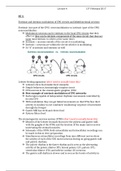
Modulatory neurons can be extrinsic to the local CPG circuits that they
affect or they can be intrinsic components of the same circuit that they act
upon (and extrinsic to others at the same time).
Extrinsic = neurons outside of the circuit it is modulating
Intrinsic = neurons are within the circuit which it is modulating
So “d” is intrinsic and extrinsic as well
Lobster feeding apparatus (don’t need to actually know this)
Lobsters chew food inside their stomachs
Simple behaviour, fascinatingly complex circuit
CPG neurons in the stomatogastic ganglion (STG)
Best example of extrinsic modulation of CPG networks
Each region capable of independent rhythmic movements controlled by
its own CPG
With modulation they can get linked movements so that CPGs fuse their
activity to swallow in one combined ‘swallowing’ sequence of movement
through the foregut
Gastric Mill has teeth and chews food
Pylorus filters food
The stomatogastric nervous system (STNS) (don’t need to actually know this)
Muscles of the lobster stomach that move the pylorus and gastric mill,
with the ganglia of the STNS, and the location of the major motor nerves
innervating the stomach muscles.
Schematic of the STNS. Both extracellular and intracellular recordings can
be made in this in vitro preparation.
Simultaneous extracellular recordings from nine different nerves show
the activity of each of the STG motor neurons during on-going gastric mill
and pyloric rhythms.
The pyloric rhythm is the faster rhythm and is seen as the alternating
activity of the pyloric dilator (PD), lateral pyloric (LP), pyloric (PY),
ventricular dilator (VD), and inferior cardiac (IC) neurons.
The gastric mill rhythm is slower and is seen as the bursts of activity in
NC 4
Extrinsic and intrinsic modulation of CPG circuits and Multifunctional neurons
Extrinsic (not part of the CPG) neuromodulation vs. intrinsic (part of the CPG)
neuromodulation
Modulatory neurons can be extrinsic to the local CPG circuits that they
affect or they can be intrinsic components of the same circuit that they act
upon (and extrinsic to others at the same time).
Extrinsic = neurons outside of the circuit it is modulating
Intrinsic = neurons are within the circuit which it is modulating
So “d” is intrinsic and extrinsic as well
Lobster feeding apparatus (don’t need to actually know this)
Lobsters chew food inside their stomachs
Simple behaviour, fascinatingly complex circuit
CPG neurons in the stomatogastic ganglion (STG)
Best example of extrinsic modulation of CPG networks
Each region capable of independent rhythmic movements controlled by
its own CPG
With modulation they can get linked movements so that CPGs fuse their
activity to swallow in one combined ‘swallowing’ sequence of movement
through the foregut
Gastric Mill has teeth and chews food
Pylorus filters food
The stomatogastric nervous system (STNS) (don’t need to actually know this)
Muscles of the lobster stomach that move the pylorus and gastric mill,
with the ganglia of the STNS, and the location of the major motor nerves
innervating the stomach muscles.
Schematic of the STNS. Both extracellular and intracellular recordings can
be made in this in vitro preparation.
Simultaneous extracellular recordings from nine different nerves show
the activity of each of the STG motor neurons during on-going gastric mill
and pyloric rhythms.
The pyloric rhythm is the faster rhythm and is seen as the alternating
activity of the pyloric dilator (PD), lateral pyloric (LP), pyloric (PY),
ventricular dilator (VD), and inferior cardiac (IC) neurons.
The gastric mill rhythm is slower and is seen as the bursts of activity in