Samenvatting literatuur ECB1 | Anouk Wiersma
Emotie, Cognitie en Gedrag 1
Samenvatti ng literatuur
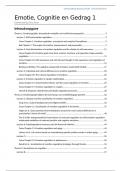
Inhoudsopgave
Thema 1: Emotieregulatie; theoretische modellen en het klinisch perspectief......................................3
Lecture 1: ECB and emotion regulation..............................................................................................3
Gross Chapter 1: Emotion regulation; conceptual and empirical foundations................................3
Keil Chapter 7: The origins of emotion, temperament, and personality.........................................7
Lecture 2: Goal directedness of emotion regulation and its relation to self-awareness...................11
Gross Chapter 22: Emotion goals; how their content, structure, and operation shape emotion
regulation.....................................................................................................................................11
Gross Chapter 23: Self-awareness and self-relevant thought in the experience and regulation of
emotion........................................................................................................................................14
Berking & Whitley: The adaptive coping with emotions model (ACE Model)...............................17
Lecture 3: Individual and cultural differences in emotion regulation................................................20
Gross Chapter 18: The cultural regulation of emotions................................................................20
Lecture 4: Emotion regulation in dyadic relationships......................................................................24
Gross Chapter 14: Social baseline theory and the social regulation of emotion...........................24
Gross Chapter 17: Emotion regulation in couples.........................................................................27
Overall & Simpsom: Attachment and dyadic regulation processes...............................................30
Thema 2: Emotieregulatie tijdens de levensloop; een ontwikkelingsperspectief.................................32
Lecture 5: Lifespan and the socialization of emotion regulation.......................................................32
Fung et al.: Cultural background and religious beliefs..................................................................32
Gross Chapter 11: Socialization of emotion regulation in the family............................................37
Hughs et al.: Does parental mind-mindedness account for cross-cultural differences in
preschoolers’ theory of mind?......................................................................................................40
Tan & Smith: Intergenerational transmission of maternal regulation to child emotion regulation:
moderated mediation of maternal positive and negative emotions.............................................42
Lecture 6: Autobiographical memory and Life Research Method.....................................................44
Gross Chapter 13: Emotion regulation and aging.........................................................................44
Latorre et al.: Life review based on remembering specific positive events in active aging...........49
Lecture 7:..........................................................................................................................................50
Gross Chapter 12: Emotion regulation in adolescence.................................................................50
Reindl et al.: Socialization of emotion regulation strategies through friends................................53
Thema 3: Veranderen van cognities......................................................................................................57
Lecture 8:..........................................................................................................................................57
, Samenvatting literatuur ECB1 | Anouk Wiersma
Keil Chapter 8: Morality in thought and action.............................................................................57
Lecture 9:..........................................................................................................................................66
Van der Mey-Baijens et al.: Perceived support from best friends and depressive symptoms during
adolescence..................................................................................................................................66
Lecture 10:........................................................................................................................................69
Burnette et al.: Harnessing growth mindsets to help individuals flourish.....................................69
Thema 4: Neuropsychologische perspectieven van emotie, cognitie en gedrag...................................72
Lecture 11:........................................................................................................................................72
Diamond: Executive functions......................................................................................................72
Lecture 12:........................................................................................................................................76
Van Leijenhorst et al.: Adolescent risky decision-making; neurocognitive development of reward
and control regions.......................................................................................................................76
Luo & Yu: Follow the heart or the head? The interactive influence model of emotion and
cognition.......................................................................................................................................78
, Samenvatting literatuur ECB1 | Anouk Wiersma
Thema 1: Emotieregulatie; theoretische modellen en
het klinisch perspectief
Lecture 1: ECB and emotion regulation
Gross Chapter 1: Emotion regulation; conceptual and empirical
foundations
- Emotions and related processes
o Emotions can and should be regulated in certain situations.
o Core features of emotions
First has to do with when it occurs:
According to appraisal theory, emotions arise when an individual
attends to and evaluates a situations as being relevant to a particular
type of currently active goal.
Second core feature has to do with its multifaceted nature:
Emotions are whole-body phenomena that involve loosely coupled
changes in the domains of subjective experience, behavior, and
central and peripheral physiology.
o The modal model of emotion
According to this model, emotions involve person-situation transactions that
compel attention, have meaning to an individual in light of currently active
goals, and give rise to coordinated yet flexible multisystem responses that
modify the ongoing person-situation transaction in crucial ways.
o Emotions and other affective processes
Affect: umbrella term for states that involve relatively quick good-bad
discriminations.
These affective states include (1) emotions, (2) stress responses to
circumstances that exceed an individual’s ability to cope, and (3)
moods.
o Differences between emotions and stress: stress typically
refers to negative affective responses, whereas emotions
refers to both negative and positive affective states.
o Differences between emotions and moods: moods often lost
longer than emotions, and compared to moods, emotions
are typically elicited by specific objects and give rise to
behavioral response tendencies relevant to these objects.
- Emotion regulation and related processes
o Emotion regulation: shaping which emotions one has, when one has them, and how
one experiences or expresses these emotions.
o Core features of emotion regulation
Activation of a goal to modify the emotion-generative process.
What people are trying to accomplish.
Intrinsic emotion regulation: goal is activated in oneself.
Extrinsic emotion regulation: goal is activated in
someone else.
, Samenvatting literatuur ECB1 | Anouk Wiersma
Most often trying to down-regulate negative emotions, sometimes
trying to up-regulate positive emotions, often by sharing positive
experiences.
o Can be seen as a 2x2 matrix (sometimes people want to up-
regulate negative emotions or down-regulate positive ones).
What are people trying to accomplish when they regulate their
emotions?: often people are motivated by “hedonic
considerations” wish to increase short-term pleasure and decrease
short-term pain.
o Sometimes motivated by “instrumental considerations”
motivated to change their emotions in order to achieve some
other, non-emotional outcome.
Engagement of the processes that are responsible for altering the emotion
trajectory engagement of regulatory processes.
The particular processes that are engaged in order to achieve the
goal.
Many different processes can be recruited to regulate emotions, and
these vary considerably in the degree to which they are explicit
(conscious) versus implicit (without conscious awareness).
Can be useful to think of a continuum of emotion regulation
possibilities that range from explicit, conscious, effortful, and
controlled regulation to implicit, unconscious, effortless and
automatic regulation.
Impact on emotion dynamics modulation of the emotion trajectory.
The consequences of trying to achieve a particular emotion
regulation goal using a particular strategy.
Depending on the individual’s goals, emotion regulation may
increase or decrease the latency, rise time, magnitude, duration, or
offset of the emotional response.
Emotion regulation may also change the degree to which emotion
response components cohere as the emotion unfolds.
o The process model of emotion regulation
Information-processing model that takes as its starting point the modal
model. The process model treats each step in the emotion-generative
process that is described in the modal model as a potential target for
regulation.
Moving from left to right represent movement through time.
Emotion generation is an ongoing process, extending beyond a single
episode.
Emotion regulation can be seen as subordinate to the broader construct of
affect regulation.
Under this fall all manner of efforts to influence our valanced
responses, including (1) emotion regulation, (2) coping, and (3) mood
regulation.
Emotie, Cognitie en Gedrag 1
Samenvatti ng literatuur
Inhoudsopgave
Thema 1: Emotieregulatie; theoretische modellen en het klinisch perspectief......................................3
Lecture 1: ECB and emotion regulation..............................................................................................3
Gross Chapter 1: Emotion regulation; conceptual and empirical foundations................................3
Keil Chapter 7: The origins of emotion, temperament, and personality.........................................7
Lecture 2: Goal directedness of emotion regulation and its relation to self-awareness...................11
Gross Chapter 22: Emotion goals; how their content, structure, and operation shape emotion
regulation.....................................................................................................................................11
Gross Chapter 23: Self-awareness and self-relevant thought in the experience and regulation of
emotion........................................................................................................................................14
Berking & Whitley: The adaptive coping with emotions model (ACE Model)...............................17
Lecture 3: Individual and cultural differences in emotion regulation................................................20
Gross Chapter 18: The cultural regulation of emotions................................................................20
Lecture 4: Emotion regulation in dyadic relationships......................................................................24
Gross Chapter 14: Social baseline theory and the social regulation of emotion...........................24
Gross Chapter 17: Emotion regulation in couples.........................................................................27
Overall & Simpsom: Attachment and dyadic regulation processes...............................................30
Thema 2: Emotieregulatie tijdens de levensloop; een ontwikkelingsperspectief.................................32
Lecture 5: Lifespan and the socialization of emotion regulation.......................................................32
Fung et al.: Cultural background and religious beliefs..................................................................32
Gross Chapter 11: Socialization of emotion regulation in the family............................................37
Hughs et al.: Does parental mind-mindedness account for cross-cultural differences in
preschoolers’ theory of mind?......................................................................................................40
Tan & Smith: Intergenerational transmission of maternal regulation to child emotion regulation:
moderated mediation of maternal positive and negative emotions.............................................42
Lecture 6: Autobiographical memory and Life Research Method.....................................................44
Gross Chapter 13: Emotion regulation and aging.........................................................................44
Latorre et al.: Life review based on remembering specific positive events in active aging...........49
Lecture 7:..........................................................................................................................................50
Gross Chapter 12: Emotion regulation in adolescence.................................................................50
Reindl et al.: Socialization of emotion regulation strategies through friends................................53
Thema 3: Veranderen van cognities......................................................................................................57
Lecture 8:..........................................................................................................................................57
, Samenvatting literatuur ECB1 | Anouk Wiersma
Keil Chapter 8: Morality in thought and action.............................................................................57
Lecture 9:..........................................................................................................................................66
Van der Mey-Baijens et al.: Perceived support from best friends and depressive symptoms during
adolescence..................................................................................................................................66
Lecture 10:........................................................................................................................................69
Burnette et al.: Harnessing growth mindsets to help individuals flourish.....................................69
Thema 4: Neuropsychologische perspectieven van emotie, cognitie en gedrag...................................72
Lecture 11:........................................................................................................................................72
Diamond: Executive functions......................................................................................................72
Lecture 12:........................................................................................................................................76
Van Leijenhorst et al.: Adolescent risky decision-making; neurocognitive development of reward
and control regions.......................................................................................................................76
Luo & Yu: Follow the heart or the head? The interactive influence model of emotion and
cognition.......................................................................................................................................78
, Samenvatting literatuur ECB1 | Anouk Wiersma
Thema 1: Emotieregulatie; theoretische modellen en
het klinisch perspectief
Lecture 1: ECB and emotion regulation
Gross Chapter 1: Emotion regulation; conceptual and empirical
foundations
- Emotions and related processes
o Emotions can and should be regulated in certain situations.
o Core features of emotions
First has to do with when it occurs:
According to appraisal theory, emotions arise when an individual
attends to and evaluates a situations as being relevant to a particular
type of currently active goal.
Second core feature has to do with its multifaceted nature:
Emotions are whole-body phenomena that involve loosely coupled
changes in the domains of subjective experience, behavior, and
central and peripheral physiology.
o The modal model of emotion
According to this model, emotions involve person-situation transactions that
compel attention, have meaning to an individual in light of currently active
goals, and give rise to coordinated yet flexible multisystem responses that
modify the ongoing person-situation transaction in crucial ways.
o Emotions and other affective processes
Affect: umbrella term for states that involve relatively quick good-bad
discriminations.
These affective states include (1) emotions, (2) stress responses to
circumstances that exceed an individual’s ability to cope, and (3)
moods.
o Differences between emotions and stress: stress typically
refers to negative affective responses, whereas emotions
refers to both negative and positive affective states.
o Differences between emotions and moods: moods often lost
longer than emotions, and compared to moods, emotions
are typically elicited by specific objects and give rise to
behavioral response tendencies relevant to these objects.
- Emotion regulation and related processes
o Emotion regulation: shaping which emotions one has, when one has them, and how
one experiences or expresses these emotions.
o Core features of emotion regulation
Activation of a goal to modify the emotion-generative process.
What people are trying to accomplish.
Intrinsic emotion regulation: goal is activated in oneself.
Extrinsic emotion regulation: goal is activated in
someone else.
, Samenvatting literatuur ECB1 | Anouk Wiersma
Most often trying to down-regulate negative emotions, sometimes
trying to up-regulate positive emotions, often by sharing positive
experiences.
o Can be seen as a 2x2 matrix (sometimes people want to up-
regulate negative emotions or down-regulate positive ones).
What are people trying to accomplish when they regulate their
emotions?: often people are motivated by “hedonic
considerations” wish to increase short-term pleasure and decrease
short-term pain.
o Sometimes motivated by “instrumental considerations”
motivated to change their emotions in order to achieve some
other, non-emotional outcome.
Engagement of the processes that are responsible for altering the emotion
trajectory engagement of regulatory processes.
The particular processes that are engaged in order to achieve the
goal.
Many different processes can be recruited to regulate emotions, and
these vary considerably in the degree to which they are explicit
(conscious) versus implicit (without conscious awareness).
Can be useful to think of a continuum of emotion regulation
possibilities that range from explicit, conscious, effortful, and
controlled regulation to implicit, unconscious, effortless and
automatic regulation.
Impact on emotion dynamics modulation of the emotion trajectory.
The consequences of trying to achieve a particular emotion
regulation goal using a particular strategy.
Depending on the individual’s goals, emotion regulation may
increase or decrease the latency, rise time, magnitude, duration, or
offset of the emotional response.
Emotion regulation may also change the degree to which emotion
response components cohere as the emotion unfolds.
o The process model of emotion regulation
Information-processing model that takes as its starting point the modal
model. The process model treats each step in the emotion-generative
process that is described in the modal model as a potential target for
regulation.
Moving from left to right represent movement through time.
Emotion generation is an ongoing process, extending beyond a single
episode.
Emotion regulation can be seen as subordinate to the broader construct of
affect regulation.
Under this fall all manner of efforts to influence our valanced
responses, including (1) emotion regulation, (2) coping, and (3) mood
regulation.