TCCC - CLS TEST Questions and Answers Latest Updated 2024/2025 (Graded A+)
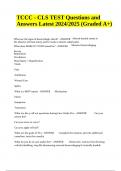
TCCC - CLS TEST Questions and Answers Latest Updated 2024/2025 (Graded A+) What does MARCH V PAWS stand for? - ANSWER Massive Hemorrhaging Airway Respiration Circulation Head Injury / Hypothermia Vitals Pain Antibiotics Wound Care Splint What is a MIST report - ANSWER Mechanism Injury Symptoms Treatment What are the 3 call out questions during Care Under Fire - ANSWER Can you return fire? Can you move to cover? Can you apply self aid? What are the goals of TC3 - ANSWER Complete the mission, prevent additional casualties, treat the casualty What do you do in care under fire? - ANSWER Return fire, remove from burning vehicles/building, stop life threatening external hemorrhaging if tactically feasible TCCC - CLS TEST Questions and Answers Latest 2024/2025 (Graded A+) What is a "Hasty" tourniquet? - ANSWER over the uniform What is the TC3 approach? - ANSWER Good medicine + Sound tactics What is the role of the first responder in care under fire? - ANSWER Suppress the enemy Stop life threatening bleeding What are the 3 phases of TC3? - ANSWER Care Under Fire Tactical Field Care Tactical Evacuation What is considered life threatening bleeding? - ANSWER Any of these: - bright red blood pooling on the ground - the overlying clothes are soaked with blood - amputation of an arm or leg - pulsing blood from the wound How quickly should you apply a tourniquet to stop life threatening bleeding - ANSWER within 1 minute how quickly can someone bleed out - ANSWER 3 minutes from femoral artery Are spinal injuries a concern during care under fire - ANSWER nope What do you do with casualties that have an altered mental status? - ANSWER clear and secure weapons secure communications equipment secure SI What are the life threatening things to check during Tactical Field Care - ANSWER MARCH Massive Hemorrhaging Airway Respiration Circulation Hypothermia / Head Injury What are the "After life threatening" things to check during tactical field care? - ANSWER PAWS or V-PAWS Vitals Pain Antiobiotics Wounds Splints What are the steps for (M) Massive Hemorrhaging - ANSWER 1) reasses any interventions from care under fire - If a tourninquet was applied check for effectiveness (no bleeding, no distal pulse) - If ineffective apply a secound tourniquet side-by-side with the first 2) perform a BLOOD SWEEP and EXPOSE the casualty to look for other life-threatening bleeding, stopping to immediately treat anything identified 3) Initial direct pressure 4) tourniquets. deliberate tourniquet, 2-3 inches above the wound, directly on the skin. record time only during TFC 5) Wound packing apply pressure pack wound, secure excess on top apply pressure for 3 minutes check to see bleeding is controlled apply pressure bandage When should you record the time on a tourniquet - ANSWER during Tactical Field Care only Should you pack hemostatic dressing in the chest? - ANSWER NO Should you pack hemostatic dressing in the abdomen? - ANSWER NO What are the steps for Airway? - ANSWER Assess - look listen feel Head tilt, chin lift and/or jaw thrust
Written for
- Institution
- TCCC - CLS
- Course
- TCCC - CLS
Document information
- Uploaded on
- May 30, 2024
- Number of pages
- 13
- Written in
- 2023/2024
- Type
- Exam (elaborations)
- Contains
- Questions & answers
Subjects
- tccc cls
- tccc
- cls
- latest updated 2024
- graded
- verified answers
-
tccc cls test questions and answers

Also available in package deal