

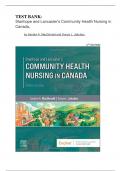
TEST BANK:
Stanhope and Lancaster's Community Health Nursing in
Canada,
by Sandra A. MacDonald and Sonya L. Jakubec,
4TH EDITION
, TABLE OF CONTENT
Chapter 1. Community Health Nursing
Chapter 2. The Evolution of Community Health Nursing in Canada
Chapter 3. Community Health Nursing in Canada: Settings, Functions, and Roles
Chapter 4. Health Promotion
Chapter 5. Evidence-Informed Practice in Community Health Nursing
Chapter 6. Ethics in Community Health Nursing Practice
Chapter 7. Diversity and Relational Practice in Community Health Nursing
Chapter 8. Epidemiological Applications
Chapter 9. Working With the Community
Chapter 10. Health Program Planning and Evaluation
Chapter 11. Working With the Individual as Client: Health and Wellness Across the Lifespan
Chapter 12. Working With Families
Chapter 13. Working with Groups, Teams, and Partners
Chapter 14. Indigenous Health: Working with First Nations People, Inuit, and Métis
Chapter 15. Working with Working with People Who Experience Structural Vulnerabilities
Chapter 16. Communicable and Infectious Disease Prevention and Control
Chapter 17. Environmental Health
Chapter 18. Disaster Management
,Chapter 01: Community Health Nursing
Stanhope: Community Health Nursing in Canada, 4th Canadian Edition
MULTIPLE CHOICE
1. Which of the following best describes community health nursing?
a. Giving care with a focus on the aggregate’s needs
b. Giving care with a focus on the group’s needs
c. Focusing on the health care of individual clients in the community
d. Working with an approach of unique client care
ANS: C
By definition, community health nursing is the health care of individual clients in the
community.
DIFFERENCE :
CognitiveLevel: Knowledge/Remember REF: p. 3
OBJECTIVE:1.6
TOP: Client Need: Safe and Effective Care Environment - Management of Care
2. Which of the following best describes primary health care?
a. A comprehensive way to address issues of social justice
b. Giving care to manage acute or chronic conditions
c. Giving direct care to ill individuals within their family setting
d. Having the goal of health promotion and disease prevention
ANS: A
By definition, primary health care is comprehensive and addresses issues of social justice and
equity. Social justice in the context of health refers to ensuring fairness and equality in health
services so that vulnerable individuals in society have easy access to health care.
DIFFERENCE : Cognitive Level: Knowledge/Remember REF: p. 10
OBJECTIVE:1.4 TOP: Client Need: Health Promotion and Maintenance
3. The health of which of the following is the primary focus of public health nurses (PHNs)?
a. Families
b. Groups
c. Individuals
d. Populations
ANS: D
PHNs use knowledge of nursing, social sciences, and public health sciences for the promotion
and protection of health and for the prevention of disease among populations.
DIFFERENCE : Cognitive Level: Knowledge/Remember REF: p. 13, Table 1-4 | p. 20
OBJECTIVE:1.5 TOP: Client Need: Health Promotion and Maintenance
4. Which change is the primary explanation for life expectancy increasing so notably since the
early 1900s?
a. An increase in findings from medical laboratory research
b. Incredible advances in surgical techniques and procedures
c. Improved sanitation and other public health activities
, d. Increased use of antibiotics to fight infections
ANS: C
Improvement in control of infectious diseases through immunizations, sanitation, and other
public health activities led to the increase in life expectancy since the early 1900s.
DIFFERENCE : Cognitive Level: Knowledge/Remember REF: pp. 12-13
OBJECTIVE:1.5 TOP: Client Need: Health Promotion and Maintenance
5. Which community health nursing practice area receives funding from the private sector?
a. Telenurses
b. Corrections nurses
c. Nurse entrepreneurs
d. Street or outreach nurses
ANS: C
The nurse entrepreneur receives private funding, whereas all of the other community health
nurse (CHN) roles are with provincially or federally funded positions.
DIFFERENCE : Cognitive Level:
Knowledge/Remember REF: p. 22, Table 1-4 Examples
OBJECTIVE:1.6
TOP: Client Need: Safe and Effective Care Environment - Management of Care
6. A PHN strives to prevent disease and disability, often in partnership with other community
groups. Which statement is an appropriate summary of the PHN’s role?
a. The PHN asks the political leaders what interventions should be chosen.
b. The PHN assesses the community and decides on appropriate interventions.
c. The PHN uses data from the main health care institutions in the community to
determine needed health services.
d. The PHN works with community members to carry out public health functions.
ANS: D
It is crucial that the PHN work with members of the community to carry out core public health
functions.
DIFFERENCE : Cognitive Level: Knowledge/Remember REF: p. 13, How To box
OBJECTIVE:1.5 TOP: Client Need: Health Promotion and Maintenance
7. Which of the following is used as a measurement of population health?
a. Health status indicators
b. The levels of prevention
c. The number of memberships at the local fitness centre
d. Reported provincial alcohol and tobacco sales in any given month
ANS: A
Population health refers to the health outcomes of a population as measured by determinants
of health and health outcomes.
DIFFERENCE : Cognitive Level: Knowledge/Remember REF: p. 16
OBJECTIVE:1.2 TOP: Client Need: Health Promotion and Maintenance
Stanhope and Lancaster's Community Health Nursing in
Canada,
by Sandra A. MacDonald and Sonya L. Jakubec,
4TH EDITION
, TABLE OF CONTENT
Chapter 1. Community Health Nursing
Chapter 2. The Evolution of Community Health Nursing in Canada
Chapter 3. Community Health Nursing in Canada: Settings, Functions, and Roles
Chapter 4. Health Promotion
Chapter 5. Evidence-Informed Practice in Community Health Nursing
Chapter 6. Ethics in Community Health Nursing Practice
Chapter 7. Diversity and Relational Practice in Community Health Nursing
Chapter 8. Epidemiological Applications
Chapter 9. Working With the Community
Chapter 10. Health Program Planning and Evaluation
Chapter 11. Working With the Individual as Client: Health and Wellness Across the Lifespan
Chapter 12. Working With Families
Chapter 13. Working with Groups, Teams, and Partners
Chapter 14. Indigenous Health: Working with First Nations People, Inuit, and Métis
Chapter 15. Working with Working with People Who Experience Structural Vulnerabilities
Chapter 16. Communicable and Infectious Disease Prevention and Control
Chapter 17. Environmental Health
Chapter 18. Disaster Management
,Chapter 01: Community Health Nursing
Stanhope: Community Health Nursing in Canada, 4th Canadian Edition
MULTIPLE CHOICE
1. Which of the following best describes community health nursing?
a. Giving care with a focus on the aggregate’s needs
b. Giving care with a focus on the group’s needs
c. Focusing on the health care of individual clients in the community
d. Working with an approach of unique client care
ANS: C
By definition, community health nursing is the health care of individual clients in the
community.
DIFFERENCE :
CognitiveLevel: Knowledge/Remember REF: p. 3
OBJECTIVE:1.6
TOP: Client Need: Safe and Effective Care Environment - Management of Care
2. Which of the following best describes primary health care?
a. A comprehensive way to address issues of social justice
b. Giving care to manage acute or chronic conditions
c. Giving direct care to ill individuals within their family setting
d. Having the goal of health promotion and disease prevention
ANS: A
By definition, primary health care is comprehensive and addresses issues of social justice and
equity. Social justice in the context of health refers to ensuring fairness and equality in health
services so that vulnerable individuals in society have easy access to health care.
DIFFERENCE : Cognitive Level: Knowledge/Remember REF: p. 10
OBJECTIVE:1.4 TOP: Client Need: Health Promotion and Maintenance
3. The health of which of the following is the primary focus of public health nurses (PHNs)?
a. Families
b. Groups
c. Individuals
d. Populations
ANS: D
PHNs use knowledge of nursing, social sciences, and public health sciences for the promotion
and protection of health and for the prevention of disease among populations.
DIFFERENCE : Cognitive Level: Knowledge/Remember REF: p. 13, Table 1-4 | p. 20
OBJECTIVE:1.5 TOP: Client Need: Health Promotion and Maintenance
4. Which change is the primary explanation for life expectancy increasing so notably since the
early 1900s?
a. An increase in findings from medical laboratory research
b. Incredible advances in surgical techniques and procedures
c. Improved sanitation and other public health activities
, d. Increased use of antibiotics to fight infections
ANS: C
Improvement in control of infectious diseases through immunizations, sanitation, and other
public health activities led to the increase in life expectancy since the early 1900s.
DIFFERENCE : Cognitive Level: Knowledge/Remember REF: pp. 12-13
OBJECTIVE:1.5 TOP: Client Need: Health Promotion and Maintenance
5. Which community health nursing practice area receives funding from the private sector?
a. Telenurses
b. Corrections nurses
c. Nurse entrepreneurs
d. Street or outreach nurses
ANS: C
The nurse entrepreneur receives private funding, whereas all of the other community health
nurse (CHN) roles are with provincially or federally funded positions.
DIFFERENCE : Cognitive Level:
Knowledge/Remember REF: p. 22, Table 1-4 Examples
OBJECTIVE:1.6
TOP: Client Need: Safe and Effective Care Environment - Management of Care
6. A PHN strives to prevent disease and disability, often in partnership with other community
groups. Which statement is an appropriate summary of the PHN’s role?
a. The PHN asks the political leaders what interventions should be chosen.
b. The PHN assesses the community and decides on appropriate interventions.
c. The PHN uses data from the main health care institutions in the community to
determine needed health services.
d. The PHN works with community members to carry out public health functions.
ANS: D
It is crucial that the PHN work with members of the community to carry out core public health
functions.
DIFFERENCE : Cognitive Level: Knowledge/Remember REF: p. 13, How To box
OBJECTIVE:1.5 TOP: Client Need: Health Promotion and Maintenance
7. Which of the following is used as a measurement of population health?
a. Health status indicators
b. The levels of prevention
c. The number of memberships at the local fitness centre
d. Reported provincial alcohol and tobacco sales in any given month
ANS: A
Population health refers to the health outcomes of a population as measured by determinants
of health and health outcomes.
DIFFERENCE : Cognitive Level: Knowledge/Remember REF: p. 16
OBJECTIVE:1.2 TOP: Client Need: Health Promotion and Maintenance


