NURS 5315 Advanced Pathophysiology-Exam 3
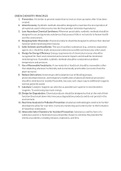
NURS 5315 Advanced Pathophysiology-Exam 3 1. Explain the cardiac structure and blood flow through chambers/valves. The right atrium receives ______ blood from the body. deoxygenated 1. Explain the cardiac structure and blood flow through chambers/valves. Blood travels from the right atrium, through the ______ valve, to the right ventricle. From the right ventricle, blood travels through the _____ valve and into the ____ artery tricuspid, pulmonic, pulmonary 1. Explain the cardiac structure and blood flow through chambers/valves. T/F The pulmonary artery is the only artery in the body that carries DEOXYGENATED blood, into the lungs, where it goes to the alveoli and gas exchange occurs True 1. Explain the cardiac structure and blood flow through chambers/valves. The oxygenated blood then enters the _____ vein and is delivered to the _____ _____ pulmonary, left atrium 1. Explain the cardiac structure and blood flow through chambers/valves. From the left atrium,. it travels through the _____ valve into the left ventricle. From the left ventricle, the blood travels through the _____ valve into the aorta, and goes to the rest of the body to deliver oxygen and nutrients mitral, aortic T/F The left ventricle is larger than the right because its workload is greater. The right ventricle ONLY PUMPS BLOOD TO THE LUNGS, whereas the left ventricle must pump blood to the entire body and has a much higher after load to push against. True (Consequently, pressure in left side of heart is greater than the right) The heart has how many layers? 3. endocardium, myocardium ,pericardium (made of two layers. Fibrous pericardium made of CT and provides heart with stability by connecting to sternum anteriorly and diaphragm inferiorly. Serous pericardium has two layers 2. Explain fetal circulation. The _____ is essential to fetal life, growth, and development. Where oxygen exchange occurs. Removes waste products and provides nutrients placenta 2. Explain fetal circulation. T/F During fetal growth and development, manner in which blood flows is different than it is at birth. Blood shunted around some areas and mixes in other areas. Different channels which are OPEN to allow for blood flow, and after birth, channels close and./or develop into various ligaments. True 2. Explain fetal circulation. The umbilical vein receives _______ blood from the placenta. The umbilical vein connects to the ______ circulation but also connects to the inferior vena cava by the _____ _____ oxygenated, hepatic, ductus venosus 2. Explain fetal circulation. The ____ ____ allows the oxygen rich blood to enter the inferior vena cava and some blood does enter the hepatic circulation. From the inferior vena cava, the blood is emptied into the ____ ____ ductus venosus, right atrium
Written for
- Institution
- NURS 5315 Advanced Pathophysiology
- Course
- NURS 5315 Advanced Pathophysiology
Document information
- Uploaded on
- May 28, 2024
- Number of pages
- 5
- Written in
- 2023/2024
- Type
- Exam (elaborations)
- Contains
- Questions & answers
Subjects
-
nurs 5315 advanced pathophysiology exam 3 1 expl