CDFM WITH COMPLETE VERIFIED ANSWERS
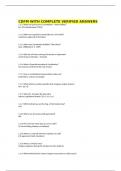
CDFM WITH COMPLETE VERIFIED ANSWERS 1.1.5: What was precursor to Constitution - when ratified? Art. Of Confederation (1781)) 1.1.5: What was required to amend the Art. Of Confed? unanimous approval of all states) 1.1.5: When was Constitution Ratified? Take effect? June 1788)(March 4, 1789) 1.1.6: Why Sep of Power among 3 branches so important? avoid strong central gov tyranny) 1.1.6: What is Essential principle of Constitution? Gov must be confined to the rule of law) 1.1.7: How is constitutional interpretation often set? predcedent, custom and usage) 1.1.7: What Article & section specifies that Congress makes all laws? Art I, Sec. 8) 1.1.7: What Art. Set apart the Executive Judicial, Legislative) branch? (E=2, J=3, L=1). 1.1.7: Which Articles lay out the Org. of the Federal Gov? I-III). 1.1.8: Where are all revenue bills generated? HR) 1.1.8: Pres has how many days to act on a bill? 10 not including Sundays or Holidays) 1.1.8: What can override the Pres rejection of a bill? 2/3 approval in both chambers) 1.1.8: What is a Pocket Veto? Congress adjourns during the 10 days the Pres holds it). 1.1.9: What Article/Section states Congress has power to collect taxes? Art I, Sec 8) 1.1.9: What is important about Art I, Sec 9? No $ from Treasury w/o Appropriation) 1.1.12: What is the difference between Joint and Concurrent Resolutions? Joint has same effect as a Bill and must be signed by Pres; Concurrent "sense of Congress" only, not law) 1.1.13: Who can introduce legislative proposals to Congress? Members of Congress only) 1.1.15: What is the sole purpose of Conferences? reconcile differences between the houses) 1.1.17: What are the 4 phases of the Federal Budget process? Formulation, Congressional Action, Execution, and Performance Review & Audit) 1.1.17: The Federal Budget is the _____ Budget. The President's) 1.1.17: Who plays a major role in developing the Budget? Pres, Cong, OMB, Agencies, Public) 1.1.17: When must the President submit the next FY Budget? 1st Monday in February) 1.1.18: The formulation phase starts as early as ____months prior to the start of the FY. 21) 1.1.18: What are the 6 major steps to the formulation phase? 1.OMB Guidance - Circ. A11 issued; 2.Organizations develop draft; 3.Agency submits to OMB; 4.OMB Reviews; 5.Pres takes action; 6.Sent to Congress) 1.1.19: What months do each step occur? 1=Feb; 2=Jul/Aug; 3=Sep/Oct; 4=Sep-Dec; 5=Nov-Jan; 6=1st Monday in February) 1.1.21: The OMB Passback can change___? funding for programs or agencies) 1.1.21: What is a Reclama? Appeal to Pres of a Passback by the Head of an Agency) 1.1.22: What budgets are included in the Pres Budget? Legis, Exec, Judicial branches and D.C.) 1.1.23: Which branch's budget is the largest? Executive) 1.1.23: Who passes Appropriations or Budget Authority? Congress) 1.1.23: Who signs Appropriations into law? Pres) 1.1.23: What provides legal authority to incur obligation and make payments from Treasury? Appropriations) 1.1.23: Who provides Budget Authority? Congress) Who provides OBL Authority? (OMB) 1.1.24: What happens after Congress gets Pres Budget? Committees review for about 6 weeks; Each House adopts concurrent resolutions (March); Conferences work out differences (April); Congress adopts budget resolution (by April 15-May15); House passes appropriation bills by June 30 to pass to SAC; Bills sent to Conference if they differ (August) - if no differences, or when differences are resolved, they go to the Pres for signature (by Sept 30th); Simultaneously the HAC and SAC hold subcommittee level hearings to review Agency justifications (February); Draft appropriation bills and reports (May); House Full committee reviews actions of subcommittees (Jun-Aug). 1.1.26: Can one Congress pass a resolution that goes into the term of another Congress? Y) 1.1.26: When does the Budget Execution phase start? When Treasury issues Warrants) 1.1.26: When does OMB/Agency negotiate apportionment? W/in 10 days of Bill signed) 1.1.26: How often does Agency monitor financial activity ongoing but especially quarterly) 1.1.26: What is submitted quarterly by Agencies to OMB? SF-133 Report on Budget Execution) 1.1.26: How do Agencies request Apportionment? SF-132 Request for Apportionment) 1.1.26: How often does the agency submit an SF-132? Quarterly) 1.1.29: The concept of fund Allotment is to place operational and obligational authority at the ___ level to increase the likelihood of ____. lowest practical; effective management) 1.1.29: Funds legally reserved for a specific purpose are? obligations) 1.1.29: The SF-133 are submitted for which years? each open year) 1.1.31: Transfers occur between appropriations and require statutory authority and what two things are required? 1. unfunded requirement must be unanticipated & higher priority) 1.1.31: Reprogramming is? a shift of funds from one purpose to another w/in same approp) 1.1.31: What is the O&M threshold for Congressional approval for Reprogramming? 15M) 1.1.31: Transfer authority can also shift funds between purposes, just w/in different approp. F) 1.1.31: Agencies have authority for Reprogramming. T but w/in dollar limits or go to Congress) 1.1.31: Transfer authority must be approved by both HASC/SASC and HAC/SAC. T) 1.1.31: DoD has automatic transfer authority for up to what % of BA? typically 1%) 1.1.32: Whom does the GAO work for? Congress) 1.1.32: Who performs much of the Review and Audit phase of the Budget Process? Congress has hearings & GAO does program & financial audits; Agencies have internal audits and management control programs and testify before Congress) 1.1.33: What is GPRA? What year was it implemented? Gov Perf & Results Act)(1993) 1.1.33: What did GPRA mandate? Strategic Planning-QDR; Annual Perf Planning-DoD Budget; Annual Perf Review - P.A.R = Perf Accountability Report due by Nov 15) 1.1.34: What is the specific statutory authority to incur obligations in anticipation of either receipts or an appropriation of liquidating cash with which to pay the obligations called? Contract Authority) 1.1.37: Typically, what is Federal Government spending as a percent of GDP? 1/5th) 1.1.38: Federal revenues come mostly from___? Individual Income Tax ~ 43% of receipts) 1.1.40: What divided Federal spending into Disc & Mandatory? When? BEA)(1990) 1.1.40: Which Acts were known as the Gramm-Rudman-Hollings Acts? 1985 Bal Budg & Emerg Defecit Control Act & 1987 Bal Budg & Emerg Defecit Control Reaffirmation Act) 1.1.40: What were the goals of the two acts above? Balance the Budget by FY91; implemented sequestration procedures, discretionary spending limits on annual appropriations...) 1.1.41: What Act established PAYGO? When expired? 1990 BEA)(2002) 1.1.41: Which Act replaced the Gramm-Rudman-Holings targets with new annual ceilings on BA & outlays for 5 years? 1990 BEA) 1.1.41: Which Act established CFO in agencies and cabinet departments and tasked them with overseeing financial management & information systems? 1990 CFO Act) 1.1.41: Which Act changed the way budgets are to be justified and managed, focused budget process on planning, & required strategic plans from Agencies by Sep 30, 1997? 1993 GPRA) 1.1.41: Which Act established discretionary spending limits for & outlined the current Sequestration process - if ever again invoked? 1993 Omnibus Reconciliation Act) 1.1.41: Which Act requires annual perf plans & perf reports? 1993 GPRA) Competency Area 2: Defense Resource Management Environment 1.2.5: What are the responsibilities of the Military Departments? Recruiting, training, and equipping the forces) 1.2.5: Who is the CFO of Defense? USD(C)) 1.2.6: What consumes the most of the DoD Budget? Second most? O&M-120B, MilPers-100B) 1.2.6: About how much annually is spent on Defense Procurement? 75B) 1.2.7: When did Congress pass the National Security Act and what did it do? 1947, SECDEF, Air Force and NSC, Civilian control of the Military) 1.2.7: When was the DoD created? 1949) 1.2.7: About how many people on AD, Reserves/Guards, GS? 1.4M, 1.3M, 669K) 1.2.10: Statutory members of the NSC include? Pres, V.Pres, SecDef, SecState) 1.2.10: Statutory Advisors to the NSC include? Dir of Natl Intel, CJCS) 1.2.7: When was Navy, Army, Marine Corps born? 10/1775, 6/1775, 11/1775) 1.2.13: CJCS reports to whom? SECDEF) 1.2.13: What identified the CJCS as the senior ranking member of the Military Goldwater, Nichols DoD Reorganization Act of 1986)
Written for
- Institution
- CDFM - Certified Defense Financial Manager
- Course
- CDFM - Certified Defense Financial Manager
Document information
- Uploaded on
- May 15, 2024
- Number of pages
- 49
- Written in
- 2023/2024
- Type
- Exam (elaborations)
- Contains
- Questions & answers
Subjects
-
cdfm with complete verified answers 115 what

Also available in package deal