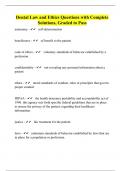
Dental Law and Ethics Questions with Complete Solutions, Graded to Pass
autonomy - self-determination beneficence - of benefit to the patient code of ethics - voluntary standards of behavior established by a profession confidentiality - not revealing any personal information about a patient ethics - moral standards of conduct, rules or principles that govern proper conduct HIPAA - the health insurance portability and accountability act of 1996. this agency sets forth specific federal guidelines that are in place to ensure the privacy of the patient, regarding their healthcare information. justice - fair treatment for the patient laws - minimum standards of behavior established by laws that are in place for a population or profession. nonmaleficence - to do no harm to the patient comes from the hippocratic oath and is the most basic principle of morality veracity - to be truthful, not lying to the patient legal recourse - all professionals are held liable for their own actions Respondent superior means the law holds the dentist liable for his/her employees
Written for
- Institution
- Dental Law and Ethics
- Course
- Dental Law and Ethics
Document information
- Uploaded on
- May 15, 2024
- Number of pages
- 4
- Written in
- 2023/2024
- Type
- Exam (elaborations)
- Contains
- Questions & answers
Subjects

Also available in package deal