NR 503 Chamberlain mid term..docx
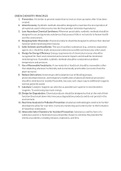
Epidemiology - correct answer is the science of public health Population Health - correct answer focuses on risk, data, demographics, and outcomes. Outcomes - correct answer is the end result that follows an intervention aggregate - correct answer is a defined population. community - correct answer is composed of multiple aggregates data - correct answer is complied information Prevalence - correct answer measures the existence of a disease. Measures the number of all cases of a disease or attribute in a population at a given time Incidence - correct answer measures the appearance of a disease. Measures the occurrence of new events in a population over a period of time. surveillance - correct answer is the collection, analysis, and dissemination of data. high-risk - correct answer is an increased chance of poor health outcome. Morbidity - correct answer is the presence of illness in a population mortality - correct answer is related to the tracking deaths in an aggregate vital statistics - correct answer statistics on live births, deaths, fetal deaths, marriages and divorces. cases - correct answer set of criteria used in making a decision as to whether an individual has a disease or health event of interest Social Justice - correct answer the view that everyone deserves equal rights and opportunities —this includes the right to good health Inter-professional collaboration - correct answer The idea of sharing and implies collective action oriented toward a common goal, in this case, improving the quality and safety of patient care. It involves responsibility, accountability, coordination, communication, cooperation, assertiveness, mutual respect, and autonomy. Healthy People 2020 - correct answer aims to reach four overarching goals: 1.Attain high-quality, longer lives free of preventable disease, disability, injury, and premature death, 2. Achieve health equity, eliminate disparities, and improve the health of all groups 3.Create social and physical environments that promote good health for all. 4. Promote quality of life, healthy development, and healthy behaviors across all life stages. Determinants of care/health - correct answer The range of personal, social, economic, and environmental factors that influence health status are known ... risk analysis - correct answer the characterization of the potential adverse health effects of human exposures to environmental hazards health disparities - correct answer the difference in health statuses between various groups (populations). Sensitivity - correct answer measures the proportion of actual positives that are correctly identified as such (e.g., the percentage of sick people who are correctly identified as having the condition) Specificity - correct answer (also called the true negative rate) measures the proportion of actual negatives that are correctly identified as such (e.g., the percentage of healthy people who are correctly identified as not having the condition) Positive predictive value - correct answer is the probability that subjects with a positive screening test truly have the disease epidemiological triangle - correct answer 1. A traditional model of infectious disease causation, known as the Epidemiological Triad is depicted in Figure 2. The triad consists of an external agent, a host and an environment in which host and agent are brought together, causing the disease to occur in the host. confounding variable - correct answer is an "extra" variable that you didn't account for. They can ruin an experiment and give you useless results. They can suggest there is correlation when in fact there isn't. They can even introduce bias. That's why it's important to know what one is, and how to avoid getting them into your experiment in the first place Study Methods - correct answer descriptive and analytic descriptive study AKA Natural history of disease - correct answer It is the first step in epidemiology investigation. Used to describe the distribution of the disease and other health-related states and events. Describes person place and time. Provided data for program planning, resource planning, and generates a hypothesis. There are 4 types: correlational (ecologic) studies, case reports, case series, and cross-sectional studies. analytic study - correct answer consists of observational and experimental. Observational include case control and cohort. Experimental includes random control trial (typically for new drug testing), field trial (conducted on those who have a high risk of obtained a disease), and community trial (research is conducted on an entire community or neighborhood). Test a hypothesis. Rapid Cycle Improvement (RCI) - correct answer 1. "quality improvement method that identifies, implements and measures changes made to improve a process or a system." it implies that changes are made and tested over periods of three or months or less, rather than the standard eight to twelve months. It consists of fours stages: Plan: Identify an opportunity to improve and plan a change or test of how something works. Do: Carry out the plan on a small number of patients. The test period may be as short as one day for small PDSA cycles. Study:Examine the results. Did you achieve your goals? Act: Use your results to make a decision, incorporate changes into your workflow, and establish future quality improvement plans Is screening a tertiary intervention? If yes, why, if not, what is it? - correct answer No, it is secondary. How does a provider determine the usefulness, appropriateness, of a screening test? - correct answer Determining whether a screening test is appropriate requires the APRN to address several aspects of the disease of interest. The target population needs to be identifiable. There should be enough people to make the study cost effective. The preclinical period should be proficient to allow treatment before symptoms appear so that early diagnosis and treatment make a difference in terms of outcomes. Can you explain what "descriptive epidemiology" means? What is the purpose? How is it used? - correct answer It covers time place and person. First, by looking at the data carefully, the epidemiologist becomes very familiar with the data. He or she can see what the data can or cannot reveal based on the variables available, its limitations (for example, the number of records with missing information for each important variable), and its eccentricities (for example, all cases range in age from 2 months to 6 years, plus one 17-year-old.). Second, the epidemiologist learns the extent and pattern of the public health problem being investigated — which months, which neighborhoods, and which groups of people have the most and least cases. Third, the epidemiologist creates a detailed description of the health of a population that can be easily communicated with tables, graphs, and maps. Fourth, the epidemiologist can identify areas or groups within the population that have high rates of disease. This information in turn provides important clues to the causes of the disease, and these clues can be turned into testable hypotheses.
Written for
- Institution
- NR 503
- Course
- NR 503
Document information
- Uploaded on
- May 7, 2024
- Number of pages
- 16
- Written in
- 2023/2024
- Type
- Exam (elaborations)
- Contains
- Questions & answers
Subjects
-
nr 503 chamberlain mid termdocx