Types of metabolism
1. Catabolic= degrade large molecules to small molecules to produce energy
2. Anabolic= use small molecules and energy to make macromolecules.
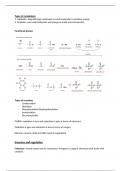
Functional groups
Types of reactions
- Condensation
- Hydration
- Phosphorylation/Dephosphorylation
- Isomerisation
- Decarboxylation
OILRIG= oxidation is loss and reduction is gain in terms of electrons.
Oxidation is gain and reduction is loss in terms of oxygen.
Electron carriers= NAD and FAD (used in respiration)
Enzymes and regulation
Cofactors= mostly metal ions or coenzymes- inorganic or organic chemicals that assist with
catalysis.
1. Catabolic= degrade large molecules to small molecules to produce energy
2. Anabolic= use small molecules and energy to make macromolecules.
Functional groups
Types of reactions
- Condensation
- Hydration
- Phosphorylation/Dephosphorylation
- Isomerisation
- Decarboxylation
OILRIG= oxidation is loss and reduction is gain in terms of electrons.
Oxidation is gain and reduction is loss in terms of oxygen.
Electron carriers= NAD and FAD (used in respiration)
Enzymes and regulation
Cofactors= mostly metal ions or coenzymes- inorganic or organic chemicals that assist with
catalysis.