Pharmacology Chapter 19: NCLEX Questions well answered
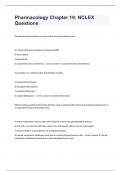
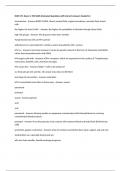
Pharmacology Chapter 19: NCLEX QuestionsNonselective beta-blockers may be used to treat hypertension and A) chronic obstructive pulmonary disease (COPD). B) heart failure. C) heart block. D) supraventricular arrhythmias. - correct answer D. supraventricular dysrhythmias. An example of a cardioselective beta-blocker includes A) propranolol (Inderal). B) labetalol (Normodyne). C) atenolol (Tenormin). D) sotalol (Betapace). - correct answer C) atenolol (Tenormin). When teaching a patient about beta-blockers such as atenolol (Tenormin) and metoprolol (Lopressor), it is important to inform the patient that A) these medications may be taken with antacids to minimize gastrointestinal distress. B) hot baths and showers will help enhance the therapeutic effects and are encouraged. C) alcohol intake is encouraged for its vasodilating effects. D) abrupt medication withdrawal may lead to a rebound hypertensive crisis. - correct answer D. abrupt medication withdrawal may lead to a rebound hypertensive crisis Propranolol (Inderal) is an effective A) selective alpha-adrenergic antagonist. B) nonselective beta-adrenergic antagonist. C) beta1-adrenergic antagonist. D) beta2-adrenergic antagonist. - correct answer B) nonselective beta-adrenergic antagonist. During assessment of a patient diagnosed with pheochromocytoma, the nurse auscultates a blood pressure of 210/110 mm Hg. The nurse would expect to administer which medication? A) nadolol (Corgard) B) phentolamine (Regitine) C) dobutamine (Dobutrex) D) verapamil (Calan) - correct answer B. phentolamine (Regitine) When assessing for cardiovascular effects of a beta-blocker, the nurse understands that these drugs produce A) a positive inotropic, positive chronotropic, and positive dromotropic effect. B) a positive inotropic, negative chronotropic, and negative dromotropic effect. C) a negative inotropic, positive chronotropic, and positive dromotropic effect. D) a negative inotropic, negative chronotropic, and negative dromotropic effect. - correct answer D) a negative inotropic, negative chronotropic, and negative dromotropic effect. Beta-blockers are used to treat which disorders? (Select all that apply.)
Written for
- Institution
- Pharmacology nclex
- Course
- Pharmacology nclex
Document information
- Uploaded on
- April 30, 2024
- Number of pages
- 7
- Written in
- 2023/2024
- Type
- Exam (elaborations)
- Contains
- Questions & answers
Subjects
-
pharmacology chapter 19 nclex questions

Also available in package deal