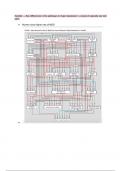
Kendler → Sex differences in the pathways to major depression : a study of opposite sex twin
pairs
● Women have higher rate of MDD
●
,●
● Low parental warmth, parental loss, neuroticism, lifetime traumas, divorce, social
support, marital satisfaction contribute more strongly to the MDD pathway in females
● For males : low self esteem, drug use disorder, past history of major depression, distal
and dependent proximal stressful life events
● Discussion
○ Best fit model data → 60% of the paths in the model differed between the sexes
○ Earliest developmental factors : childhood sexual abuse and low parental warmth
= potent down stream in M and F
○ Drug use disorders influenced M more
○ Divorce and low social support more for F
○ Marital satisfaction higher effects in F
, ○ 20 risk variables divided into → no/modest/moderate/large sex differences
■ 9 variables similar, 5 F>M, 6 M>F
○ The five risk variables with a stronger total impact of liability to major depression
in women reflected personality and interpersonal relationships
■ Neuroticism 30% more potent in in F
■ Parental warmth, divorce, social support, marital satisfaction
■ Women place more importance on interpersonal relationships
■ Women more emotionally involved in their social networks
○ The six risk variables with a stronger total impact on liability to major depression
in men were divisible into three groups,
■ externalizing psychopathology
● Men have higher rates of conduct disorder and drug abuse
■ prior depressive history
● More sensitivity to childhood abuse/stressors from previous year
(past history more of a risk predictor)
■ greater sensitivity to specific stressors
● More sensitive to recent stressful events
● Removed marital satisfaction → removal equalized impact of
stressful life events
● Blatt
○ Anaclitic depression → deficiencies in caring relationships and unmet
dependency needs (more in women)
○ Introjective depression → inability to meet internal demands for self-worth and
achievement (more in men)
● Limitations
○ Model assumes causal relationship between predictor and DV
○ Recall bias during long term memory assessment
○ The model assumes that multiple independent variables act additively and
linearly in their impact on risk for major depression. This is unlikely to be true
○ Sample adult twins from virginia
Martin - the experience of symptoms of depression in men vs women
● Addis 4 conceptual frameworks to address how gender shapes men’s experiences of
depression
○ Sex differences framework
■ Sex differences in symptoms
○ The masked depression framework
■ Men express emotions as “depressive equivalents” not directly expressing
emotions, makes it hard to identify
○ Masculine depression framework
■ Hegemonic masculinity → externalizing symptoms, reacting with anger,
self destructive, more irritable, lower impulse control
, ○ Gendered response framework
■ Men’s reaction to negative affect are shaped by adherence or rejection of
hegemonic masculinity , gendered socialization
● Gotland male depression scale
● Masculine depression scale
● Male symptoms scale
○ Depression more prevalent in men when assessed with MSS
○ Sex differences in endorsement of specific items → men endorsed anger,
substance abuse, risk taking behavior
● Gender inclusive depression scale
○ men endorsed anger attacks/ aggression, substance abuse, risk-taking behavior,
and hyperactivity more than women
○ Depressed mood was the principal symptom for both men and women
● Discussion
○ men were significantly more likely to report symptoms of anger
attacks/aggression, irritability, substance abuse, and risk-taking behaviors over
symptoms such as withdrawal from friends, sleep problems, and feelings of
competitiveness
○ Relying on traditional symptoms may cause underdiagnosis in men
○ 2 measures had high internal consistency
○ The MSS found that depression was more prevalent among men than women
and more prevalent among men than major depression
○ Men endorsed externalizing symptoms more and women endorsed traditional
depression symptoms more
○ More women than men fit the criteria for irritable depression
○ Externalizing symptoms not present in all men
○ GIDS identified depression in men more often than when only the traditional
DSM-IV criteria were used = men and women in equal proportions
● Limitations
○ Secondary data analysis → not all constructs in the literature used
○ Several constructs imperfect
○ Not be confident that all the symptoms assessed in our scale were present during
the same time period
● Conclusion
○ Future use
○ Important changes in conceptualization/measurement of depression
○ Men are willing to endorse the alternative depression syndromes
○ Current depression criteria may be biased towards women
○ Male-type symptoms also common in women
○ Gender likely plays an important role in how men and women conceptualize and
experience depression.
pairs
● Women have higher rate of MDD
●
,●
● Low parental warmth, parental loss, neuroticism, lifetime traumas, divorce, social
support, marital satisfaction contribute more strongly to the MDD pathway in females
● For males : low self esteem, drug use disorder, past history of major depression, distal
and dependent proximal stressful life events
● Discussion
○ Best fit model data → 60% of the paths in the model differed between the sexes
○ Earliest developmental factors : childhood sexual abuse and low parental warmth
= potent down stream in M and F
○ Drug use disorders influenced M more
○ Divorce and low social support more for F
○ Marital satisfaction higher effects in F
, ○ 20 risk variables divided into → no/modest/moderate/large sex differences
■ 9 variables similar, 5 F>M, 6 M>F
○ The five risk variables with a stronger total impact of liability to major depression
in women reflected personality and interpersonal relationships
■ Neuroticism 30% more potent in in F
■ Parental warmth, divorce, social support, marital satisfaction
■ Women place more importance on interpersonal relationships
■ Women more emotionally involved in their social networks
○ The six risk variables with a stronger total impact on liability to major depression
in men were divisible into three groups,
■ externalizing psychopathology
● Men have higher rates of conduct disorder and drug abuse
■ prior depressive history
● More sensitivity to childhood abuse/stressors from previous year
(past history more of a risk predictor)
■ greater sensitivity to specific stressors
● More sensitive to recent stressful events
● Removed marital satisfaction → removal equalized impact of
stressful life events
● Blatt
○ Anaclitic depression → deficiencies in caring relationships and unmet
dependency needs (more in women)
○ Introjective depression → inability to meet internal demands for self-worth and
achievement (more in men)
● Limitations
○ Model assumes causal relationship between predictor and DV
○ Recall bias during long term memory assessment
○ The model assumes that multiple independent variables act additively and
linearly in their impact on risk for major depression. This is unlikely to be true
○ Sample adult twins from virginia
Martin - the experience of symptoms of depression in men vs women
● Addis 4 conceptual frameworks to address how gender shapes men’s experiences of
depression
○ Sex differences framework
■ Sex differences in symptoms
○ The masked depression framework
■ Men express emotions as “depressive equivalents” not directly expressing
emotions, makes it hard to identify
○ Masculine depression framework
■ Hegemonic masculinity → externalizing symptoms, reacting with anger,
self destructive, more irritable, lower impulse control
, ○ Gendered response framework
■ Men’s reaction to negative affect are shaped by adherence or rejection of
hegemonic masculinity , gendered socialization
● Gotland male depression scale
● Masculine depression scale
● Male symptoms scale
○ Depression more prevalent in men when assessed with MSS
○ Sex differences in endorsement of specific items → men endorsed anger,
substance abuse, risk taking behavior
● Gender inclusive depression scale
○ men endorsed anger attacks/ aggression, substance abuse, risk-taking behavior,
and hyperactivity more than women
○ Depressed mood was the principal symptom for both men and women
● Discussion
○ men were significantly more likely to report symptoms of anger
attacks/aggression, irritability, substance abuse, and risk-taking behaviors over
symptoms such as withdrawal from friends, sleep problems, and feelings of
competitiveness
○ Relying on traditional symptoms may cause underdiagnosis in men
○ 2 measures had high internal consistency
○ The MSS found that depression was more prevalent among men than women
and more prevalent among men than major depression
○ Men endorsed externalizing symptoms more and women endorsed traditional
depression symptoms more
○ More women than men fit the criteria for irritable depression
○ Externalizing symptoms not present in all men
○ GIDS identified depression in men more often than when only the traditional
DSM-IV criteria were used = men and women in equal proportions
● Limitations
○ Secondary data analysis → not all constructs in the literature used
○ Several constructs imperfect
○ Not be confident that all the symptoms assessed in our scale were present during
the same time period
● Conclusion
○ Future use
○ Important changes in conceptualization/measurement of depression
○ Men are willing to endorse the alternative depression syndromes
○ Current depression criteria may be biased towards women
○ Male-type symptoms also common in women
○ Gender likely plays an important role in how men and women conceptualize and
experience depression.