
1 Copyright © 202 1 Pearson Education, Inc. TEST BANK FOR COLLEGE ACCOUNTING A PRACTICAL APPROACH 14TH CANADIAN ED ITION JEFFREY SLATER, DEBRA GOO College Accounting, 14Ce (Slater/Good) Chapter 1 Accounting Concepts and Procedures: An Introduction 1.1 Defining and listing the functions of accounting. 1) Which of the following professional accounting designations has been replaced by "CPA"? A) CA B) CMA C) CGA D) All of the above Answer: D Diff: 1 Type: MC Objective: 1 -1 2) The type of business organization that can continue indefinitely is known as a A) sole pro prietorship. B) partnership. C) corporation. D) None of the above. Answer: C Diff: 1 Type: MC Objective: 1 -1 3) This type of business organization is subject to income tax. A) sole proprietorship. B) partnership. C) corporation. D) All of the above. Answer: C Diff: 1 Type: MC Objective: 1 -1 4) Putting the information into the accounting system would be called A) analyzing. B) recording. C) classifying. D) summarizing. Answer: B Diff: 2 Type: MC Objective: 1 -1 MEDCONNOISSEUR 2 Copyright © 202 1 Pearson Education, Inc. 5) The purpose of the accounting process is to provide financial information about A) sole proprietorships. B) small businesses. C) large corporations. D) All of these answers are correct. Answer: D Diff: 2 Type: MC Objective: 1 -1 6) The advantages of a corporation do NOT include A) limited personal risk. B) can continue indefinitely. C) business decisions made by career administrators. D) easy to set up. Answer: D Diff: 1 Type: MC Objective: 1 -1 7) Accounting reports are least helpful in answering which of the follo wing questions? A) How much cash was available at the end of the last year? B) How well were the employees treated by management? C) Did the company make a profit for the previous year? D) Can the company pay its debts on time? Answer: B Diff: 3 Type: MC Objective: 1 -1 8) Accounting provides information to A) managers. B) government. C) investors. D) All of these answers are correct Answer: D Diff: 2 Type: MC Objective: 1 -1 9) Which of the following is a characteristic of a sole proprietorship? A) Business owned by more than one person B) Easy to form C) Each shareholder acts as an owner of the company D) Can continue indefinitely Answer: B Diff: 1 Type: MC Objective: 1 -1 MEDCONNOISSEUR 3 Copyright © 202 1 Pearson Education, Inc. 10) A partnership is a business which is A) easy to form. B) ends wi th the death of a partner. C) owned by more than one person. D) All of these answers are correct. Answer: D Diff: 1 Type: MC Objective: 1 -1 11) Which is an advantage of a sole proprietorship form of business? A) There is limited personal risk. B) The business can continue indefinitely. C) The owner makes all the decisions. D) All of these answers are correct. Answer: C Diff: 1 Type: MC Objective: 1 -1 12) Which of the following is NOT a type of business organization? A) Corporation B) Partnership C) Sole proprietorship D) Operation Answer: D Diff: 2 Type: MC Objective: 1 -1 13) A corporation A) can continue indefinitely. B) is owned by shareholders. C) has limited risk to shareholders. D) all of the above. Answer: D Diff: 2 Type: MC Objec tive: 1 -1 14) The Sarbanes -Oxley Act in the United States and National Policies in Canada were passed to A) prevent fraud at public companies. B) replace all of the old accounting procedures with new ones. C) improve the accuracy of the company's financi al reporting. D) Both A and C are correct. Answer: D Diff: 2 Type: MC Objective: 1 -1 MEDCONNOISSEUR 4 Copyright © 202 1 Pearson Education, Inc. 15) A legal firm would be considered a A) merchandise company. B) manufacturer. C) service company. D) None of the above are correct. Answer: C Diff: 1 Type: MC Objective: 1 -1 16) Not -for-profit organizations A) aim to improve society in some way. B) seek to maximize profits. C) usually obtain funding from donations and government grants. D) Both A and C are correct. Answer: D Diff: 1 Type: MC Objective: 1-1 17) Generally Accepted Accounting Principles are the underlying concepts that make up acceptable accounting practices. Answer: TRUE Diff: 1 Type: TF Objective: 1 -1 18) Not -for-profit businesses are not permitted to earn any revenue. Answer: FAL SE Diff: 2 Type: TF Objective: 1 -1 19) The primary objective of a not -for-profit business is to maximize revenue. Answer: FALSE Diff: 1 Type: TF Objective: 1 -1 20) The new accounting designation for Canada is CGA. Answer: FALSE Diff: 1 Type: TF Objective: 1 -1 21) A disadvantage of a corporation is that shareholders are held personally liable for the corporation's debts. Answer: FALSE Diff: 2 Type: TF Objective: 1 -1 MEDCONNOISSEUR
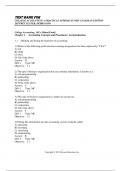
Preview 4 out of 616 pages
Exam (elaborations)
Test Bank for College Accounting A Practical Approach 14th Canadian Edition Jeffrey Slater, Debra Good
Preview 4 out of 616 pages
Test Bank for College Accounting A Practical Approach 14th Canadian Edition Jeffrey Slater, Debra Good. Table of Contents: Accounting Concepts and Procedures An Introduction Debits and Credits Analyzing and Recording Business Transactions Beginning the Accounting Cycle Journalizing, Posting, and the Trial Balance The Accounting Cycle Continued Preparing Worksheets and Financial Statements The Accounting Cycle Completed Closing and Post-Closing Trial Balance Special Journals and Subsidiary Ledgers Sales and Cash Receipts Journal Special Journals and Subsidiary Ledgers Purchases and Cash Payments Journal Completion of the Accounting Cycle for a Merchandising Company Banking Procedures and Control of Cash Payroll Procedures The Employee's Perspective The Employer's Payroll Responsibilities Accounting for Bad Debts Special Journals with Taxes
Content preview
Connected book
Document information
- Uploaded on
- April 15, 2024
- Number of pages
- 616
- Written in
- 2023/2024
- Type
- Exam (elaborations)
- Contains
- Questions & answers
$20.49
Wrong document? Swap it for free
Within 14 days of purchase and before downloading, you can choose a different document. You can simply spend the amount again.
Written by students who passed
Immediately available after payment
Read online or as PDF

Reputation scores are based on the amount of documents a seller has sold for a fee and the reviews they have received for those documents. There are three levels: Bronze, Silver and Gold. The better the reputation, the more your can rely on the quality of the sellers work.

