Nur 513 Weberg Exam 7 2024
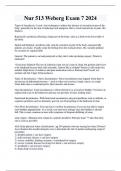
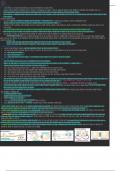
Types of Anesthesia - Local- Any technique to induce the absence of sensation in part of the body, generally for the aim of inducing local analgesia, that is, local insensitivity to pain. (Ex. Stiches) Regional-Is anesthesia affecting a large part of the body, such as a limb or the lower half of the body. Spinal and Epidural- anesthesia only stop the sensation in part of the body, and generally patients are awake. Usually stops the feeling from the stomach down. (Ex. include epidural for cesarean or vaginal birth) General- The patient is out and paralyzed so they don't wake up during surgery. Patient is intubated! *Conscious Sedation-The use of sedation to put you in a state of sleep, but patients don't have to be intubated because their still arousable. Almost like a twilight! Patient is still awake but sedated. High doses of sedatives and pain medication such as Fentanyl and Versid. (ex. include cath lab, Upper GI procedures). Types of Incontinence - Stress Incontinence- Stress incontinence may happen when there is an increase in abdominal pressure -- such as when you exercise, laugh, sneeze, or cough. Urine leaks due to weakened pelvic floor muscles and tissues. Urge Incontinence- Urge incontinence is often referred to as overactive bladder: You have an urgent need to go to the bathroom and may not get there in time, leaking urine. Functional Incontinence- With functional incontinence, physical problems such as arthritis, or cognitive problems such as dementia, prevent you from getting to the bathroom in time Over Flow Incontinence- You may have overflow incontinence if you are not able to empty your bladder appropriately. As a result, you may have leakage once the bladder is already full. This is more common in men with symptoms of frequent dribbling of urine. urine output - Minimal urine output in a patient should be 30ml per hour! ** take that foley out as soon as possible! ASA Scale physical status classification - pg 554 patients who are staying less than 24 hours! An evaluation the anesthesiologists uses to determine the risk of patient undergoing surgical procedure. 1.) healthy patient = can have surgery 2.) mild systemic disease = can have surgery 3.) severe, mobility, limiting systemic = considered for surgery 4.) severe systemic disease involving live threat = can not have surgery 5.) moribund = can not have surgery 6.) brain dead or tissue donor Malignant Hyperthermia (MH) - Severe spike in temperature! Malignant hyperthermia is disease passed down through families that causes a fast rise in body temperature (fever) and severe muscle contractions when the affected person gets general anesthesia. How to reverse Malignant Hyperthermia - pg 536 Hyperventilate the patient, High doses of Dantrolene Sodium, Stop the surgery, begin cooling with ice water in NG tube, ice on neck, underar
Written for
- Institution
-
Chamberlain College Of Nursing
- Course
-
NUR 513
Document information
- Uploaded on
- April 15, 2024
- Number of pages
- 7
- Written in
- 2023/2024
- Type
- Exam (elaborations)
- Contains
- Questions & answers
Subjects
-
nur 513 weberg exam 7 2024

Also available in package deal