24
24.1 population size
21/03/23
- Population is the number of organisms that exist within a particular area e.g.
looking at number of plants/animals in particular habitat / OR number of bacteria growing
in bioreactor
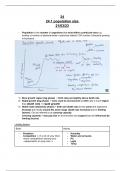
1) Slow growth region (lag phase) = birth rate just slightly above death rate
2) Rapid growth (log phase) = more used to environment so birth rate is much higher
than death rate → rapid growth
3) Stable state (stationary phase) = birth and death rate are the same and organisms
fluctuate but mostly around the same range (death rate increased due to limiting
factors). Can be referred to as carrying capacity
- Carrying capacity = max pop size an environment can support (can be influenced by
limiting factors)
Limiting factors
Biotic Abiotic
- Predation - Humidity
- Competition = if a lot of you then - Water and o2 levels
more competition among you - Ph
→dependent on pop size → - Light
- Temp
, density dependent factor
- Diseases
Other Factors affecting pop size
- Migration = refer to movement of whole species going from one place to another
Immigration Emigration
- Animals coming into a new habitat - Organisms moving out of a place
e.g. immigrants coming into your own
country
E.g. birds are emigrating out of their habitat and immigrating into a new one
Factors affecting death rate:
- Density independent factors = factors that affect the population size regardless of
its initial size
- e.g. natural disasters such as earthquakes , storms or fires
- Age
- Food
- Water and sanitisation
- Medicine
Factors affecting birth rate:
- Economic
- Cultural
- Living condition
- Birth control
- Political factors
Competitor 24.2
Competition = refer to how diff organisms will be fighting for same resources
- So any changes in the amount or size of resources → will have impact on pop
size
Intraspecific competition Interspecific competition
- Competition between organisms of same - Competitor between different
species species
- Food food , mate , habitat - Could be food /habitat
24.1 population size
21/03/23
- Population is the number of organisms that exist within a particular area e.g.
looking at number of plants/animals in particular habitat / OR number of bacteria growing
in bioreactor
1) Slow growth region (lag phase) = birth rate just slightly above death rate
2) Rapid growth (log phase) = more used to environment so birth rate is much higher
than death rate → rapid growth
3) Stable state (stationary phase) = birth and death rate are the same and organisms
fluctuate but mostly around the same range (death rate increased due to limiting
factors). Can be referred to as carrying capacity
- Carrying capacity = max pop size an environment can support (can be influenced by
limiting factors)
Limiting factors
Biotic Abiotic
- Predation - Humidity
- Competition = if a lot of you then - Water and o2 levels
more competition among you - Ph
→dependent on pop size → - Light
- Temp
, density dependent factor
- Diseases
Other Factors affecting pop size
- Migration = refer to movement of whole species going from one place to another
Immigration Emigration
- Animals coming into a new habitat - Organisms moving out of a place
e.g. immigrants coming into your own
country
E.g. birds are emigrating out of their habitat and immigrating into a new one
Factors affecting death rate:
- Density independent factors = factors that affect the population size regardless of
its initial size
- e.g. natural disasters such as earthquakes , storms or fires
- Age
- Food
- Water and sanitisation
- Medicine
Factors affecting birth rate:
- Economic
- Cultural
- Living condition
- Birth control
- Political factors
Competitor 24.2
Competition = refer to how diff organisms will be fighting for same resources
- So any changes in the amount or size of resources → will have impact on pop
size
Intraspecific competition Interspecific competition
- Competition between organisms of same - Competitor between different
species species
- Food food , mate , habitat - Could be food /habitat