BUL3310 FSU exam 1 Marzen Questions And Answers!!
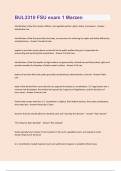
classification of law that creates, defines, and regulates parties' rights, duties, and powers - AnswerSubstantive Law classification of law that prescribes the steps, or processes, for enforcing the rights and duties defined by substantive law - Answer-Procedural Law applies to acts that society deems so harmful to the public welfare that gov is responsible for prosecuting and punishing the perpetrators - Answer-Criminal Law classification of law that applies to legal matters not governed by criminal law and that protect rights and provide remedies for breaches of duties owed to others - Answer-Civil Law bodies of law that affect the public generally (constitutional, administrative, criminal) - Answer-Public Law body of law derived from court decisions as opposed to statutes or constitutions. U.S. legal system has a common law foundation, the written laws passed by Congress and legislatures, and the decisions of court cases - Answer-Common Law Federal law trumps state law. U.S. Constitution is highest, then federal statutes, then state constitutions, then state laws - Answer-Hierarchy of Laws Doctrine that law should adhere to decided cases and "stand by the decision" - Answer-"Stare Decisis" "the thing has been decided" - Answer-"Res Judicata" states typically have 3 levels of court systems: trial courts, appellate courts, and supreme courts - Answer-State Court Structure U.S. Constitution created Supreme Court and authorized congress to establish inferior laws.12 U.S. Circuit Courts of Appeal Special Courts of Appeal - Answer-Federal Court Structure The court's power or authority to conduct trials and decide cases - Answer-Jurisdiction courts have the power to hear almost and type of case (Civil Circuit Trial Courts) - Answer-General Jurisdiction courts that are only allowed to hear certain types of cases. small claims courts generally have jurisdiction on controversies of $5000 or less. some other states have specialized courts, such as traffic courts - Answer-Limited Jurisdiction court having appellate jurisdiction - Answer-Appellate Courts courts having appellate jurisdiction act as reviewing courts, or appellate courts. generally, cases can be brought before appellate courts only on appeal from an order or a judgment of a trial court or other lower court - Answer-Appellate Jurisdiction court in which trials are held and testimony taken - Answer-Trial Court function is to ascertain facts. 6th and 7th amendments of U.S. Constitution guarantee the right of trial by jury in both criminal and civil cases. mast states require a jury's verdict to be unanimous - Answer-Jury grand jury's finding that it has probable cause to believe there is sufficient evidence to require that the accused be tried and that informs the accused of the offense with which he or she is charged so the accused may prepare a defense - Answer-Indictment trial courts of the Federal System - Answer-District Court original jurisdiction, exclusive of the courts of the states over all federal crimes. accused is entitled to a trial by jury in the state and district where crime committed - Answer-Criminal ActionsDistrict courts have jurisdiction only when the matter in controversy involves either diversity of citizenship that meets the jurisdictional amount (exceeds $75k) or involves a federal question, or the U.S. gov is a party. - Answer-Civil Actions suits between citizens of different states, a citizen and a citizen of a foreign country, and a state and citizen of another state where the amount in controversy exceeds $75k - Answer-Diversity of Citizenship where diversity jurisdiction exists, the defendant has the right to "remove" the case from state to federal court. The burden would then shift to the Plaintiff to "remand" the case back to the state court. - Answer-Defendant's Right to Removal the substantive law, including conflict of law principles, of the state in which they are sitting. bound by state precedent in diversity of citizenship cases - Answer-What laws do federal courts apply? cases involving the U.S. Constitution, treaties, and federal statutes - Answer-Federal Substantive Law is used when? Supreme Court reviews cases decided by the U.S. Court of Appeals if it chooses to hear the cases - which is called issuing a writ or certiorari. 4 justices must vote affirmatively to issue the writ - Answer-General rules for Supreme Court process decrees - Answer-Decisions made in court of equity brand of law - founded on notions of justice and fair dealing - that seeks to supply a remedy when no adequate remedy at law is available - Answer-Equity Plaintiff, Defendant, Third-Party Defendant - Answer-Parties in Trial Stage appelant, appellee - Answer-Parties in Appeal Stage all persons may join in one lawsuit as plaintiffs if the cause of action arises out of the same transaction or series of transaction and involve common questions of law and fact. in addition, additional parties maybe added by the Plaintiff and Defendant who are necessary to complete determination of the lawsuit - Answer-Joinder Rule - Plaintiff must have been or will be directly and personally injured by the Defendant's action -There must be some threatened or actual injury resulting from the Defendant's action - AnswerStanding to Sue harm alone does not typically grant standing to sue - Answer-Generalized Grievances person files suit on his or her own behalf and on behalf of all persons who may have a similar claim Requirements: a) Numerosity, b) Typicality, c) Commonality, d) Adequacy - Answer-Class Action Suits the ability of a court to resolve a controversy between parties - Answer-Subject Matter Jurisdiction voluntarily submits to the jurisdiction of a Court when lawsuit is filed - Answer-Personal Jurisdiction of Plaintiff must be served a summons (document issued by a court directing the defendant to appear in court or otherwise respond the the Plaintiff's allegations) - Answer-Personal Jurisdiction of Defendant -Pleadings (complaint, answer, counterclaim, reply) -Motions Attacking Pleadings (motion to dismiss) -Discovery (interrogatories, request for production of documents, depositions) -Pretrial Conference -Pretrial Motions - Answer-Stages of a Lawsuit
Written for
- Institution
- BUL3310 FSU Marzen
- Course
- BUL3310 FSU Marzen
Document information
- Uploaded on
- April 15, 2024
- Number of pages
- 9
- Written in
- 2023/2024
- Type
- Exam (elaborations)
- Contains
- Questions & answers
Subjects

Also available in package deal