Peds Study Guide Exam 2 (GI, GU, Endocrine, Neuro, Heme/Immune)
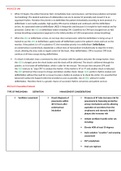
Kim 1. Dehydration – diarrhea and vomiting (from powerpoint) a. Dehydration i. Clinical Manifestations: 1. CRT greater than 3 seconds, dry mucous membranes, absence of tears, sunken fontanels, lethargy, weight loss, rapid weak pulse (1st to respond), low BP (last to respond) ii. Urine output needs to be 1mL/kg per hour for anyone under 30kg. iii. Dehydration Criteria (% of body weight lost) 1. Mild dehydration=5% of total body weight 2. Moderate=10% of total body weight 3. Severe=15% of total body weight iv. Nursing Interventions 1. Assessment should include body weight, skin color, temp & turgor, CRT, presence of thirst sensation, fontanels in infants v. Vomiting: 1. So there is nothing really in the powerpoint or ATI specifically on vomiting….I guess just know that it can cause dehydration and to monitor I&O and F&E status. Can be associated with metabolic alkalosis. vi. TB (chapter 26) 1. Question #: 20 2. ATI book (chapter 22): question 1 2. Inflammatory bowel disease – Ulcerative Colitis and Crohn’s a. Kaur said she’s taking this topic out since it wasn’t in the powerpoint or discussed in lecture. 3. Necrotizing enterocolitis (NEC) (from Powerpoint) a. Acute inflammatory disease of the bowel. Usually occurs 4-10 days after initial feeding. Seen in preterm and high risk infants! b. Due to stasis in the GI tract, decreased blood supply leads to ischemia →bacterial proliferation (HUGE PROBLEM!) c. S/S i. Distended abdomen, bloating, gastric residual that is bile tinged, occult blood in stool, lethargy, poor feeding, pale skin, and bradycardia and hypotension (which are s/s of sepsis!) d. Treatment i. DC the feedings to rest the bowel ii. Gastric tube used to decompress iii. Abx used to treat sepsis iv. Sx may be indicated to remove necrotizing tissue e. Nursing Care i. Monitor VS and gastric residuals ii. Eval stool and abdominal girth iii. Re-establish feeding (breast milk) and monitor tolerance 4. Hirschsprung’s disease (ATI book and powerpoint) a. Lack of ganglionic cells in the segments of the colon resulting in ↓motility and mechanical obstruction. No peristaltic waves in the affected portion of the bowel causing obstruction and distention. b. S/S i. Failure to pass meconium w/i 24-48 hrs after birth ii. Episodes of vomiting bile, poor feeding iii. Abdominal distention/constipation iv. Foul smelling, ribbon like stool! c. Surgical removal of the affected portion is needed. Temporary colostomy may be required d. Nursing Interventions i. High protein, high calorie, low fiber diet ii. Educate parents on colostomy care. e. TB (chapter 26) i. Question #: 6, 7, 8, 9, 38 39 ii. ATI book (chapter 23): question 2 iii. 5. GERD (ATI book and powerpoint) a. Primarily due to an incompetent LES, gastric contents regurg into esophagus. Peak incidence is around 4 mo. old, usually resolves by 1 yr. b. S/S i. Spitting up, forceful vomiting, aspiration may lead to resp. Signs, ulceration and bleeding c. Nursing Management i. Offer small, frequent feedings. ii. Thicken formula with rice cereal iii. Position the child with head elevated after meals. At least an hour at a 30° angle. iv. Can administer antacids before meals or at bedtime. Ranitidine commonly used. v. Nissen fundoplication sx used for patients who have severe cases. vi. TB (chapter 26) 1. Question #: 10, 11, 24, 25, 41, 46, 47. SATA #: 1, 5, 11 2. ATI book (chapter 23): question 5 Mae 6. Appendicitis/Appendectomy (ATI/other version of PPT in portal) a. Etiology/Pathophysiology: 1. Inflammation of the vermiform appendix caused from an obstruction of the lumen of the appendix 2. Obstruction causing inflammation and ischemia → can rupture → peritonitis 3. Average client age is 10 years b. S/S: 1. Abdominal pain in the RLQ 2. Decreased or absent bowel sounds 3. Fever 4. Lethargy 5. Tachycardia 6. Diarrhea or constipation 7. Rapid, shallow breathing 8. Anorexia 9. Possible vomiting 10. “Colicky, cramping, abdominal pain around the umbilicus” c. Lab tests: 1. CBC 2. Urinalysis d. Diagnostic Procedures: 1. Computed tomography scan shows an enlarged diameter of appendix, as well as thickening of the appendiceal wall 2. Including pain: “McBurney’s point” e. Management: 1. Surgery, antibiotics, IV fluids, pain meds with caution, antipyretics, antiemetics f. Nursing care: 1. **Avoid applying heat to the abdomen, enemas or laxatives g. Therapeutic Procedures 1. Appendectomy: treatment for simple or perforated appendicitis 2. Laparoscopic procedure: provides quick recovery for simple appendicitis a. Laparoscopic surgery: removal of the non ruptured appendix b. Laparoscopic or open surgery: removal of the ruptured appendix h. Complications: 1. Peritonitis (inflammation of the peritoneal cavity) i. TB (Chapter 26) i. Question #: 13, 14, 15, 48 and SATA #: 9 7. Cleft lip and palate a. Etiology/Pathophysiology: 1. Lip: visible separation from the upper lip toward the nose 2. Palate: visible or palpable opening of the palate connecting the mouth and the nasal cavity b. Risk Factors: 1. Family history 2. Environmental factors: exposure to teratogens, alcohol, smoking, medications & low folic acid 3. Other syndromes (ATI) c. S/S: 1. Feeding difficulties 2. Speech difficulties 3. Recurrent otitis media (related to altered structure) d. Medical management: 1. Surgical closure 2. Surgery, speech therapy 3. Cleft lip: repair is done b/w 2-3 mo of age 4. Cleft palate: repair is done b/w 6-12 mo of age e. Nursing Interventions: 1. Ensure adequate intake of food and fluids without aspiration 2. Special feeding devices may be used 3. Frequent burping is necessary 4. Assist parents in dealing with the diagnosis f. Procedure nursing care: 1. Pre-op: - assess ability to suck, position the infant upright while cradling the head during feeding, use a wide-based nipple for bottle feeding (only for isolated cleft lip), burp the infant frequently, 2. Post-op: - ABCs, wound care, monitor for bleeding, clear liquid to soft diet, **AVOID having the infant suck on a nipple or pacifier b/c it can damage the surgical site - For cleft lip: apply elbow restraints to keep the infant form injuring the repair site - For cleft palate: change the infant’s position frequently to facilitate drainage and breathing. The infant may be placed on the abdomen in the immediate post-op period. g. TB (Chapter 3, 8) i. Chapter 3 Question #: 18 ii. Chapter 8 Question #: 21, 22, 26 & SATA #: 4 8. Esophageal atresia/Tracheoesophageal fistula a. Etiology/Pathophysiology: 1. Malformation, failure of esophagus to develop 2. Failure of trachea and esophagus to separate b. Risk factors: 1. More in boys 2. Low birth weight 3. Preterm c. Often associated with: 1. V.A.C.T.E.R.L. Syndrome - Vertebral, Anorectal, Cardiovascular, Tracheo-Esophageal, Renal, Limb deformities d. S/S: 1. Newborn with frothy saliva 2. Drooling 3. Choking 4. Coughing 5. Respiratory distress 6. Aspiration e. Pre-op 1. Monitor respiratory status 2. Prevent aspiration; remove excess secretions, HOB 30 3. NPO 4. O2 prn f. Post-op 1. Care of GT, to drainage 2. Pacifier for developmental needs g. TB (Chapter 7, 26) i. Chapter 7 Question #: 15 ii. Chapter 26 Question #: 30 9. Pyloric stenosis a. Etiology/Pathophysiology: 1. Thickening of the pyloric sphincter, which creates an obstruction 2. More common in firstborn 3. Boys affected 4-6xs more frequently b. Risk Factors: 1. Genetic predisposition c. S/S: 1. Begin as regurgitation that progresses to PROJECTILE VOMITING 2. Dehydration: lethargy, weight loss, poor skin turgor, sunken fontanels 3. Loss of subcutaneous tissue 4. Olive shaped mass to the right of the umbilicus, revealed by palpation d. Medical management: 1. Surgical relief of the pyloric obstruction by PYLOROMYOTOMY (quiz) e. Nursing Interventions: 1. Provide adequate nutrition 2. Manage preop and post-op care 3. F&E replacement, NG-tube, NPO, I&O f. TB (Chapter 26) i. Question #20 & SATA #10 ii. ATI: pg. 145 Question #1 10. Intussusception a. Etiology/Pathophysiology: 1. Result of the telescoping of one portion of the intestine into another 2. Common in infants and children ages 3 months to 6 years (ATI) b. S/S: 1. Sudden onset of severe abdominal pain 2. Tender, distended abdomen 3. Vomiting and lethargy 4. “Currant jelly” stool (!) c. Diagnostic Procedure: 1. Ultrasound d. Medical Management: 1. Hydrostatic reduction 2. Surgical treatment e. Nursing Interventions: 1. Obtain hx from the parents, observe for physical signs, prepare for procedures, provide post-op care 2. ATI: - IV fluids to correct and prevent dehydration, NG tube for decompression, air enema performed by a radiologist - Complication: Reoccuring intussusception (surgery is required for reoccuring cases) f. TB (Chapter 26) i. Question #: 21 & SATA #: 2 11. Hernias a. Etiology/Pathophysiology: 1. Protrusion of an organ through an abnormal opening 2. Inguinal (80% of childhood hernia) 3. Umbilical & femoral (<1%) 4. ** Danger if it causes ischemia, poor circulation = incarceration b. S/S: 1. Usually asymptomatic, painless c. Management: 1. Surgery if hernia does not resolve on its own d. Nursing care: 1. Do not tape or strap 2. Caution with lifting, pushing, wrestling, sports, etc. e. TB (Chapter 22) i. Question #: 19 Jeslin 12. Celiac disease: autoimmune disorder triggered by the ingestion of gluten (found in wheat, barley, and rye) in genetically susceptible individuals a. Pathophysiology: When an individual cannot digest gliadin component of gluten, an accumulation of a toxic substance occurs that is damaging to the mucosal cells * villous atrophy, hyperplasia of the crypts, and infiltration of the epithelial cells with lymphocytes. b. Clinical Manifestation: symptoms appear with solid foods such as beans and pasta are introduced in child’s diet between the ages of 1-5 years. Intestinal symptoms are common in children diagnosed within the first 2 years of life other symptoms: failure to thrive, chronic diarrhea, abdominal distention and pain, muscle wasting, aphthous ulcers, and fatigue c. Diagnostic evaluation: serologic blood test for tissue transglutaminase and anti endomysial antibodies in children 18 months of age or older. Biopsy of small intestine demonstrating mucosal inflammation, hyperplasia of the crypts, and villous atrophy d. Therapeutic Management: Low gluten diet, avoid wheat, rye, barley, and oats, substitute with corn, rice, and millet. This individual may develop lactose intolerance due to damaged mucosa. Deficiencies: iron, folic acid and fat-soluble vitamins. e. Nursing care management: help child adhere to diet. Advice parents to read the food labels. Diet with high in calories and proteins with simple carbohydrates such as fruits and vegetables, but low in fats. Avoid high fiber foods such as nuts, raisins, raw fruits and vegetable. f. TB (Chapter 26) i. Question #22: A school-age child with celiac disease asks for guidance about snacks that will not exacerbate the disease. What snack should the nurse suggest? Popcorn ii. Question #43: The nurse is assisting a child with celiac disease to select foods from a menu. What foods should the nurse suggest? Corn on the cob with butter iii. Question #7 (SATA): The nurse is caring for a child with celiac disease. The nurse understands that what may precipitate a celiac crisis? (Select all that apply.) Infections, Electrolyte depletion, emotional disturbance iv. Question #8 (SATA): The nurse is preparing to admit a 6-year-old child with celiac disease. What clinical manifestations should the nurse expect to observe? (Select all that apply.) Steatorrhea, melena stools, foul- smelling stools 13. UTI: first initial UTI is often in the first year of life with increase risk of renal scarring. a. Etiology: E. coli is the most common and other gram-negative organisms. b. Clinical manifestations: it depends on the age of the child. Infants and toddlers under 2 years of age have nonspecific symptoms such as fever, irritability, lethargy, poor feeding, vomiting, and diarrhea. Newborns may have fever hypothermia, jaundice, tachypnea, or cyanosis. Classic symptoms (children over age 2) enuresis, fever, foul-smelling urine, increased frequency of urination, dysuria, or urgency. In older children and adolescents, small amount of turbulent urine, low grade fever, chills and flank pain. c. Diagnosis: Diagnosis of UTI is confirmed by detection of bacteria in urine culture, but urine collection is often difficult, especially in infants and very small children. The most accurate tests of bacterial content are suprapubic aspiration (for children younger than 2 years old) and properly performed bladder catheterization (as long as the first few milliliters are excluded from collection). The specimen must be fresh (<1 hour with storage at room temperature or <4 hours with refrigeration) to ensure sensitivity and specificity of the urinalysis and to prevent growth of organisms. d. Therapeutic Management: The objectives in management of UTIs are to (1) eliminate the current infection, (2) identify contributing factors to reduce the risk of recurrence, (3) prevent systemic spread of the infection, and (4) preserve renal function. Antibiotics therapy such as penicillin, sulfonamide, cephalosporin, and nitrofurantoin. e. Nursing Care management: good toilet habits and intake of fluid and fibers can help avoid UTIs. Parents should know the main symptoms of UTI: incontinence in a toilet -trained child, strong-smelling urine, frequency or urgency, and pain with urination. f. TB (Chapter 25) i. Question #5: The nurse is teaching a client to prevent future urinary tract infections (UTIs). What factor is most important to emphasize as the potential cause? Urinary stasis ii. Question #6: A girl, age 5 1/2 years, has been sent to the school nurse for urinary incontinence three times in the past 2 days. The nurse should recommend to her parent that the first action is to have the child evaluated for what condition? UTI iii. Question #7: What recommendation should the nurse make to prevent urinary tract infections (UTIs) in young girls? Ensure clear liquid intake of 2 L/day iv. Question #2 (SATA): The nurse is caring for a child with a urinary tract infection who is on intravenous gentamicin (Garamycin). What interventions should the nurse plan for this child with regard to this medication? (Select all that apply.) Encourage fluids. Monitor urinary output. Monitor serum peak and trough levels. v. Question #3 (SATA): The nurse is caring for a child with a urinary tract infection who is on trimethoprim–sulfamethoxazole (Bactrim). What side effects of this medication should the nurse teach to the parents and the child? (Select all that apply.) Rash, Urticaria, Photosensitivity 14. Acute/Chronic Glomerulonephritis: a. Etiology: Inflammation of the glomeruli of the kidney commonly caused by a post infection of streptococcal b. Clinical manifestation: Sudden onset of hematuria, proteinuria, and oliguria (!). Urine may be tea colored. Edema, abdominal pain, pallor, low-grade fever, anorexia, vomiting, and headache c. Therapeutic management: restricted fluids, sodium, potassium, and phosphate; regular measurement of vital signs, body weight, and I&O; antibiotic therapy d. Nursing Care Management: Promote rest and adequate nutrition and prevent and detect complications e. TB (Chapter 25) i. Question #9: What pathologic process is believed to be responsible for the development of postinfectious glomerulonephritis? Immune complex formation and glomerular deposition ii. Question #10: The nurse notes that a child has lost 3.6 kg (8 lb) after 4 days of hospitalization for acute glomerulonephritis. What is the most likely cause of this weight loss? Reduction of edema iii. Question #11: What measure of fluid balance status is most useful in a child with acute glomerulonephritis? Daily weight iv. Question #12: The parent of a child hospitalized with acute glomerulonephritis asks the nurse why blood pressure readings are being taken so often. What knowledge should influence the nurse’s reply? Acute hypertension is a concern that requires monitoring v. Question #40: A parent asks the nurse what would be the first indication that acute glomerulonephritis was improving. What would be the nurse’s best response? Urine output will increase. vi. Question #41: A child is admitted with acute glomerulonephritis. What should the nurse expect the urinalysis during this acute phase to show? Hematuria and proteinuria vii. Question #42: A child with acute glomerulonephritis is in the playroom and experiences blurred vision and a headache. What action should the nurse take? Obtain the child’s blood pressure and notify the health care provider. viii. Question #43: The nurse is preparing to admit a child to the hospital with a diagnosis of acute poststreptococcal glomerulonephritis. The nurse understands that the peak age at onset for this disease is what? 5 to 7 years ix. Question #8 (SATA): What dietary instructions should the nurse give to parents of a child in the oliguria phase of acute glomerulonephritis with edema and hypertension? (Select all that apply.) moderate sodium restriction, limi foods high in potassium 15. Nephrotic Syndrome a. Etiology: Proteinuria resulting from glomerular damage that renders the glomerulus permeable to protein. b. Clinical Manifestations: periorbital edema, decreased urine output, abdominal distention, generalized edema, increased body weight, vomiting, anorexia, diarrhea, irritability. Glomerular membrane becomes permeable to proteins, especially albumin. Albumin is lost in urine (hyperalbuminuria) and serum albumin decreases (hypoalbuminemia). Fluid shifts from plasma to interstitial spaces causing ascites and hypovolemia Therapeutic management: Monitor I&O, body weight, and abdominal girth. Encourage protein intake. Instruct parents in testing urine for albumin. Administration of medications (corticosteroids- Prednisone; immunosuppressant therapy- rituximab; diuretics- furosemide or with metolazone). Monitor for side effects of steroids. c. TB (Chapter 25) i. Question #13: What laboratory finding, in conjunction with the presenting symptoms, indicates minimal change nephrotic syndrome? Reduced serum albumin ii. Question #14: What is the primary objective of care for the child with minimal change nephrotic syndrome (MCNS)? Minimize excretion of urinary protein. iii. Question #15: A hospitalized child with minimal change nephrotic syndrome is receiving high doses of prednisone. What nursing goal is appropriate for this child? Minimize risk of infection. iv. Question #16: The nurse is teaching a child experiencing severe edema associated with minimal change nephrotic syndrome about his diet. The nurse should discuss what dietary need? Restricting fluids v. Question #17: A child is admitted for minimal change nephrotic syndrome (MCNS). The nurse recognizes that the child’s prognosis is related to what factor? Response to steroid therapy vi. Question #27: The nurse is conducting discharge teaching with the parent of a 7-year-old child with minimal change nephrotic syndrome (MCNS). What statement by the parent indicates a correct understanding of the teaching? “I should not add additional salt to any of my child’s meals.”
Written for
- Institution
- Peds
- Course
- Peds
Document information
- Uploaded on
- April 6, 2024
- Number of pages
- 34
- Written in
- 2023/2024
- Type
- Exam (elaborations)
- Contains
- Questions & answers
Subjects
-
kim 1dehydration diarrhea and vomiting