ATI Pharmacology Final Review
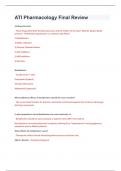
ATI Pharmacology Final Review Antihypertensives - These drugs affect both the blood pressure and the rhythm of the heart. Monitor patient blood pressure. *Orthostatic hypotension is a common side effect*. 1) Betablockers 2) Alpha 1 Blockers 3) Calcium Channel blockers 4) ACE Inhibitors 5) ARB Inhibitors 6) Diuretics Betablockers - Usually end in *-olol*. Propranolol (Inderal) Atenolol (Tenormin) Metoprolol (Lopressor) What additional effects of betablockers should the nurse monitor? - The nurse should monitor for broncho constriction and bronchospasms due to beta-2 adrenergic blocking mechanisms. In what population should betablockers be used cautiously in? - Betablockers should be used cautiously in patients who suffer from asthma. Beta blockers can mask tachycardia in patients suffering from *hypovolemia* and hypoglycemic symptoms seen in diabetic patients. What affects do betablockers cause? - Therapeutic effects include decreasing blood pressure and heart rate. Alpha 1 blocker - Clonidine (Catapres)What affects do alpha 1 blockers cause? - They cause systemic vasodilation by directly acting on smooth muscle of arteries. What adverse effects can alpha 1 blockers cause? - Hypotension, dizziness, sedation. In what form are alpha 1 blockers usually administered? - Alpha 1 blockers are generally administered as a patch and are changed once a week. Calcium Channel Blockers - Verapamil (Calan) Dilitiazem (Cardizem) Amlodipine (Norvasc) Nifedipine (Procardia) How do calcium channel blockers work? - They block the influx of calcium into myocardium resulting in a decrease in contractility. It helps keep vasculature relaxed and decreases SA and AV node conduction.
Document information
- Uploaded on
- March 23, 2024
- Number of pages
- 19
- Written in
- 2023/2024
- Type
- Exam (elaborations)
- Contains
- Questions & answers